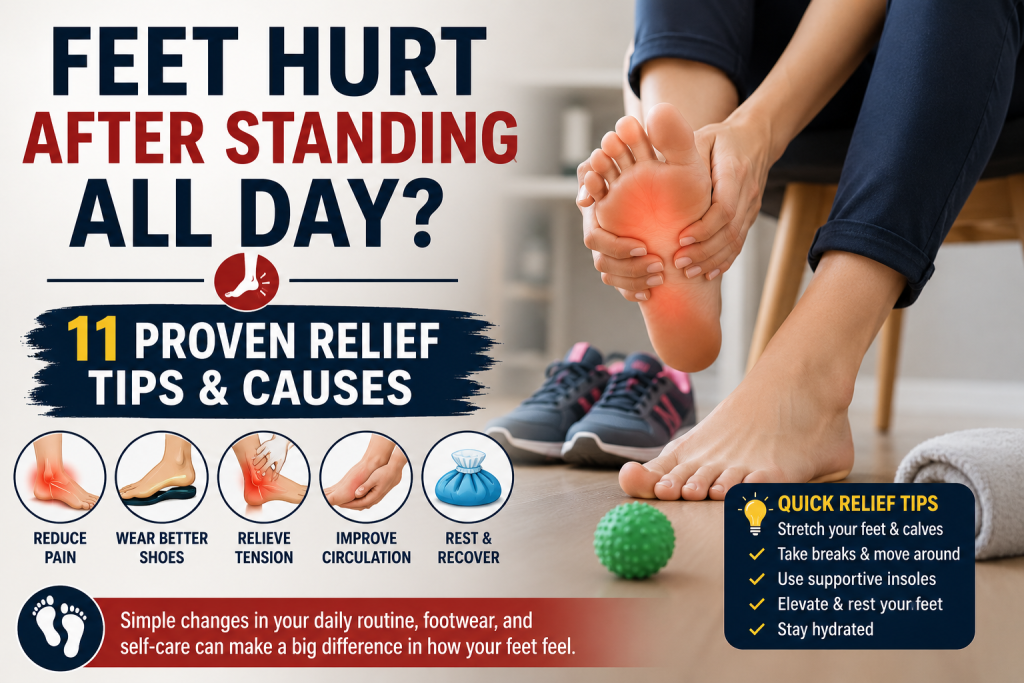
Feet Hurt After Standing All Day? 11 Proven Relief Tips & Causes
If your feet hurt after standing all day, you are not alone. People who work in healthcare, retail, factories, hospitality, construction, education, and other jobs that require prolonged standing often experience aching, burning, stiffness, swelling, or soreness in their feet and legs.
Standing for several hours places continuous demands on the muscles, joints, ligaments, and other tissues of the feet. Wearing uncomfortable shoes, standing on hard surfaces, having limited foot strength, or suddenly increasing your daily activity can make discomfort more noticeable.
Occasional foot soreness after a long day may improve with rest and simple self-care. However, persistent or severe foot pain can sometimes be related to conditions such as plantar fasciitis, tendon problems, arthritis, nerve irritation, or an injury.
Understanding why your feet hurt and knowing how to manage the discomfort can help you stay active and comfortable.
Why Do Feet Hurt After Standing All Day?
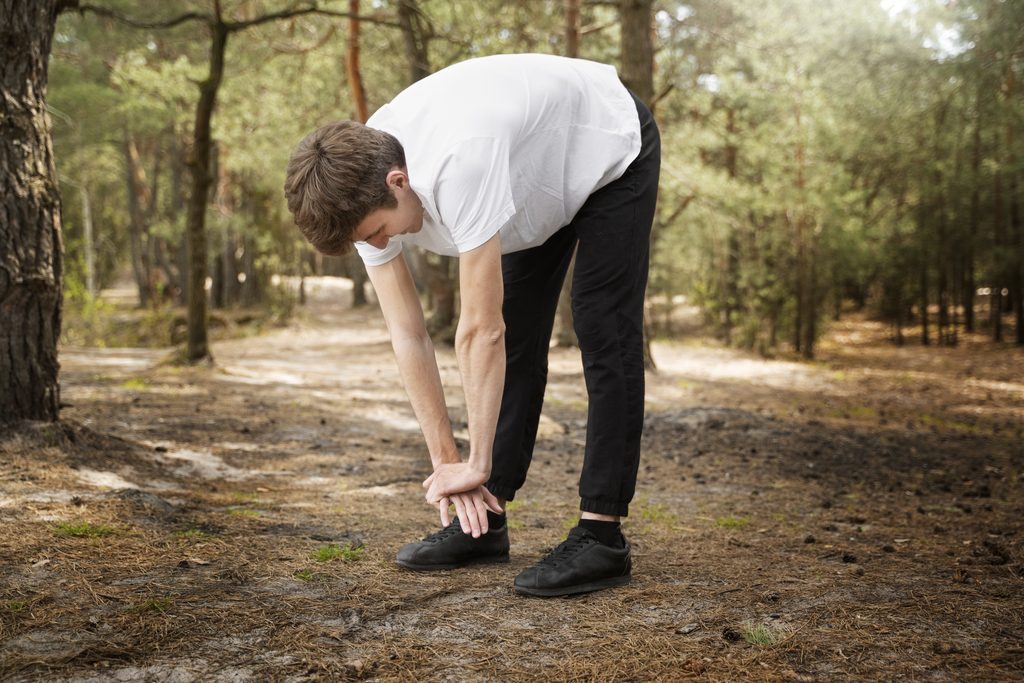
When you stand for a long time, your feet continuously support your body weight. Unlike sitting, standing does not give the muscles and joints of your lower body much opportunity to rest.
If you feet hurt after standing all day, several factors may be involved.
One common reason is simple muscle fatigue. The small muscles in your feet and the muscles around your ankles and lower legs work continuously to help maintain balance and stability.
Hard flooring can also increase discomfort because your feet repeatedly absorb forces from standing and walking.
Your footwear matters as well. Shoes that are too tight, lack adequate support, have worn-out cushioning, or do not fit your foot shape can make prolonged standing more uncomfortable.
Other factors, including body weight, foot structure, activity level, previous injuries, and underlying health conditions, can also influence foot pain.
11 Reasons Your Feet May Hurt After Standing All Day
1. Muscle Fatigue

One of the simplest explanations is muscle fatigue.
Your feet contain numerous small muscles that help control movement and stability. When these muscles work for many hours without adequate rest, they may become tired and sore.
You may notice a dull ache that becomes more noticeable toward the end of your shift and improves after resting.
Occasional fatigue is generally different from persistent or severe pain.
2. Unsupportive Shoes
Your shoes can have a major effect on how your feet feel after a long day.
Shoes that are too narrow may squeeze the toes. Shoes with inadequate cushioning may make hard floors feel more uncomfortable. Worn-out soles may also provide less support than they once did.
If your shoes are several years old or the soles are visibly worn unevenly, replacing them may help.
A comfortable shoe should have enough room for your toes and feel supportive without creating pressure points.
3. Standing on Hard Surfaces

Concrete, tile, and other hard surfaces can be particularly demanding when you stand for hours.
Although your feet naturally absorb and distribute forces, prolonged exposure to hard flooring may contribute to soreness and fatigue.
If your workplace allows it, an appropriate anti-fatigue mat may provide a more comfortable surface.
4. Plantar Fasciitis
Plantar fasciitis is a common cause of heel and bottom-of-the-foot pain. It involves irritation of the plantar fascia, a strong band of tissue running along the bottom of the foot.
Pain is often noticeable around the heel and may be particularly uncomfortable with the first steps after getting out of bed or after sitting for a while.
Long periods of standing can aggravate symptoms in some people.
If your pain is concentrated around the heel or arch and repeatedly returns, consider getting assessed by a healthcare professional.
5. Tight Calf Muscles
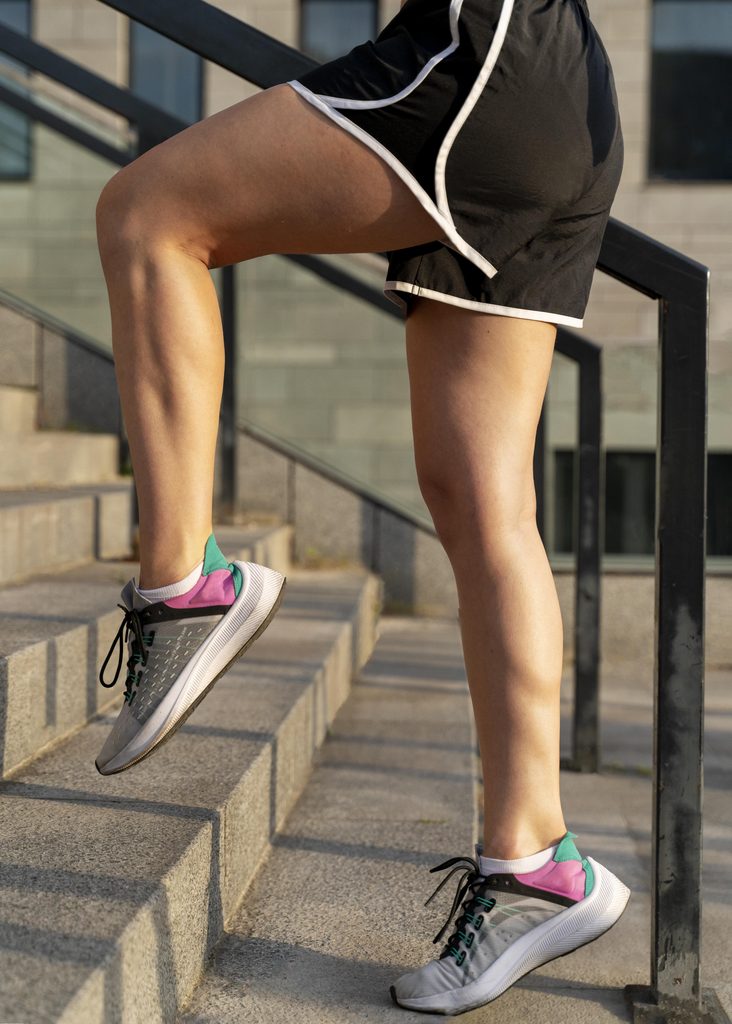
Tight calf muscles can affect how your ankle and foot move.
If your calves are stiff, activities involving prolonged standing or walking may feel more difficult.
Gentle calf mobility and stretching may be useful for some people, although stretching should not cause sharp pain.
A physiotherapist can assess whether calf flexibility is contributing to your symptoms.
6. Increased Activity
Sometimes the problem is simply doing more than your body is accustomed to.
For example, if you normally sit at a desk but suddenly begin a job requiring eight or more hours of standing, your feet may need time to adapt.
The same can happen after increasing walking, running, hiking, or exercise.
Gradually increasing activity gives your muscles and tissues more opportunity to adapt.
7. Foot Structure
Everyone’s feet are different.
Some people have flatter arches, while others have higher arches. These differences can influence how forces are distributed through the feet during standing and walking.
Foot structure does not automatically mean that you will develop pain. However, if you repeatedly experience discomfort, a professional assessment can help determine whether your foot mechanics are contributing.
8. Swelling After Prolonged Standing
Some people notice that their feet or ankles look slightly swollen after spending many hours upright.
Fluid can accumulate in the lower limbs during prolonged standing, particularly when movement is limited.
Taking short walking breaks, changing positions, and elevating your legs after work may help reduce temporary swelling.
However, sudden, severe, or one-sided swelling should not simply be assumed to be caused by standing.
9. Previous Foot or Ankle Injury
An old injury can sometimes continue to influence movement even after the initial injury has healed.
For example, a previous ankle sprain may affect strength, balance, or movement patterns.
If one foot consistently hurts more than the other, especially around an area that has previously been injured, professional assessment may be worthwhile.
10. Nerve Irritation
Burning, tingling, numbness, or electric-like sensations can sometimes indicate nerve involvement rather than ordinary muscle fatigue.
Nerve-related foot symptoms may have different causes and should be evaluated if they persist, worsen, or interfere with walking.
Do not repeatedly massage or stretch an area with significant numbness without understanding the underlying cause.
11. Other Foot Conditions
Persistent foot pain can sometimes be associated with arthritis, tendon problems, stress injuries, bunions, or other conditions.
The location and character of the pain can provide useful clues, but they cannot replace a professional examination.
If your symptoms keep returning despite changing your shoes and activity habits, consider getting your feet assessed.
11 Ways to Relieve Foot Pain After Standing
If your feet hurt after standing all day, several simple strategies may help.
1. Rest Your Feet
After a long shift, give your feet some time to recover.
Sit down, remove uncomfortable footwear, and allow your feet to relax.
Rest alone may not solve an ongoing problem, but it can help with temporary fatigue.
2. Elevate Your Feet
If your feet feel heavy or mildly swollen after standing, try elevating them while resting.
Place your feet on a cushion or another comfortable surface so they are raised.
You can combine elevation with gentle ankle movements.
3. Choose Comfortable Shoes
Good footwear is one of the most important factors for people who stand for work.
Look for shoes that:
- Fit comfortably around the toes
- Provide adequate cushioning
- Do not create pressure points
- Have a stable sole
- Match your workplace requirements
- Are appropriate for your daily activity
Avoid buying shoes based only on appearance. Comfort and fit should be priorities.
4. Replace Worn-Out Footwear
Even a shoe that was originally comfortable may become less supportive as it wears down.
Inspect the soles regularly. If cushioning has compressed or the sole is unevenly worn, it may be time for a replacement.
5. Take Movement Breaks
Standing still for hours can be harder on your body than alternating between standing and gentle movement.
If possible, walk for a few minutes, change your position, or perform gentle ankle movements during breaks.
Small changes throughout the day may help reduce stiffness.
6. Try Gentle Calf Stretching
Stand facing a wall and place your hands against it. Step one foot backward and keep the heel comfortably grounded. Bend the front knee while keeping the back leg relatively straight.
Hold the stretch gently without bouncing.
If the exercise causes sharp foot pain, stop.
7. Perform Ankle Movements
Simple ankle movements can be useful during breaks.
While seated, slowly move your ankles up and down or make controlled circles.
These movements can help you avoid remaining completely still during a long workday.
8. Strengthen Your Feet and Ankles
Foot and ankle strengthening can improve your ability to tolerate physical activity.
Exercises may include controlled heel raises, toe movements, or balance exercises.
However, exercise selection should depend on your symptoms. If you have significant pain, an injury, or swelling, consult a professional before beginning a strengthening routine.
9. Consider an Appropriate Insole
Some people find supportive insoles comfortable, particularly when their work involves prolonged standing.
However, not every person needs an insole, and a highly structured insert is not automatically better.
If you have ongoing pain, a podiatrist or physiotherapist can assess your foot mechanics and help determine whether an insole is appropriate.
10. Use Temperature for Comfort
Some people find a warm foot soak relaxing after a long day. Others prefer a cool pack when the feet feel irritated.
If using cold therapy, protect the skin with a cloth and avoid prolonged exposure.
Temperature-based comfort measures should complement—not replace—assessment of persistent pain.
11. Increase Standing Time Gradually
If you are starting a new job or activity that requires prolonged standing, increase your exposure gradually when possible.
Your feet need time to adapt to increased workload.
Where practical, alternate standing with walking or sitting and take regular breaks.
What Shoes Are Best for Standing All Day?
The best shoes depend on your foot shape, workplace, activity, and personal comfort.
Generally, shoes for prolonged standing should fit properly and provide enough cushioning and stability for your environment.
Avoid shoes that squeeze the toes or create pressure on painful areas.
If you work on slippery floors, choose footwear with appropriate traction.
If your shoes cause pain even after a short period, changing them may be one of the simplest steps you can take.
Can Standing All Day Cause Heel Pain?
Yes, prolonged standing can aggravate heel pain in some people.
If the pain is concentrated underneath the heel and is especially noticeable during the first steps after waking or after sitting, plantar fasciitis may be one possible explanation.
However, heel pain can have multiple causes.
Do not assume every episode of heel pain is plantar fasciitis. Persistent symptoms should be evaluated by a qualified professional.
Can Standing All Day Cause Swollen Feet?
Prolonged standing can contribute to temporary swelling in the feet and ankles for some people.
The swelling may be more noticeable at the end of the day and may improve after resting or elevating the legs.
However, swelling that is sudden, severe, painful, or mainly affects one leg requires medical attention.
Swelling accompanied by shortness of breath, chest pain, or other serious symptoms should be treated as an urgent medical concern.
What If Only One Foot Hurts?
If one foot hurts significantly more than the other, consider whether there has been an injury, change in footwear, unusual activity, or another localized problem.
One-sided pain can sometimes provide an important clue about the underlying cause.
If the pain is severe, persistent, associated with swelling, or affecting your ability to walk normally, seek professional evaluation.
When Should You See a Physiotherapist?
If your feet hurt after standing all day repeatedly and simple changes are not helping, a physiotherapist can assess your movement and identify factors contributing to your discomfort.
An assessment may include:
- Foot and ankle movement
- Calf flexibility
- Muscle strength
- Balance
- Walking pattern
- Foot mechanics
- Previous injuries
- Workplace activity
- Exercise habits
A personalized exercise program may then be recommended based on your specific needs.
Physiotherapy can be particularly useful when foot discomfort is affecting your ability to work, exercise, sleep, or perform everyday activities.
When Is Foot Pain an Emergency?
Most foot soreness after a long day is not an emergency. However, certain symptoms require prompt medical evaluation.
Seek medical care if you experience severe pain after an injury, inability to put weight on the foot, significant deformity, rapidly increasing swelling, or severe redness and warmth feet hurt after standing all day.
You should also seek medical advice for unexplained numbness, significant weakness, or persistent wounds—particularly if you have a medical condition that affects circulation or sensation.
Do not ignore severe or rapidly worsening symptoms simply because you spend a lot of time standing.
Frequently Asked Questions
Why do my feet hurt after standing all day?
Your feet may hurt because of muscle fatigue, prolonged pressure, hard flooring, unsupportive shoes, increased activity, or an underlying foot condition. The exact cause depends on the location and type of pain feet hurt after standing all day.
How can I stop my feet from hurting after standing?
Start with comfortable, properly fitting shoes, regular movement breaks, adequate recovery, and gradual activity increases. If pain persists, professional assessment can help identify the cause.
Is it normal for feet to hurt after a long shift?
Mild temporary soreness can occur after prolonged standing, especially if you are not accustomed to it. However, recurring, severe, or worsening pain should not be considered normal feet hurt after standing all day.
Should I use a footrest while standing?
A small footrest or step can allow you to alternate positions and shift your weight periodically if your workplace setup allows it. Avoid remaining in exactly the same position for hours.
Does walking help tired feet?
Gentle walking may help some people because it changes the load on the feet and encourages movement. However, if walking increases your pain significantly, stop and consider getting assessed feet hurt after standing all day.
Can stretching help foot pain?
Gentle stretching of the calves and feet may help certain types of stiffness, but the effectiveness depends on the underlying cause. Stretching should not produce sharp or worsening pain.
Should I see a doctor for foot pain from standing?
If pain is persistent, severe, recurrent, or associated with swelling, numbness, weakness, injury, or difficulty walking, professional medical assessment is recommended feet hurt after standing all day,.
Final Thoughts
If your feet hurt after standing all day, the discomfort may be related to simple fatigue, footwear, hard surfaces, increased activity, or an underlying foot problem. The first steps are often practical: choose comfortable shoes, take movement breaks, allow your feet to recover, and avoid suddenly increasing your standing or exercise workload.
Gentle stretching, ankle movements, strengthening, and appropriate footwear may also help improve your ability to tolerate prolonged standing.
However, persistent foot pain should not be ignored. If symptoms repeatedly return, interfere with your daily activities, or occur with swelling, numbness, weakness, or significant pain, consider consulting a qualified healthcare professional or physiotherapist.
Your feet carry you throughout the day, so taking care of them can make a meaningful difference in your comfort, mobility, and overall quality of life.