Can Lysol Kill Hantavirus? 7 Powerful Facts You Need to Know
If you have discovered mouse or rat droppings in your home, garage, basement, shed, or vehicle, you may be wondering: can Lysol kill hantavirus? This is an important question because hantaviruses can cause serious illnesses, including hantavirus pulmonary syndrome (HPS), and rodents are the primary source of exposure.
The good news is that proper disinfection can help deactivate hantaviruses on contaminated surfaces. The Centers for Disease Control and Prevention (CDC) recommends using a general-purpose household disinfectant or an appropriate bleach solution when cleaning areas contaminated by rodents.
However, simply spraying a product around a room is not enough. Safe cleanup requires the right disinfectant, sufficient contact time, ventilation, protective gloves, and careful handling of rodent urine, droppings, nests, and dead rodents.
In this guide, we will explain can Lysol kill hantavirus, how disinfectants work, how to clean rodent-contaminated areas safely, what mistakes to avoid, and when professional help may be necessary.
Can Lysol Kill Hantavirus?
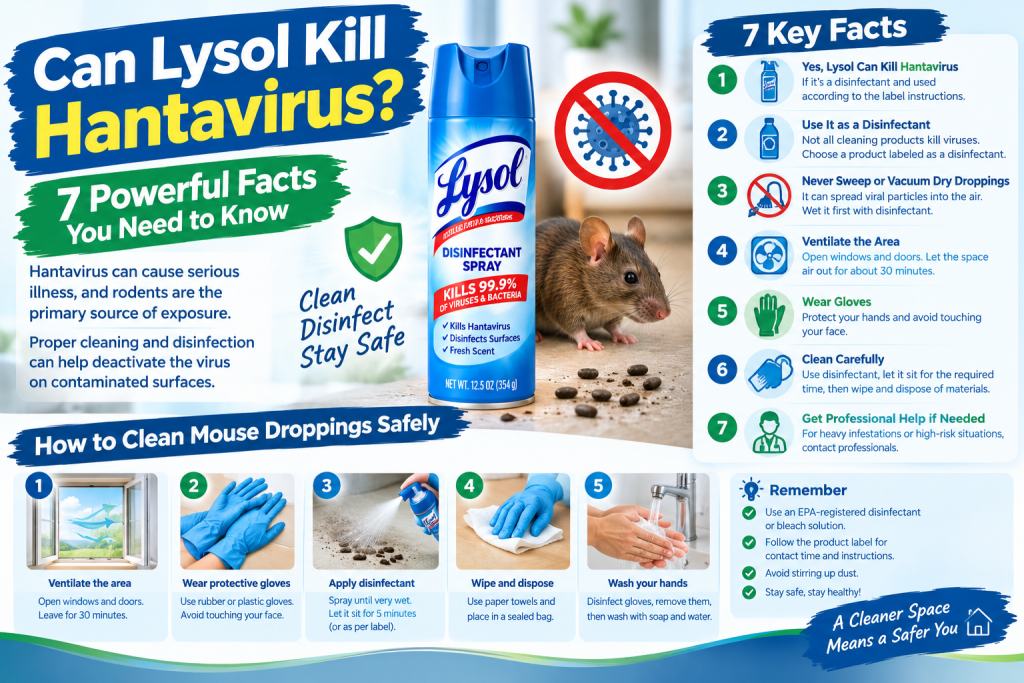
Yes, an appropriate Lysol product that is labeled as a disinfectant can be used for cleaning surfaces potentially contaminated with hantavirus. CDC guidance recommends a general-purpose household disinfectant for rodent urine, droppings, nests, and contaminated hard surfaces.
The important point is that not every cleaning product is automatically a disinfectant. A product should specifically state that it is a disinfectant and should be used according to its label directions.
Older CDC recommendations explain that general-purpose household disinfectants containing ingredients such as phenols, quaternary ammonium compounds, or hypochlorite can be effective against hantaviruses.
Therefore, when asking can Lysol kill hantavirus, the answer depends on the specific Lysol product and its disinfectant label instructions. Always check the product label before using it for rodent cleanup.
1. Lysol Must Be Used as a Disinfectant
One of the biggest mistakes people make is assuming that every household cleaner kills every virus.
Cleaning and disinfecting are not exactly the same thing. Cleaning physically removes dirt, urine, droppings, and other material. Disinfection uses an appropriate chemical product to deactivate microorganisms on a surface.
If you are using Lysol for possible hantavirus contamination, choose a product that is clearly labeled as a disinfectant and follow its instructions carefully.
Do not simply spray a small amount and immediately wipe it away. Disinfectants generally need sufficient wet contact time to work properly. The required time can vary by product, so the label should always be followed.
CDC guidance for rodent cleanup says to spray urine and droppings with bleach solution or an EPA-registered disinfectant until they are very wet and allow the product to soak for about five minutes or according to the disinfectant label.
This is one reason why the question can Lysol kill hantavirus should always be followed by another question: “Am I using the product correctly?”
2. Never Sweep or Vacuum Dry Rodent Droppings
This may be the most important safety rule when cleaning a suspected hantavirus-contaminated area.
Do not immediately sweep or vacuum mouse or rat droppings, urine, nesting materials, or contaminated dust.
Why?
Hantavirus exposure can occur when contaminated materials are disturbed and particles become airborne. Breathing contaminated air can increase the risk of infection. CDC specifically recommends avoiding sweeping or vacuuming rodent urine, droppings, or nesting materials before they have been disinfected.
Instead, put on appropriate gloves and thoroughly wet the contaminated material with a suitable disinfectant. Allow it to remain wet for the recommended contact time. Then carefully wipe it up with paper towels.
This approach reduces the chance of creating contaminated dust or aerosols during cleanup.
3. Ventilate the Area Before Cleaning
If rodents have been living in a closed room, garage, shed, cabin, or other poorly ventilated location, ventilation is an important part of preparation.
CDC recommends opening doors and windows and allowing a closed area to air out before cleaning. For homes and outbuildings, the CDC advises ventilating the space for about 30 minutes before beginning cleanup and leaving the area during that period.
Good ventilation can help reduce the concentration of airborne contaminants that may be present.
Do not immediately enter a dusty, enclosed space and start sweeping. Instead:
- Open doors and windows.
- Allow fresh air to circulate.
- Leave the area while it airs out.
- Return with appropriate protective equipment.
- Avoid stirring up dust.
- Begin disinfection before removing contaminated material.
Ventilation is especially important when the space has been closed for a long period and there is evidence of substantial rodent activity.
4. Wear Gloves During Cleanup
Before touching rodent droppings, urine, nesting material, or a dead rodent, wear rubber or plastic gloves.
Gloves provide a barrier between your hands and potentially contaminated materials. CDC specifically recommends rubber or plastic gloves during routine rodent cleanup.
After cleaning, disinfect or wash your gloved hands before removing the gloves. Then wash your bare hands thoroughly with soap and warm water.
Do not touch your face, eyes, nose, or mouth while wearing contaminated gloves.
If you have cuts or broken skin on your hands, take additional precautions and avoid unnecessary contact with contaminated materials.
For heavy infestations or situations involving confirmed hantavirus exposure, additional protective measures may be necessary, and professional assistance is recommended.
5. How to Clean Mouse Droppings Safely
Now that we have answered can Lysol kill hantavirus, let’s look at the practical cleanup process.
Step 1: Ventilate
Open doors and windows and allow the area to air out before cleaning.
Step 2: Put on Gloves
Wear rubber or plastic gloves before handling potentially contaminated materials.
Step 3: Apply Disinfectant
Spray the droppings and urine thoroughly with an appropriate disinfectant. The material should become very wet.
If using a bleach solution, CDC recommends a fresh solution made by mixing 1.5 cups of household bleach with 1 gallon of water, equivalent to approximately a 1:9 bleach-to-water mixture.
Step 4: Allow Contact Time
Let the disinfectant remain on the contaminated material for approximately five minutes or follow the exact contact time stated on the product label.
Step 5: Wipe Everything Up
Use paper towels to carefully pick up the wet droppings and urine.
Step 6: Dispose of the Waste
Place used paper towels and contaminated waste into a suitable garbage bag according to local disposal guidance.
Step 7: Disinfect the Surface Again
After removing the contaminated material, disinfect the surrounding hard surface.
Step 8: Wash Your Hands
Clean your gloves before removing them, remove them carefully, and then wash your hands thoroughly with soap and warm water.
These steps follow the basic CDC approach for cleaning rodent-contaminated areas.
6. Can Lysol Kill Hantavirus on Different Surfaces?
The effectiveness of a disinfectant depends partly on the surface being cleaned and the specific product instructions.
Hard Surfaces
Hard, nonporous surfaces such as countertops, floors, cabinets, drawers, and some vehicle surfaces can generally be disinfected with an appropriate household disinfectant.
First remove rodent contamination safely, then disinfect the surface according to the product label.
Clothing and Bedding
Contaminated clothing, bedding, or washable fabric should not simply be sprayed and assumed to be safe.
CDC recommends laundering potentially contaminated clothing, bedding, and stuffed animals with hot water and detergent, followed by machine drying on a high setting or air drying in sunlight.
Carpets and Upholstery
Carpet and upholstered furniture require different cleaning methods because they are porous.
CDC recommends shampooing rugs and upholstered furniture with a commercial disinfectant or using a commercial-grade steam cleaner or shampooing method.
Books and Paper
Paper products generally cannot be treated in the same way as hard surfaces.
CDC guidance recommends allowing non-washable items such as books and papers to remain outdoors in sunlight for several hours, or keeping them in a rodent-free indoor area for an extended period.
7. Preventing Hantavirus Exposure Is Better Than Cleaning It Up
Disinfectants are useful, but preventing rodent infestations is even more important.
Hantaviruses are primarily associated with rodents. People can be exposed through contact with infected rodents, urine, droppings, saliva, or nesting materials. In some circumstances, disturbing contaminated material can allow infectious particles to become airborne.
To reduce the risk:
Seal Entry Points
Inspect your home for holes, cracks, gaps around pipes, damaged screens, and other possible rodent entry points.
Store Food Properly
Keep food in sealed, rodent-resistant containers. Clean food spills quickly and avoid leaving pet food exposed overnight.
Reduce Clutter
Rodents can hide in cluttered garages, storage areas, sheds, and basements. Keeping these areas organized can make rodent activity easier to detect.
Remove Nesting Materials Safely
If you find nests, do not immediately pick them up with bare hands. Disinfect them thoroughly before removal.
Control Rodents
Rodent control is one of the most important ways to reduce hantavirus exposure. CDC identifies rodent control and exclusion as key prevention strategies.
What Should You Not Do When Cleaning Rodent Droppings?
Knowing what not to do is just as important as knowing what to do.
Do Not Dry Sweep
Dry sweeping can disturb contaminated particles.
Do Not Vacuum First
Avoid vacuuming droppings, urine, or nesting materials before disinfection.
Do Not Touch Contaminated Material With Bare Hands
Always use appropriate gloves.
Do Not Mix Cleaning Chemicals
Never mix bleach with ammonia, acids, or other household chemicals. Dangerous gases can be produced.
Do Not Ignore Heavy Infestations
A small amount of rodent activity may be manageable with careful household cleanup. A major infestation is different and may require specialized protective equipment and professional services.
What If You Accidentally Vacuumed Mouse Droppings?
If you already vacuumed mouse droppings, do not panic.
The important thing is to avoid further exposure and clean the area properly. CDC notes that vacuuming or sweeping contaminated material can create airborne particles, so additional precautions are appropriate.
Stop disturbing the area, ventilate the space if appropriate, and follow CDC cleanup guidance. If there was significant exposure, particularly in a heavily infested area, consider contacting a healthcare professional or local public-health authority for advice.
Can Hantavirus Make You Sick?
Yes. Hantaviruses can cause serious illnesses.
In the United States, certain hantaviruses can cause hantavirus pulmonary syndrome, while other hantaviruses around the world can cause hemorrhagic fever with renal syndrome.
Early symptoms may include fever, fatigue, muscle aches, headaches, dizziness, chills, nausea, vomiting, or stomach problems. HPS can later cause serious breathing difficulties.
Because symptoms can initially resemble other illnesses, a person with a significant rodent exposure should tell a healthcare professional about that exposure if they become ill.
If you develop serious breathing difficulty, chest symptoms, severe weakness, or rapidly worsening illness after possible rodent exposure, seek urgent medical attention.
Does Lysol Prevent Hantavirus Infection?
No. Lysol can help disinfect contaminated surfaces, but it should not be considered a complete prevention method.
The best prevention strategy is to reduce exposure to rodents and their urine, droppings, saliva, and nesting materials.
Disinfection is one part of a broader safety plan that includes rodent control, sealing entry points, proper food storage, safe cleanup, and appropriate ventilation.
So, while the answer to can Lysol kill hantavirus can be yes for an appropriate disinfectant product used correctly, Lysol should not create a false sense of security.
Lysol vs. Bleach for Hantavirus Cleanup
Both an appropriate household disinfectant and a properly prepared bleach solution can be used for rodent cleanup.
CDC recommends either a general-purpose household disinfectant or a bleach solution for disinfecting rodent-contaminated areas.
A bleach solution can be useful when a suitable disinfectant is unavailable. CDC’s current cleanup guidance specifies 1.5 cups of household bleach per gallon of water and recommends making the solution fresh before use.
However, bleach can damage certain materials and should never be mixed with other cleaning chemicals.
If you choose Lysol or another commercial disinfectant, follow the product label carefully, including dilution instructions and required contact time.
When Should You Call a Professional?
Professional help may be appropriate when you discover:
- A large rodent infestation
- Numerous dead rodents
- Extensive urine or droppings
- Rodent activity inside ventilation systems
- Heavy contamination in insulation
- Contamination in difficult-to-reach areas
- A building associated with a suspected or confirmed hantavirus case
CDC specifically recommends professional assistance when rodents have accessed heating and cooling ventilation systems because specialized procedures may be necessary.
Professionals can also help identify entry points and reduce the likelihood of another infestation.
Final Answer: Can Lysol Kill Hantavirus?
So, can Lysol kill hantavirus? An appropriate Lysol product that is labeled as a disinfectant can be used to disinfect surfaces potentially contaminated with hantavirus, provided it is used exactly according to its label directions.
The key is not simply spraying Lysol. Safe cleanup involves ventilating the area, wearing gloves, thoroughly wetting contaminated material with an appropriate disinfectant, allowing sufficient contact time, carefully wiping it up, disposing of waste properly, and washing your hands afterward. CDC specifically advises against sweeping or vacuuming rodent urine, droppings, or nesting materials before disinfection because doing so can increase the chance of inhaling contaminated particles.
Most importantly, preventing rodent infestations remains the best way to reduce the risk of hantavirus exposure. Seal holes and gaps, store food securely, reduce rodent-friendly clutter, and clean rodent contamination safely when it occurs.
If you believe you have had significant exposure to rodents and subsequently develop concerning symptoms, contact a healthcare professional and mention the rodent exposure.