How to Relieve Sciatica Pain Fast: 9 Powerful Tips, Exercises & Relief Methods
Sciatica pain can make everyday activities such as walking, sitting, sleeping, bending, or getting out of bed surprisingly difficult. The pain often starts in the lower back and travels through the buttock and down one leg. Some people also experience tingling, numbness, burning, or weakness in the affected leg.
If you are searching for how to relieve sciatica pain fast, the good news is that many cases improve with conservative treatment, movement, and appropriate self-care. However, the best approach depends on what is irritating the sciatic nerve and how severe your symptoms are.
Sciatica is not usually a condition by itself. Instead, it describes symptoms caused by irritation or compression of the sciatic nerve or its nerve roots. Common causes include a herniated disc, spinal narrowing, bone changes, or other problems affecting the lower spine.
This guide explains practical ways to manage sciatica, including gentle exercises, posture changes, heat or cold therapy, activity modification, and physiotherapy.
What Is Sciatica?
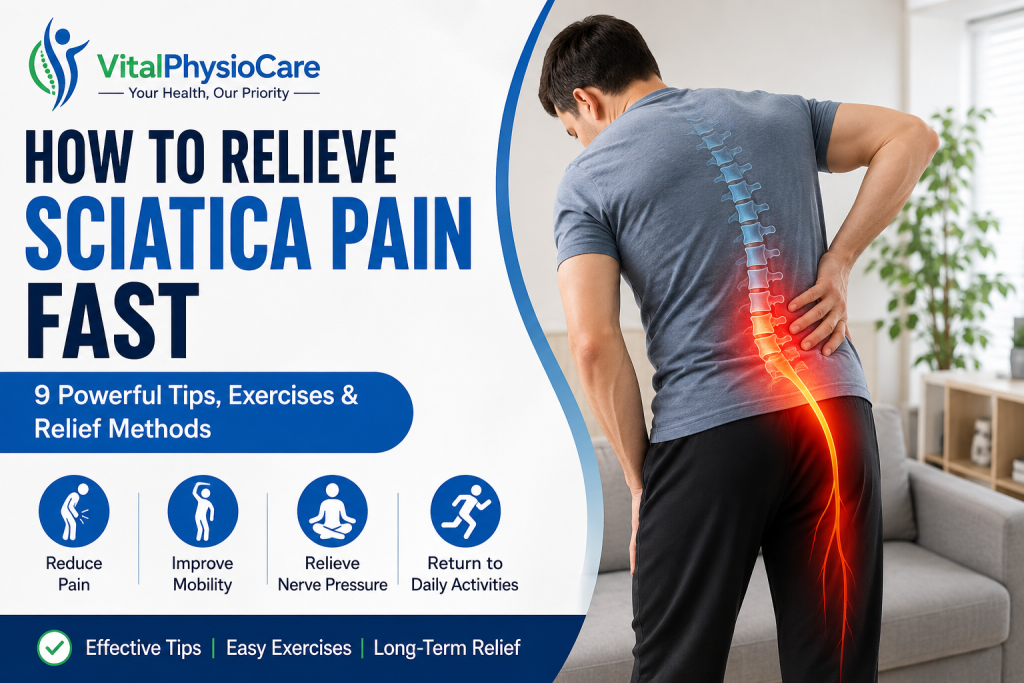
The sciatic nerve is the largest nerve in the human body. It is formed by several nerve roots in the lower spine and travels through the buttocks and down each leg.
When one of these nerve roots becomes irritated or compressed, symptoms can develop along the path of the nerve. Sciatica commonly affects one side of the body.
Typical symptoms include:
- Pain in the lower back or buttock
- Pain traveling down the leg
- Tingling or pins-and-needles sensations
- Numbness
- Burning or electric-like pain
- Leg or foot weakness in more serious cases
The severity can vary considerably. Some people experience mild discomfort, while others have significant pain that interferes with normal activities.
How to Relieve Sciatica Pain Fast
There is no single treatment that instantly eliminates sciatica for everyone. However, several strategies may provide short-term relief and support recovery.
1. Keep Moving Gently
One of the most important principles for managing many cases of sciatica is avoiding prolonged inactivity.
When pain starts, you may naturally want to stay in bed or sit still for long periods. Although short periods of rest may feel comfortable, excessive inactivity can make it harder to return to normal movement.
Try gentle activities such as:
- Short walks
- Easy household activities
- Gentle mobility exercises
- Changing positions regularly
- Light stretching if it does not increase symptoms
The goal is not to push through severe pain. Instead, maintain comfortable movement within your limits.
If walking significantly increases your symptoms, reduce the duration and discuss your symptoms with a healthcare professional.
2. Try a Comfortable Position
Your sitting and sleeping position can affect how your lower back feels.
If sitting makes your symptoms worse, avoid staying in one position for a long time. Stand up, walk around briefly, or change your sitting position regularly.
When sitting, try to:
- Keep both feet supported
- Avoid excessive slouching
- Use comfortable back support
- Keep your hips and knees in a relaxed position
- Change position regularly
For sleeping, choose a position that feels comfortable rather than forcing yourself into a particular posture.
Side sleepers may find it comfortable to place a pillow between the knees. If you sleep on your back, placing a pillow beneath the knees may also feel supportive.
3. Use Heat or Cold Therapy
Heat and cold can sometimes provide temporary relief from back and leg discomfort.
A cold pack may feel helpful during a painful flare, while gentle heat can help some people relax tight muscles and feel more comfortable.
If using either method:
- Protect your skin with a cloth or towel.
- Avoid applying extreme temperatures directly to the skin.
- Use short sessions rather than leaving a pack on for an extended period.
- Stop if your skin becomes painful, excessively red, or irritated.
Heat and cold are mainly comfort measures. They do not necessarily correct the underlying cause of nerve irritation.
4. Try Gentle Sciatica Exercises
Appropriate exercises can be an important part of recovery. However, there is no universal exercise that works for every person with sciatica.
A movement that feels good for one person may aggravate symptoms in another.
Some commonly used movements include gentle walking, pelvic movements, controlled lower-back mobility, and selected nerve-mobility exercises.
Gentle Knee-to-Chest Movement
Lie comfortably on your back with your knees bent.
Slowly bring one knee toward your chest only as far as comfortable. Hold the position briefly, then return your leg to the starting position.
Repeat gently on the other side.
Do not force the stretch. If the movement causes sharp or worsening pain down your leg, stop.
Pelvic Tilts
Lie on your back with your knees bent and feet supported.
Gently tighten your abdominal muscles and move your pelvis so that your lower back moves slightly toward the floor. Then relax and return to your comfortable starting position.
Perform the movement slowly and without holding your breath.
Gentle Walking
Walking is often one of the simplest ways to maintain movement while recovering from back and leg symptoms.
Start with a short, comfortable walk. If symptoms remain stable, you can gradually increase the duration.
The right amount of activity depends on your symptoms, fitness level, and underlying condition.
5. Avoid Activities That Clearly Aggravate Your Symptoms
When you are experiencing sciatica, certain activities may temporarily increase nerve irritation.
Common aggravating activities can include:
- Heavy lifting
- Repeated bending
- Twisting while lifting
- Prolonged sitting
- High-impact exercise during a painful flare
- Sudden movements
This does not mean you should permanently avoid these activities.
Instead, modify them while symptoms are active and gradually return to normal activity as your condition improves.
For example, when lifting an object, keep it close to your body and avoid twisting your spine while carrying it.
6. Improve Your Daily Posture and Movement Habits
Poor movement habits are not always the direct cause of sciatica, but changing how you perform everyday tasks may reduce stress on your back.
If you work at a desk, adjust your workstation so that your screen is at a comfortable height and your feet are supported.
Try not to sit continuously for several hours. Regular movement breaks can help prevent stiffness.
When getting out of bed, move slowly rather than suddenly twisting your lower back.
When picking something up from the floor, bend your hips and knees and keep the object close to your body.
These small changes can make daily activities more comfortable while you recover.
7. Consider Physiotherapy
Physiotherapy can be especially useful when sciatica symptoms persist, repeatedly return, or interfere with normal activities.
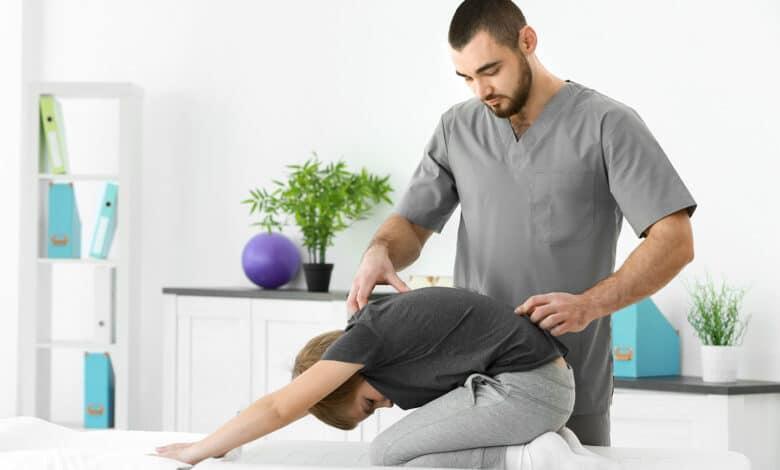
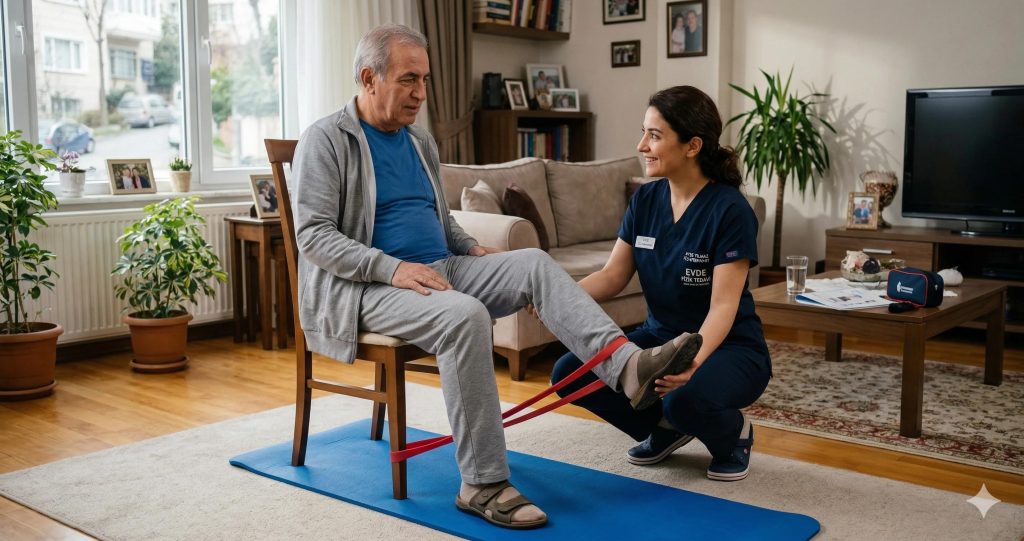
A physical therapist can assess your movement, strength, flexibility, symptoms, and functional limitations. Based on the assessment, they may develop an individualized rehabilitation program.
Treatment may include:
- Therapeutic exercises
- Mobility exercises
- Strength training
- Movement education
- Manual therapy when appropriate
- Activity modification
- Advice about returning to exercise
A physiotherapy program should be adjusted according to your symptoms and progress.
At VitalPhysioCare, our educational approach focuses on helping readers understand movement, exercise, and practical strategies for managing common musculoskeletal problems.
8. Maintain a Healthy Level of Physical Activity
Once severe symptoms begin to settle, gradually rebuilding strength and physical capacity can be helpful.
Your rehabilitation may eventually include exercises for the:
- Core muscles
- Glutes
- Hips
- Legs
- Lower back
Strong and well-conditioned muscles can help you perform everyday movements more efficiently.
However, strengthening exercises should be introduced gradually. Starting an intense workout program during a severe flare may make symptoms worse.
A physiotherapist or other qualified healthcare professional can help determine which exercises are appropriate for your situation.
9. Give Your Body Time to Recover
People often search for how to relieve sciatica pain fast because they want immediate relief. While some strategies can reduce discomfort relatively quickly, recovery may take longer.
The timeline depends on the underlying cause, severity, activity level, general health, and treatment approach.
Instead of focusing only on eliminating pain immediately, focus on improving function gradually.
A useful recovery plan may include:
- Managing activities that aggravate symptoms
- Maintaining comfortable movement
- Gradually increasing walking
- Performing appropriate exercises
- Improving strength and mobility
- Returning gradually to normal activities
Consistency is often more useful than doing too much too quickly.
What Should You Avoid With Sciatica?
Knowing what not to do can be just as important as knowing what to do.
Avoid forcing stretches that produce sharp or worsening pain. You should also be cautious with heavy lifting and sudden twisting movements during an acute flare.
Prolonged bed rest is generally not a good long-term strategy. Remaining completely inactive can contribute to stiffness and reduced physical capacity.
You should also avoid copying an exercise routine from the internet simply because it helped someone else. Sciatica can have different causes, and exercises should be appropriate for your individual symptoms.
If an exercise consistently increases pain traveling farther down your leg, causes increasing numbness, or produces new weakness, stop the exercise and seek professional advice.
When Should You See a Doctor or Physiotherapist?
Many people with sciatica improve with conservative care, but persistent or worsening symptoms deserve professional assessment.
Consider seeing a healthcare professional if:
- Your pain is severe or getting worse
- Symptoms are interfering with sleep or daily activities
- Pain continues despite self-care
- You develop persistent numbness or tingling
- You notice weakness in your leg or foot
- Symptoms repeatedly return
- You are unsure what is causing the pain
A professional assessment can help determine whether your symptoms are consistent with sciatica and whether further testing or treatment is necessary.
Emergency Symptoms You Should Not Ignore
Although serious complications are uncommon, certain symptoms require urgent medical evaluation.
Seek emergency medical attention if you develop severe or worsening weakness in both legs, significant numbness around the genital or anal area, or new difficulty controlling your bladder or bowel.
These symptoms can indicate serious nerve compression and should not be managed at home.
Can Stretching Cure Sciatica?
Stretching can help some people feel more comfortable, but it should not be considered a guaranteed cure.
Sciatica can have different causes. If a particular movement reduces discomfort and allows you to move more comfortably, it may be useful as part of a broader rehabilitation program.
However, aggressive stretching can sometimes aggravate nerve-related symptoms.
The best exercise program is one that matches your symptoms and gradually improves mobility, strength, and function.
How Long Does Sciatica Take to Improve?
The recovery time varies from person to person.
Some cases improve within a relatively short period, while persistent symptoms may require longer-term management.
Factors that can influence recovery include the underlying cause, severity of symptoms, activity level, physical conditioning, and adherence to an appropriate rehabilitation plan.
If your symptoms are not improving or are getting worse, professional evaluation is important rather than simply continuing the same home treatment indefinitely.
Frequently Asked Questions
Can I walk with sciatica?
Many people can continue walking with sciatica, provided walking does not significantly worsen their symptoms. Start with short, comfortable walks and gradually increase activity as tolerated.
Is bed rest good for sciatica?
Extended bed rest is generally not recommended as a long-term approach. Comfortable movement and gradual return to normal activities are usually preferable when medically appropriate.
Is heat or ice better for sciatica?
Both heat and cold may provide temporary comfort for some people. There is no single option that is best for everyone, so use whichever feels more helpful and safe for you.
Can exercises make sciatica worse?
Yes. An inappropriate or overly intense exercise can aggravate symptoms. Exercises should be performed gently and stopped if they cause significant worsening pain, increasing numbness, or new weakness.
Should I see a physiotherapist for sciatica?
A physiotherapist can be helpful, particularly when symptoms persist, interfere with normal activities, or keep returning. They can assess your movement and create an individualized rehabilitation plan.
Final Thoughts
If you are wondering how to relieve sciatica pain fast, start with practical and gentle strategies rather than trying to force a quick cure. Comfortable movement, appropriate exercises, activity modification, supportive positions, and gradual strengthening can all play a role in recovery.
Remember that sciatica can have different causes, so the right treatment is not identical for everyone. Avoid exercises that clearly worsen your symptoms and seek professional guidance when pain persists, becomes severe, or is accompanied by numbness or weakness.
Most importantly, listen to your body and focus on gradual progress. The goal is not simply to reduce pain for a few hours but to improve movement, function, strength, and confidence over time.