
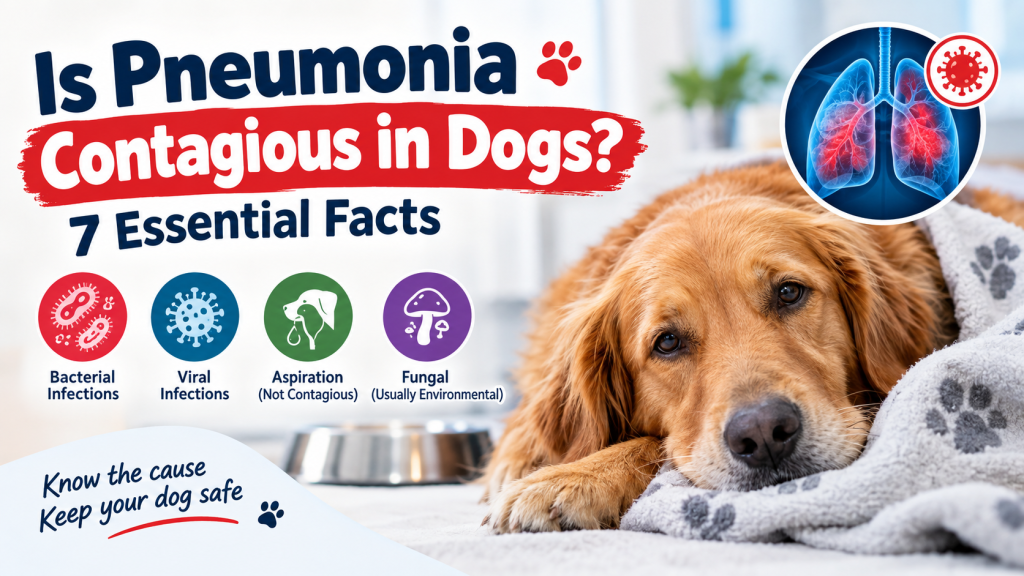
Is Pneumonia Contagious in Dogs? 7 Essential Facts
If your dog has been diagnosed with pneumonia, one of the first questions you may have is: is pneumonia contagious in dogs? The answer depends largely on what caused the pneumonia. Pneumonia is not one single disease. It is inflammation and infection affecting the lungs, and different causes can behave very differently.
Some types of pneumonia can be associated with infectious viruses or bacteria that spread between dogs. Other forms, such as aspiration pneumonia caused by inhaling food, liquid, or vomit, are not contagious from one dog to another. Fungal pneumonia is also generally associated with environmental exposure rather than direct dog-to-dog transmission.
Understanding the cause is therefore important when deciding whether an affected dog should be separated from other pets.
What Is Pneumonia in Dogs?
Pneumonia is inflammation of the lungs that can interfere with normal oxygen exchange. Fluid and inflammatory material can build up in the airways and air sacs, making breathing more difficult.
Dogs can develop pneumonia for several reasons, including bacterial infections, viral infections, fungal infections, parasites, or aspiration of foreign material. The condition can range from relatively mild respiratory illness to severe breathing difficulty requiring urgent veterinary treatment.
A dog with pneumonia may develop a cough, tiredness, reduced appetite, fever, nasal discharge, wheezing, or difficulty breathing. Severe cases can result in inadequate oxygen levels and respiratory distress.
Because breathing problems can become serious, suspected pneumonia should be evaluated by a veterinarian rather than treated solely at home.
Is Pneumonia Contagious in Dogs?
So, is pneumonia contagious in dogs? Sometimes, but not always.
Pneumonia itself is a condition rather than a single contagious organism. Whether it can spread depends on the underlying cause.
For example, bacterial or viral respiratory infections can spread between dogs and may contribute to pneumonia. Close contact with infected dogs can increase exposure to respiratory pathogens. This is particularly relevant in places where many dogs are together, such as boarding facilities, kennels, shelters, and daycare environments.
On the other hand, aspiration pneumonia occurs when material such as food, liquid, or vomit enters the lungs. This type does not spread from an affected dog to another dog.
Fungal pneumonia is also generally linked to inhalation of fungal spores from the environment rather than transmission directly from one dog to another.
Therefore, a veterinarian needs to determine the likely cause before you can know how much concern there should be about transmission.
1. Bacterial Pneumonia Can Be Associated With Contagious Infections
Bacteria can play an important role in canine respiratory disease. Some bacterial infections can spread between dogs, especially when animals are kept in close contact.
For example, Bordetella bronchiseptica is associated with canine respiratory disease and can be involved in infections affecting the lower respiratory tract. Dogs frequently exposed to other dogs, including those in boarding or group settings, may have greater exposure to respiratory pathogens.
However, it is important not to assume that every case of bacterial pneumonia is automatically contagious. Some bacteria can be part of a dog’s normal respiratory environment and may contribute to pneumonia when the dog’s natural defenses are weakened.
The specific organism, underlying illness, vaccination status, and living environment can all influence the risk.
If your veterinarian suspects an infectious respiratory disease, ask whether your dog should be kept away from other dogs during recovery.
2. Viral Infections May Spread Between Dogs
Viruses are another important cause of respiratory disease in dogs. Certain viral infections can damage the respiratory tract and make dogs more vulnerable to secondary bacterial infections and pneumonia.
Canine distemper, canine influenza, and other respiratory viruses are examples of infections that can cause respiratory signs and, in some circumstances, pneumonia.
Canine distemper is particularly important because it is highly infectious and can cause respiratory signs, including pneumonia. Transmission commonly occurs through respiratory secretions from infected animals. Vaccination is an important preventive measure against canine distemper.
Canine influenza can also spread between dogs through respiratory droplets and contaminated objects. Some infected dogs may develop pneumonia, particularly when disease becomes severe or secondary infections occur.
This is why identifying the underlying infection matters when answering the question, is pneumonia contagious in dogs?
3. Aspiration Pneumonia Is Not Contagious
Aspiration pneumonia happens when a dog inhales material into the lungs instead of swallowing it normally.
The material may include vomit, food, liquid medication, or other substances. Dogs with swallowing problems, certain neurological conditions, abnormalities of the esophagus, or recent anesthesia may be at increased risk. Improper administration of liquid medication can also contribute to aspiration.
Unlike an infectious respiratory disease, aspiration pneumonia is caused by inhaling foreign material. Therefore, it is not considered contagious between dogs.
A dog with aspiration pneumonia can still be seriously ill, however. The inflammation and infection in the lungs may interfere with breathing and can require veterinary treatment.
Owners should never assume that a dog is safe simply because its pneumonia is not contagious. The severity of the condition still matters.
4. Fungal Pneumonia Usually Comes From the Environment
Fungal pneumonia occurs when fungal organisms or spores reach the lungs. Dogs can encounter fungal spores in the environment, including soil and other areas where certain fungi are present.
Merck Veterinary Manual notes that fungal pneumonia is generally associated with environmental exposure rather than spread directly from one animal to another.
This means that simply being near a dog with fungal pneumonia does not necessarily mean another dog will catch pneumonia from it.
However, environmental exposure may affect multiple animals living in the same area. If several pets develop respiratory problems, tell your veterinarian about their environment, recent travel, outdoor exposure, and other possible sources.
Common Symptoms of Pneumonia in Dogs
Recognizing symptoms early can help you seek veterinary care promptly.
Common signs may include:
- Persistent or worsening cough
- Difficulty breathing
- Rapid or labored breathing
- Nasal discharge
- Wheezing or abnormal breathing sounds
- Fever
- Low energy or lethargy
- Reduced appetite
- Weakness
- Exercise intolerance
- Blue or bluish-looking gums in severe cases
Veterinary sources identify coughing, lethargy, fever, appetite changes, and respiratory difficulty among the important clinical signs associated with pneumonia.
Not every dog will show all of these symptoms. Some signs may initially appear mild and become more noticeable as the disease progresses.
When Is Dog Pneumonia an Emergency?
Breathing difficulty should always be taken seriously.
If your dog is struggling to breathe, has severe respiratory distress, or develops blue or bluish gums, seek emergency veterinary care. These signs can indicate that the dog is not receiving enough oxygen.
Other reasons to contact a veterinarian promptly include persistent coughing, significant weakness, loss of appetite combined with respiratory symptoms, fever, or rapidly worsening symptoms.
Do not wait for symptoms to become severe before contacting a veterinary professional.
How Do Veterinarians Diagnose Pneumonia?
A veterinarian may begin by asking about your dog’s symptoms, vaccination history, recent contact with other animals, travel, medications, previous illnesses, and possible exposure to infectious diseases.
A physical examination can provide important information. The veterinarian may listen to the lungs for abnormal respiratory sounds.
Chest X-rays are commonly used when pneumonia is suspected because they can reveal changes in the lungs associated with inflammation or infection. Depending on the situation, additional blood tests, airway samples, cultures, or other diagnostic tests may be recommended.
Diagnosis is important because treatment depends on the underlying cause. A viral infection, bacterial infection, fungal infection, parasite, and aspiration event do not necessarily require the same approach.
How Is Pneumonia in Dogs Treated?
Treatment depends on the cause and severity of the pneumonia.
Dogs with bacterial pneumonia may require antibiotics selected by a veterinarian. In some cases, laboratory testing and bacterial culture can help determine which medication is most appropriate.
Dogs with severe breathing problems may require oxygen therapy and hospitalization. Supportive treatment can also include hydration, nutritional support, nebulization, or other therapies depending on the dog’s condition.
Fungal pneumonia requires a different treatment approach and may involve antifungal medication for an extended period. Aspiration pneumonia also requires treatment based on the severity of lung inflammation, infection, and the reason aspiration occurred.
Never give your dog leftover antibiotics or human medication without veterinary guidance. The wrong medication or dose can cause additional problems and may delay appropriate treatment.
Should a Dog With Pneumonia Be Separated From Other Dogs?
If the cause of pneumonia has not been determined, it is reasonable to ask your veterinarian whether temporary separation is appropriate.
When a contagious respiratory infection is suspected, limiting contact with other dogs can reduce potential transmission. This is particularly important for dogs living in multi-pet households or those that regularly visit daycare, kennels, dog parks, or boarding facilities.
Good hygiene can also help. Wash your hands after handling a sick dog, clean shared bowls and surfaces appropriately, and avoid allowing an ill dog to share close-contact spaces with healthy dogs until your veterinarian advises that it is safe.
Merck Veterinary Manual recommends separating dogs with kennel cough from other dogs and practicing good hygiene because infectious respiratory disease can spread rapidly among susceptible animals.
Can Dogs Get Pneumonia From Humans?
A common concern among pet owners is whether a person with pneumonia can pass the condition to their dog.
PetMD notes that dogs generally do not get pneumonia from humans because the organisms responsible for respiratory infections in dogs differ from those commonly responsible for human pneumonia.
Nevertheless, basic hygiene remains a good practice. Wash your hands regularly, avoid unnecessary close contact when either you or your pet is sick, and follow medical or veterinary advice about infectious diseases.
If your dog develops respiratory symptoms after someone in the household has been ill, contact your veterinarian rather than assuming the cause.
How Can You Reduce the Risk of Pneumonia?
You cannot prevent every case of pneumonia, but several measures can reduce the risk of infectious respiratory disease.
Keeping your dog’s vaccinations current is important because certain vaccine-preventable infections can cause serious respiratory disease. Your veterinarian can recommend a vaccination schedule based on your dog’s age, lifestyle, health, and exposure risk.
You can also reduce exposure to sick animals. If a dog at a boarding facility or daycare is experiencing a respiratory outbreak, ask the facility about its infection-control procedures.
Good nutrition, appropriate veterinary care, parasite prevention, and management of underlying health problems can also support overall health.
Avoid giving liquid medications too quickly or forcing food and liquids into a dog that cannot swallow normally, because aspiration can contribute to pneumonia.
Frequently Asked Questions
Is pneumonia contagious in dogs?
It can be, depending on the cause. Pneumonia associated with contagious bacterial or viral infections may spread between dogs. Aspiration pneumonia and most fungal pneumonia are not considered directly contagious between dogs.
Can a dog with pneumonia be around other dogs?
That depends on the underlying cause. If an infectious respiratory disease is suspected, separating the sick dog from other dogs may help reduce transmission. Ask your veterinarian when normal contact can safely resume.
Can pneumonia kill a dog?
Severe pneumonia can become life-threatening, particularly when breathing is significantly impaired or oxygen levels fall. Early veterinary assessment and appropriate treatment can improve the chances of recovery.
How long does pneumonia last in dogs?
There is no single recovery time because pneumonia has many causes and different levels of severity. Some dogs improve relatively quickly with appropriate treatment, while severe or complicated cases can require prolonged care and follow-up.
Can dogs recover from pneumonia?
Many dogs can recover when pneumonia is identified and treated appropriately. Prognosis depends on the underlying cause, severity of disease, the dog’s overall health, and how quickly treatment begins.
Final Thoughts
So, is pneumonia contagious in dogs? The answer is sometimes. Pneumonia caused by contagious bacterial or viral infections can be associated with transmission between dogs, while aspiration pneumonia is not contagious and fungal pneumonia is generally linked to environmental exposure.
The most important step is finding out what caused the pneumonia. Symptoms such as coughing, fever, lethargy, nasal discharge, or breathing difficulty should not be ignored. Severe breathing problems or bluish gums require urgent veterinary attention.
If your dog has pneumonia or is showing signs of respiratory illness, contact a veterinarian for an accurate diagnosis and individualized treatment plan. Keeping a sick dog away from other dogs until the cause is understood can also be a sensible precaution.
This article is for general educational purposes and does not replace diagnosis or treatment from a licensed veterinarian.