Tonsillitis vs. Strep Throat: 7 Powerful Ways to Tell the Difference
A sore throat can make swallowing uncomfortable, speaking difficult, and everyday activities frustrating. Because several throat conditions can cause similar symptoms, it is easy to wonder whether you have a common throat infection, tonsillitis, or strep throat.
Understanding strep throat vs tonsillitis can help you recognize the differences and understand when medical evaluation may be appropriate. Although these conditions can overlap, they are not exactly the same. Tonsillitis describes inflammation of the tonsils, while strep throat is an infection caused by specific bacteria called group A Streptococcus.
This guide explains seven important ways these conditions can differ, including their causes, symptoms, testing, treatment, and recovery.
What Is Tonsillitis?
Tonsillitis occurs when the tonsils become inflamed or infected. The tonsils are two areas of tissue located at the back of the throat and are part of the body’s immune system.
Tonsillitis can be caused by viruses or bacteria. Viral infections are common causes, and the same viruses responsible for colds and other respiratory infections may sometimes cause tonsillitis.
Bacterial infections can also cause tonsillitis. Group A Streptococcus is one possible bacterial cause, which means a person can have tonsillitis and strep throat at the same time.
Common symptoms may include:
- Sore throat
- Red or swollen tonsils
- Pain when swallowing
- Fever
- Swollen lymph nodes in the neck
- Bad breath
- Changes in the voice
- White or yellow patches on the tonsils
The exact symptoms can vary depending on the underlying cause.
What Is Strep Throat?
Strep throat is a bacterial infection caused by group A Streptococcus bacteria. It primarily affects the throat and can cause a sudden, painful sore throat.
Strep throat is contagious and can spread through respiratory droplets or close contact with an infected person.
Typical symptoms can include a sudden sore throat, pain while swallowing, fever, swollen lymph nodes in the front of the neck, and red spots on the roof of the mouth. Some people may also develop swollen or red tonsils, sometimes with white patches.
Unlike many viral throat infections, strep throat generally does not cause typical cold symptoms such as coughing or a runny nose.
Because symptoms can overlap with other infections, a healthcare professional may use a rapid strep test or throat culture to determine whether group A Streptococcus is present.
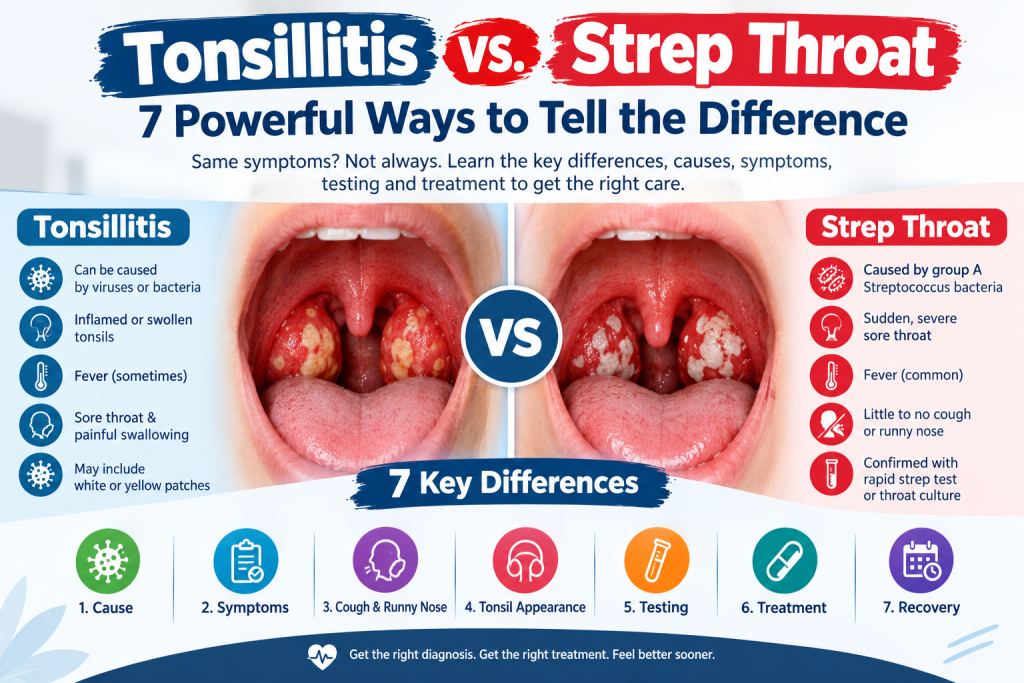
Strep Throat vs Tonsillitis: 7 Important Differences
1. The Cause Can Be Different
One of the biggest differences in strep throat vs tonsillitis is the cause.
Tonsillitis is a description of inflammation of the tonsils rather than one specific infection. Viruses are common causes, but bacteria can also cause it.
Strep throat, on the other hand, specifically refers to an infection caused by group A Streptococcus bacteria.
This distinction matters because treatment depends partly on what is causing the symptoms. Antibiotics are used for confirmed bacterial infections such as strep throat, but they do not treat viral infections.
2. The Symptoms May Appear Differently
Both conditions can cause throat pain and difficulty swallowing, but the pattern of symptoms can provide clues.
Strep throat often begins suddenly. A person may develop a painful sore throat and fever without the typical symptoms of a cold.
Tonsillitis can also begin quickly, especially when caused by an infection. However, the symptoms may vary because tonsillitis can result from different viruses or bacteria.
Symptoms associated with tonsillitis can include swollen tonsils, throat discomfort, fever, swollen lymph nodes, and difficulty swallowing.
Because symptoms overlap, you should not rely on symptoms alone to determine whether you have strep throat.
3. Cough and Runny Nose Can Provide a Clue
Another useful distinction is the presence of respiratory symptoms.
Coughing, sneezing, a runny nose, hoarseness, or conjunctivitis are more commonly associated with viral infections than with classic strep throat.
If a sore throat occurs together with a prominent cough and runny nose, a viral respiratory infection may be more likely.
However, symptoms are not a substitute for professional evaluation. A person can have more than one infection or experience symptoms that do not follow the typical pattern.
This is why testing may be recommended when strep throat is suspected.
4. The Tonsils Can Look Different
The appearance of the tonsils may also provide information.
With tonsillitis, the tonsils may appear red, swollen, and enlarged. White or yellow patches can sometimes develop, depending on the cause.
Strep throat can also cause red and swollen tonsils, and white patches or streaks of pus may be present.
This means that seeing white spots on the tonsils does not automatically prove that someone has strep throat.
A visual examination can help a healthcare professional assess the throat, but laboratory testing may be necessary to confirm a group A Streptococcus infection.
5. Testing Is More Important for Suspected Strep Throat
When a healthcare professional suspects strep throat, testing can help confirm the diagnosis.
A rapid antigen detection test can provide results relatively quickly. In some situations, a throat culture may also be used.
Testing is useful because different infections can produce similar symptoms. Treating someone for strep throat without confirming the infection may expose them to unnecessary antibiotics.
For children and teenagers, follow-up testing may be recommended after a negative rapid test depending on clinical guidance and the healthcare setting.
If you have significant throat pain, fever, swollen lymph nodes, or other symptoms that make strep throat possible, speak with a healthcare professional about whether testing is appropriate.
6. Treatment Can Be Different
Treatment is another major difference in strep throat vs tonsillitis.
Because tonsillitis can have different causes, treatment depends on the underlying infection.
If tonsillitis is caused by a virus, treatment generally focuses on relieving symptoms while the immune system clears the infection. Rest, adequate fluids, and appropriate pain or fever relief may help.
If tonsillitis is caused by bacteria, a healthcare professional may recommend treatment directed at that bacterial infection.
Confirmed strep throat is commonly treated with antibiotics prescribed by a healthcare professional. Antibiotics can help shorten the duration of symptoms, reduce transmission, and lower the risk of certain complications.
It is important to take antibiotics exactly as prescribed and not use leftover antibiotics from an earlier illness.
Antibiotics should not be used to treat viral infections because they do not work against viruses.
7. The Potential Complications Are Not Exactly the Same
Most sore throat infections improve without serious problems, but some infections can cause complications.
Untreated strep throat can sometimes lead to complications such as scarlet fever, peritonsillar abscess, or, more rarely, rheumatic fever and kidney inflammation.
Tonsillitis can also occasionally lead to complications, particularly when the infection is severe or does not improve.
A collection of pus beside the tonsil, known as a peritonsillar abscess, can cause severe throat pain and difficulty opening the mouth. This requires prompt medical attention.
These complications are uncommon, but understanding warning signs is important.
Can You Have Tonsillitis and Strep Throat at the Same Time?
Yes.
Tonsillitis describes inflammation of the tonsils, while strep throat identifies an infection caused by group A Streptococcus.
Because group A Streptococcus can infect the throat and cause swollen tonsils, a person can have strep throat with tonsillitis.
This is one reason the terms are sometimes confused.
Think of it this way: tonsillitis describes what is happening to the tonsils, while strep throat describes a specific bacterial cause of a throat infection.
How Is Strep Throat Diagnosed?
A healthcare professional may examine your throat, ask about symptoms, check for swollen lymph nodes, and consider how quickly the illness developed.
If strep throat is suspected, testing may be performed.
A rapid strep test looks for evidence of group A Streptococcus and can provide results quickly. A throat culture involves collecting a sample from the throat and sending it for laboratory testing.
Not every sore throat requires antibiotics. Testing and clinical evaluation can help determine whether antibiotics are appropriate.
How Long Does Tonsillitis Last?
The duration depends on the underlying cause.
Viral infections often improve as the immune system clears the infection. Bacterial infections may require specific treatment.
If symptoms are getting worse rather than improving, or if severe symptoms develop, medical advice should be sought.
Persistent or recurrent tonsillitis may also require further evaluation.
How Long Does Strep Throat Last?
With appropriate treatment, people with confirmed strep throat often begin to feel better within a few days.
However, the full recovery period can vary from person to person.
If antibiotics are prescribed, they should be taken according to the healthcare professional’s instructions even if symptoms improve before the medication is finished.
People with strep throat should also follow medical advice about when it is appropriate to return to school, work, or other close-contact activities.
When Should You See a Healthcare Professional?
A sore throat does not always require urgent medical care, but certain symptoms deserve prompt evaluation.
Seek medical attention if you experience:
- Severe or worsening throat pain
- Difficulty breathing
- Difficulty swallowing liquids
- Drooling because swallowing is difficult
- Significant swelling in the throat or neck
- A muffled or unusual voice
- Difficulty opening your mouth
- Persistent high fever
- Signs of dehydration
- Symptoms that are worsening instead of improving
Emergency symptoms such as serious breathing difficulty should receive immediate medical attention.
Children with severe throat symptoms, dehydration, unusual sleepiness, or breathing difficulties should also be evaluated promptly.
Can Strep Throat Be Prevented?
There is no guaranteed way to prevent every case of strep throat, but good hygiene can reduce the chance of spreading infections.
Wash your hands regularly, especially after coughing or sneezing. Avoid sharing drinking glasses, utensils, or personal items with someone who is sick.
Cover coughs and sneezes and clean frequently touched surfaces when someone in the household has an infectious illness.
If you are diagnosed with strep throat, follow your healthcare professional’s advice about treatment and reducing transmission.
Home Care for a Sore Throat
Whether a sore throat is caused by a viral illness or another condition, several basic measures may make you more comfortable.
Drink enough fluids to prevent dehydration. Warm liquids may soothe the throat, while cool drinks or ice pops may also provide temporary relief.
Getting adequate rest can help your body recover.
Adults and older children may benefit from warm salt-water gargles if they can gargle safely without swallowing the solution.
Over-the-counter pain or fever medicines may also help some people, but they should be used according to the product directions and individual medical advice.
Children should not be given aspirin because of the risk of serious complications.
Frequently Asked Questions
Is strep throat the same as tonsillitis?
No. Tonsillitis refers to inflammation of the tonsils and can be caused by viruses or bacteria. Strep throat is a bacterial infection caused by group A Streptococcus. Strep throat can cause tonsillitis.
Which is worse, strep throat or tonsillitis?
The severity varies from person to person and depends on the underlying cause. Neither term alone determines how severe an illness will be. A healthcare professional can evaluate symptoms and determine whether testing or treatment is needed.
Can tonsillitis go away without antibiotics?
Yes, if tonsillitis is caused by a virus, it generally does not require antibiotics. However, bacterial tonsillitis may require specific treatment. The cause should be considered before using antibiotics.
Does white stuff on the tonsils mean strep throat?
Not necessarily. White patches can occur with strep throat, but they may also occur with other throat infections. Testing may be necessary to determine whether group A Streptococcus is responsible.
Can adults get strep throat?
Yes. Although strep throat is particularly common among school-aged children, adults can also develop the infection.
Final Thoughts
Understanding strep throat vs tonsillitis can make it easier to recognize why these terms are often confused. Tonsillitis describes inflammation of the tonsils and can result from several types of infections, while strep throat is specifically caused by group A Streptococcus bacteria.
Both conditions can cause sore throat, difficulty swallowing, fever, and swollen tonsils. Because symptoms can overlap, appearance alone cannot always determine the cause.
If strep throat is suspected, appropriate testing can help confirm the infection and determine whether antibiotic treatment is needed. For severe symptoms, breathing or swallowing difficulties, dehydration, or symptoms that continue to worsen, seek medical attention promptly.
Reliable diagnosis and appropriate treatment are more important than trying to identify the infection based only on symptoms.