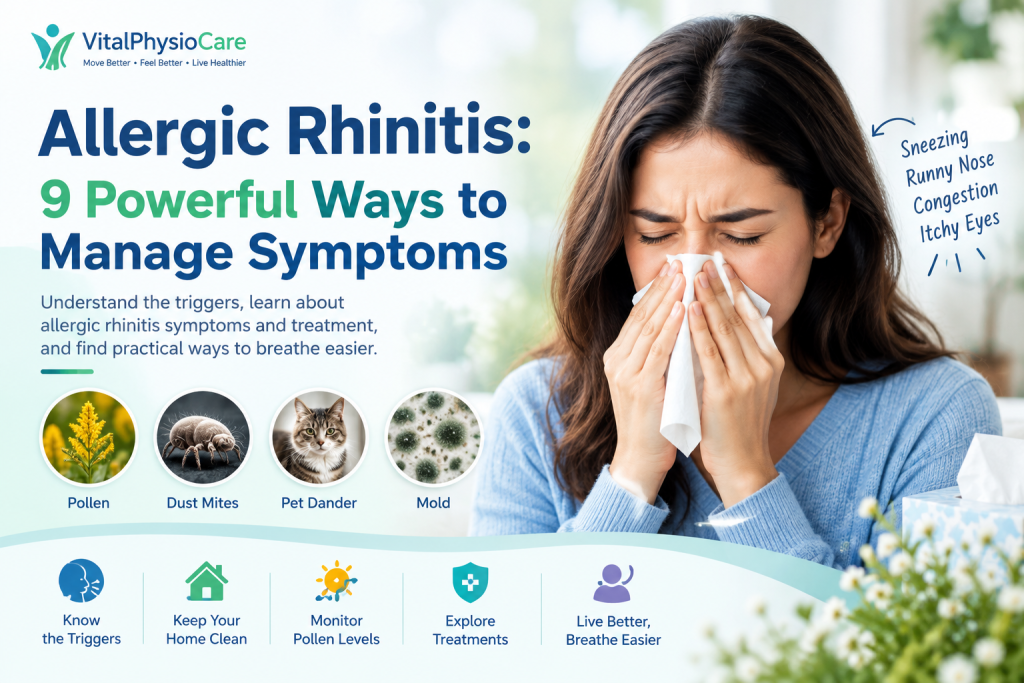
Allergic Rhinitis: 9 Powerful Ways to Manage Symptoms
Allergic rhinitis is a common condition that causes sneezing, a runny nose, nasal congestion, and itching when the immune system reacts to substances such as pollen, dust mites, or pet dander. These symptoms may occur during particular seasons or continue throughout the year, depending on the allergens a person encounters.
Although allergic rhinitis is not usually dangerous, it can interfere with sleep, concentration, exercise, and everyday activities. Understanding the triggers and choosing suitable treatments can help people manage symptoms more effectively.
This guide explains the common causes, symptoms, diagnosis, and allergic rhinitis symptoms and treatment, along with nine practical strategies for reducing discomfort.
What Is Allergic Rhinitis?
Allergic rhinitis is an inflammatory reaction inside the nose caused by exposure to an allergen. When a sensitive person breathes in a substance that triggers their allergy, the immune system releases chemicals, including histamine. These chemicals contribute to sneezing, itching, swelling, and increased mucus production.
The condition is often called hay fever, although it does not necessarily cause a fever and can occur without exposure to hay.
There are two main types:
1. Seasonal Allergic Rhinitis
Seasonal allergic rhinitis commonly occurs when pollen levels rise during particular times of the year. Tree pollen, grass pollen, and weed pollen can trigger symptoms, depending on the region and season.
People may notice worsening symptoms when spending time outdoors, especially when pollen levels are high.
2. Perennial Allergic Rhinitis
Perennial allergic rhinitis can cause symptoms throughout the year. Common triggers include dust mites, indoor mold, and animal dander.
People with this type may experience persistent nasal congestion or sneezing, particularly in environments where their triggers are present.
Common Symptoms of Allergic Rhinitis
Recognizing the symptoms can help you decide when to try self-care and when to seek professional advice.
Common symptoms include:
- Frequent sneezing, especially after exposure to allergens.
- A runny nose with clear, watery discharge.
- A blocked or stuffy nose.
- Itching inside the nose, throat, or roof of the mouth.
- Red, itchy, or watery eyes.
- Mucus dripping down the back of the throat.
- Coughing or throat irritation.
- Reduced sense of smell.
- Difficulty sleeping because of nasal congestion.
Symptoms can begin shortly after contact with an allergen. Their severity varies from person to person and may depend on the type and amount of exposure.
Some symptoms overlap with those of a common cold. However, itchy eyes and repeated sneezing after exposure to pollen or dust may suggest an allergy. A cold can also cause a sore throat, fever, or general illness. These differences are not enough to confirm a diagnosis on their own.
What Causes Allergic Rhinitis?
Allergic rhinitis develops when the immune system reacts to a substance that is generally harmless to most people.
Common triggers include:
Pollen: Trees, grasses, and weeds release pollen that can travel through the air and trigger seasonal symptoms.
Dust mites: These microscopic organisms live in household dust and commonly occur in bedding, upholstered furniture, and carpets.
Pet dander: Tiny flakes of skin from cats, dogs, and other animals can trigger allergy symptoms.
Mold: Mold spores may be present in damp rooms, bathrooms, basements, and other poorly ventilated areas.
Workplace allergens: Flour dust, wood dust, and certain other airborne substances can cause symptoms in some workers.
A family history of allergies, asthma, or eczema may increase the likelihood of developing allergic conditions. However, not everyone with a family history will develop allergic rhinitis.
9 Powerful Ways to Manage Allergic Rhinitis Symptoms
The most suitable approach depends on your symptoms, triggers, age, and medical history. These nine strategies can help reduce exposure and improve symptom control.
1. Identify and Avoid Your Allergy Triggers
Identifying the substances that worsen your symptoms is an important first step.
Pay attention to when sneezing, itching, or congestion occurs. For example, symptoms that worsen outdoors during pollen season may suggest a pollen allergy. Symptoms that persist indoors may be associated with dust mites, mold, or pets.
Keep a simple symptom diary that records where you were, what you were doing, and when symptoms appeared. This information may help a healthcare professional identify possible triggers.
Avoidance does not always eliminate symptoms completely, but reducing exposure can make a meaningful difference.
2. Keep Your Home Clean and Reduce Dust
Household dust can contain allergens that aggravate nasal symptoms. Regular cleaning can help reduce exposure, particularly in bedrooms and other areas where you spend considerable time.
Consider the following steps:
- Wipe surfaces with a damp cloth instead of dry dusting.
- Wash bed sheets and pillowcases regularly.
- Use allergen-resistant mattress and pillow covers if dust mites are a suspected trigger.
- Vacuum carpets and upholstered furniture using a vacuum with a HEPA filter, when practical.
- Keep clutter to a minimum so surfaces are easier to clean.
If cleaning makes your symptoms worse, consider asking someone else to vacuum or dust. A well-fitted mask may also reduce exposure while cleaning.
3. Monitor Pollen Levels Before Going Outdoors
People with seasonal allergies may benefit from checking local pollen forecasts.
When pollen levels are high, consider limiting prolonged outdoor activities or choosing times when exposure is lower. Keep windows closed when necessary and use air conditioning with appropriate filters if available.
Wraparound sunglasses can help reduce pollen exposure to the eyes. After spending time outdoors, changing clothes and showering may also remove pollen from your skin and hair.
These precautions can be especially useful during periods when your symptoms regularly flare up.
4. Try Saline Nasal Spray or Rinsing
Saline solutions contain salt water and can help loosen mucus and remove some allergens from the nasal passages.
A ready-made saline nasal spray is a convenient option for many people. Nasal irrigation devices may also help, provided they are used correctly.
Important safety advice: For nasal rinsing, use only distilled, sterile, or previously boiled and cooled water. Never use untreated tap water. Clean and dry the device according to its instructions after each use.
Saline rinsing may relieve irritation and congestion, but it does not replace medication when symptoms require additional treatment.
5. Discuss Antihistamines With a Pharmacist
Antihistamines block the effects of histamine, a chemical involved in allergic reactions. They may help relieve sneezing, itching, a runny nose, and itchy or watery eyes.
They are available in different forms, including tablets, liquids, nasal sprays, and eye drops.
Some oral antihistamines cause drowsiness, which can affect driving and other activities requiring alertness. Ask a pharmacist or healthcare professional which option is suitable for your age, symptoms, other medications, and health conditions.
Antihistamines can be helpful for many people, but they may not adequately control every symptom, especially persistent nasal congestion.
6. Ask About Corticosteroid Nasal Sprays
Intranasal corticosteroid sprays reduce inflammation inside the nose. They are considered among the most effective treatments for allergic rhinitis, particularly when congestion is persistent or symptoms affect several parts of the nose.
These sprays often work best with regular use according to the product instructions or a healthcare professional’s advice. Improvement may take several days, and full benefit can take longer.
Correct technique matters. Aim the spray slightly outward, away from the middle wall of the nose, and follow the product instructions. Possible side effects include dryness, irritation, and nosebleeds.
Ask a healthcare professional or pharmacist whether this treatment is appropriate for you, particularly if you are treating a child or have recurrent nosebleeds.
7. Control Indoor Humidity and Mold
Damp environments can encourage mold growth, and mold spores can trigger allergy symptoms in sensitive people.
To reduce indoor mold exposure:
- Repair leaking pipes and roofs promptly.
- Dry wet surfaces and address condensation.
- Ventilate bathrooms and kitchens where possible.
- Avoid leaving damp clothing or towels in poorly ventilated rooms.
- Keep indoor spaces dry and deal with visible mold safely.
If your home has persistent dampness, correcting the underlying moisture problem is more useful than simply cleaning visible mold repeatedly.
Humidity control may also help create a more comfortable indoor environment, although the ideal approach depends on the local climate and the allergens involved.
8. Use Decongestants Carefully
Decongestants can temporarily reduce nasal blockage by narrowing swollen blood vessels inside the nose. They are available in nasal sprays, drops, and some oral products.
However, decongestants are not suitable for everyone. Certain products may be inappropriate for people with high blood pressure, heart conditions, glaucoma, or other health concerns.
Overusing decongestant nasal sprays can cause rebound congestion, in which the nose becomes blocked again or symptoms worsen. Follow the product label and professional advice; many nasal decongestants should not be used for more than three days, although product instructions can vary.
9. Consider Allergy Testing and Immunotherapy
If symptoms persist despite appropriate self-care and medication, a healthcare professional may recommend allergy testing.
Skin-prick tests and selected blood tests can help identify specific allergens. The results must be interpreted alongside your symptoms and medical history.
For some people with confirmed allergies that remain difficult to manage, allergen immunotherapy may be an option. This treatment gradually exposes the immune system to carefully selected allergens under a specialist’s guidance. It may be administered through injections or certain under-the-tongue preparations, depending on the allergen and available treatment.
Immunotherapy is not suitable for everyone and requires professional assessment. It can take months or longer to achieve its full benefit.
Allergic Rhinitis Symptoms and Treatment: When to See a Doctor
Although many cases can be managed with appropriate self-care, professional evaluation is important when symptoms are persistent, severe, or interfering with daily life.
Arrange a medical appointment if:
- Symptoms regularly disturb your sleep.
- Nasal congestion or sneezing affects your ability to work or study.
- Pharmacy treatments do not provide sufficient relief.
- You are unsure whether symptoms are caused by allergies, a cold, or another condition.
- You have asthma and your breathing symptoms are worsening.
- You experience frequent nosebleeds or persistent one-sided nasal blockage.
Seek emergency medical help if you develop severe difficulty breathing, throat or tongue swelling, or signs of a serious allergic reaction. Do not assume these symptoms are ordinary allergic rhinitis.
Allergic Rhinitis vs. a Common Cold
Allergic rhinitis and the common cold can cause similar nasal symptoms, but some differences may provide useful clues.
| Feature | Allergic rhinitis | Common cold |
|---|---|---|
| Cause | Reaction to an allergen | Viral infection |
| Sneezing | Often frequent | Can occur |
| Itchy eyes or nose | Common | Less typical |
| Fever | Not a usual feature | Sometimes occurs |
| Duration | May persist with exposure | Often improves within 1–2 weeks |
| Contagious | No | Yes |
These are general patterns, not a diagnostic test. Some infections last longer, and allergy symptoms can overlap with other conditions. Seek professional advice if symptoms are unusual, worsening, or persistent.
Frequently Asked Questions
Can allergic rhinitis be cured?
There is no single cure that works for everyone. However, avoiding triggers, using appropriate medicines, and considering immunotherapy when indicated can help many people control their symptoms.
Is allergic rhinitis contagious?
No. Allergic rhinitis results from an immune response to allergens, not from an infection that spreads between people.
Can allergic rhinitis affect sleep?
Yes. Nasal congestion and other symptoms may disturb sleep and contribute to daytime tiredness. If symptoms regularly interfere with rest, consult a healthcare professional about treatment options.
What is the most effective treatment for allergic rhinitis?
There is no single best option for every person. Intranasal corticosteroids are among the most effective treatments for overall nasal symptoms, while antihistamines may help with itching, sneezing, and a runny nose. A healthcare professional can help select treatment based on your symptoms and medical history.
Can children develop allergic rhinitis?
Yes. Children can develop seasonal or year-round nasal allergies. Parents should seek advice from a healthcare professional about suitable treatments and age-appropriate products.
Conclusion
Allergic rhinitis can cause persistent sneezing, nasal congestion, itching, and watery eyes, but its effects can often be reduced with the right management plan.
Identifying triggers, maintaining a clean and dry home, monitoring pollen exposure, and using saline rinses may help reduce discomfort. Appropriate medication and specialist assessment can provide additional relief when symptoms continue.
Understanding allergic rhinitis symptoms and treatment can help you make informed decisions about your care. If symptoms are severe, persistent, or affecting your sleep and everyday activities, speak with a qualified healthcare professional.
Medical disclaimer: This article is for educational purposes only and does not replace professional medical advice, diagnosis, or treatment.