
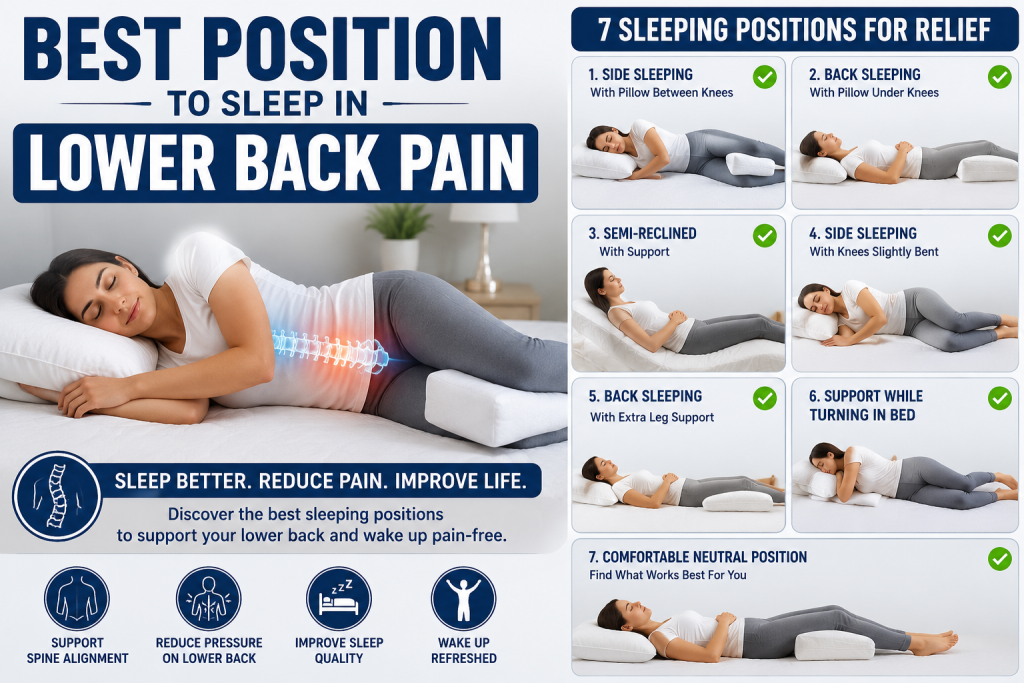
Best Position to Sleep in Lower Back Pain: 7 Sleeping Positions for Relief
Lower back pain can make something as simple as going to bed feel difficult. You may lie down hoping to relax, only to find yourself shifting positions repeatedly because your back feels stiff, sore, or uncomfortable. The way you sleep can influence how much stress is placed on your spine, pelvis, hips, and surrounding muscles. Choosing a supportive sleeping position may help reduce unnecessary pressure and make it easier to get comfortable.
The Best Position to Sleep in Lower Back Pain depends on your symptoms, body shape, mattress, and personal comfort. There is no single sleeping position that works perfectly for everyone. However, certain positions can help keep the spine in a more neutral alignment and reduce excessive twisting or arching during the night.
This guide explains seven practical sleeping positions that may help with lower back discomfort. It also covers pillow placement, mattress considerations, common mistakes, and situations in which professional medical advice is appropriate.
Why Sleeping Position Matters for Lower Back Pain

Your spine naturally has gentle curves. When you sleep in a position that significantly increases these curves or rotates your pelvis, certain muscles and joints may remain under unnecessary tension for hours.
A supportive sleeping position aims to keep your head, shoulders, pelvis, and legs comfortably aligned. This can reduce strain on tissues around the lower back and may make it easier for irritated muscles to relax.
The Best Position to Sleep in Lower Back Pain is generally one that feels comfortable while keeping your spine relatively neutral. If a position causes increasing pain, numbness, tingling, or significant stiffness, it may not be suitable for you.
1. Sleep on Your Side With a Pillow Between Your Knees
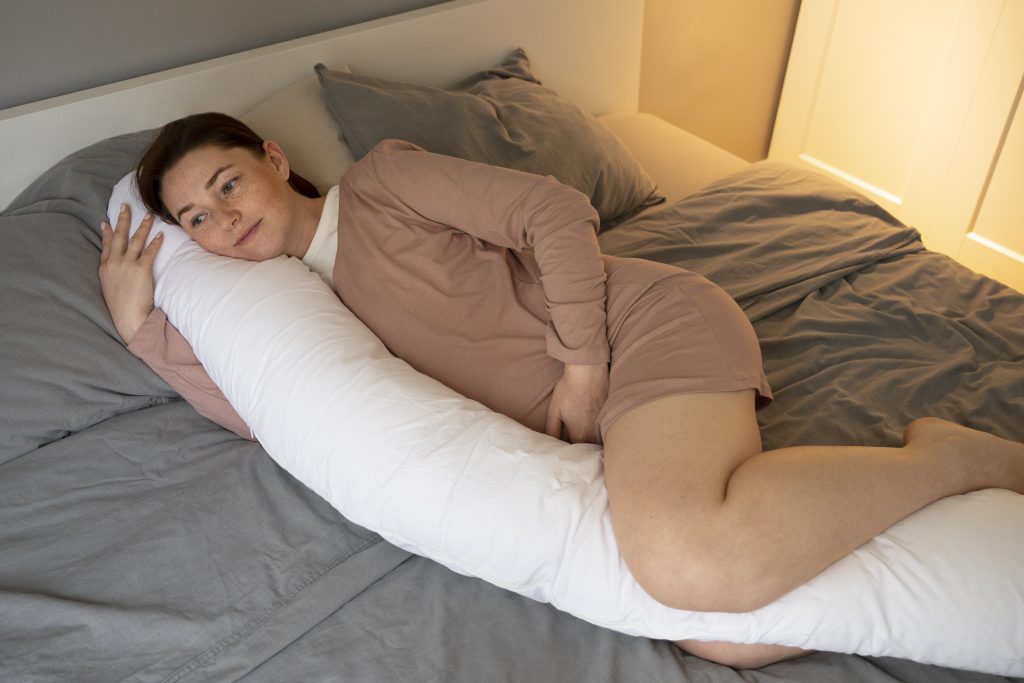
Side sleeping is one of the most comfortable options for many people experiencing lower back discomfort. Lie on either side with your knees slightly bent rather than pulling them tightly toward your chest.
Place a pillow between your knees. Ideally, the pillow should be thick enough to prevent your upper leg from dropping forward toward the mattress.
When your upper leg falls forward without support, your pelvis may rotate. A pillow between the knees can help keep the hips more level and reduce excessive twisting through the lower back.
If you prefer this position, choose a pillow under your head that keeps your neck aligned with the rest of your spine. Your head should not be pushed sharply upward or allowed to fall toward the mattress.
For many people, this can be an excellent Best Position to Sleep in Lower Back Pain, particularly when side sleeping already feels natural.
2. Sleep on Your Back With a Pillow Under Your Knees
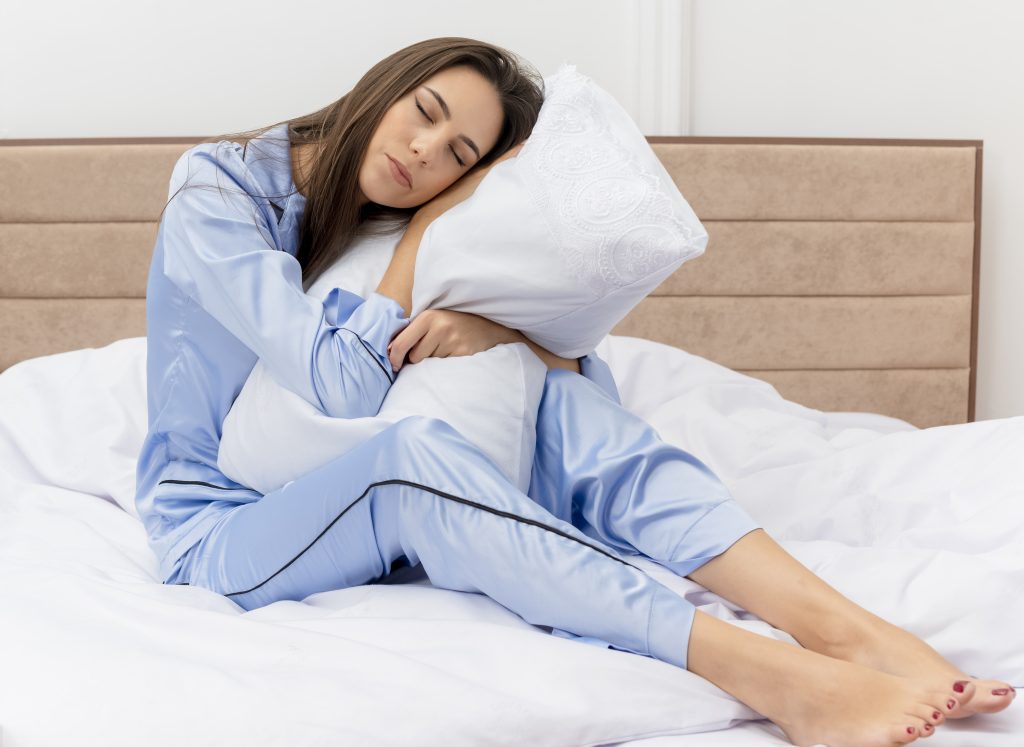
Back sleeping can be another useful option. Lie flat on your back and place a pillow underneath your knees.
The pillow slightly bends the knees and may reduce excessive arching in the lower back. It can also provide a more relaxed position for the hips and legs.
Your head pillow should provide enough support to keep your neck comfortable without pushing your chin excessively toward your chest.
If lying completely flat increases your discomfort, experiment with the height of the pillow beneath your knees. A small adjustment can sometimes make the position significantly more comfortable.
This is often recommended when looking for the Best Position to Sleep in Lower Back Pain because it can provide balanced support without requiring the spine to rotate.
3. Try a Semi-Reclined Sleeping Position

Some people find that a slightly reclined position is more comfortable than lying completely flat. This can be particularly useful if your lower back feels uncomfortable when your hips and knees are fully extended.
You can use an adjustable bed or a supportive reclining arrangement to elevate the upper body and slightly bend the knees.
The goal is not to sleep at a steep angle. Instead, aim for a relaxed position where your back and legs are comfortably supported.
Make sure you do not create a position that causes your neck to bend sharply forward. Good support should extend through your body rather than concentrating pressure around one area.
A semi-reclined setup may be worth trying if traditional side or back sleeping does not provide enough comfort.
4. Side Sleeping With Your Knees Slightly Bent
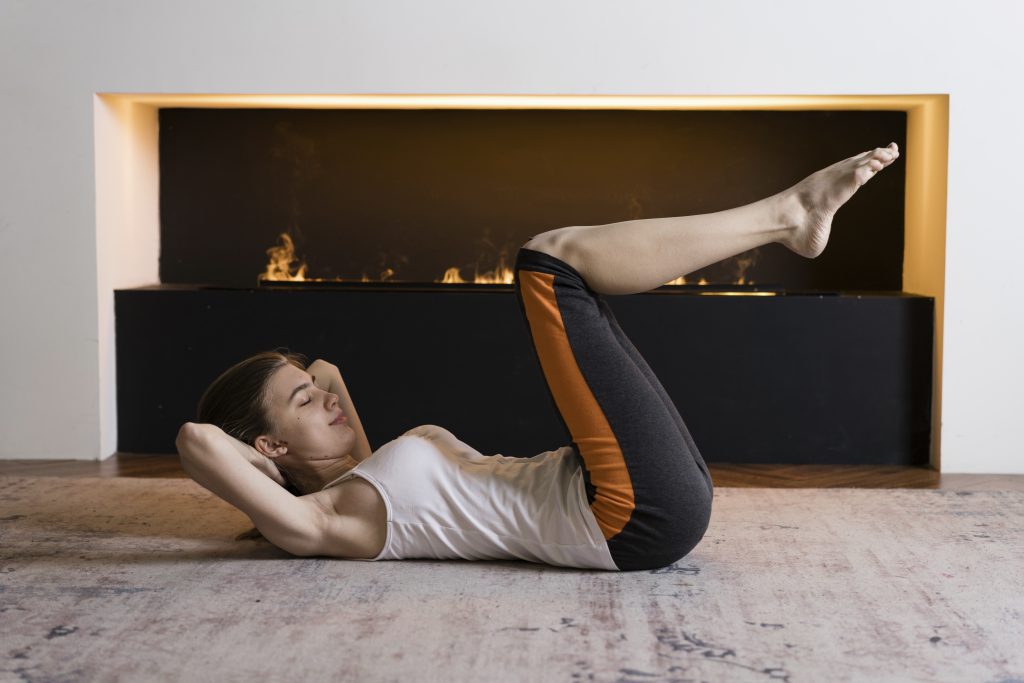
There is an important difference between relaxed side sleeping and curling into a tight fetal position.
For lower back discomfort, try lying on your side with your knees comfortably bent but not pulled tightly toward your chest. Keep your shoulders and hips facing generally forward.
You can place a pillow between your knees for additional support. If there is a gap between your waist and the mattress, a small amount of support may also help, provided it does not force your spine into an unnatural curve.
This position can be especially comfortable for people who naturally prefer sleeping on their side.
When considering the Best Position to Sleep in Lower Back Pain, comfort and alignment should be considered together. A position that feels comfortable initially but causes morning stiffness may need adjustment.
5. Sleep on Your Back With Additional Lower-Leg Support
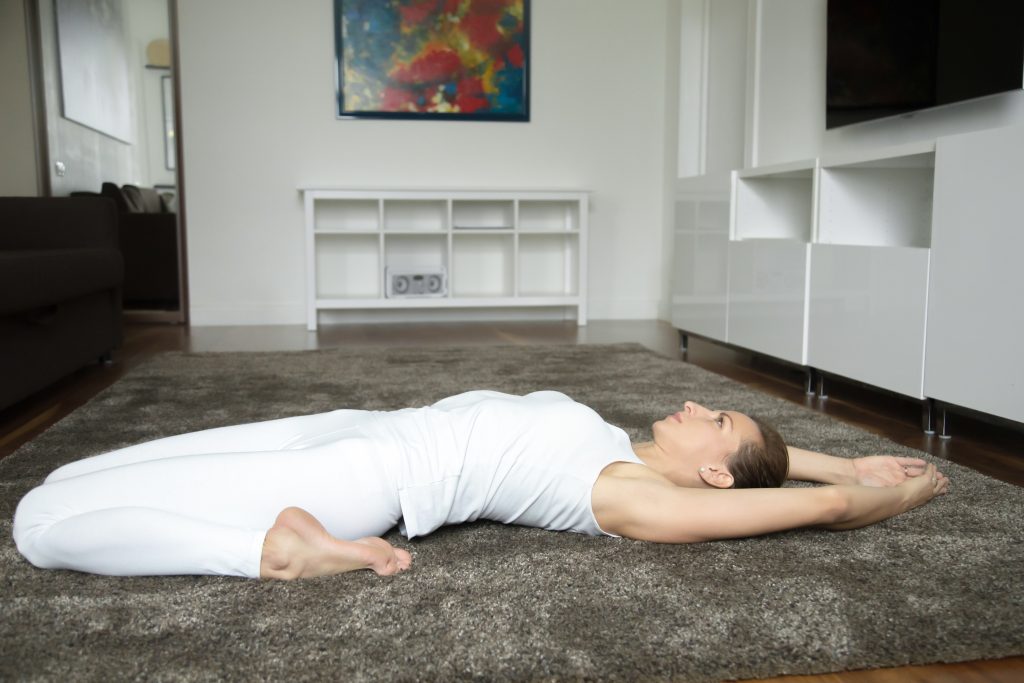
Another variation of back sleeping involves supporting both the knees and lower legs.
Instead of placing a small pillow directly under the knees, you can use a larger supportive pillow or cushion that allows the legs to rest comfortably.
This may help reduce tension through the hips and lower back while keeping the legs supported.
Avoid using an extremely high cushion that forces your hips into an uncomfortable angle. The objective is gentle support, not excessive elevation.
If you wake up with increased stiffness, experiment with the amount of support rather than assuming that more pillows are always better.
6. Use a Supportive Position When Turning in Bed

Your sleeping position is only part of the equation. The way you move between positions can also affect your comfort.
When turning from your back to your side, try moving your shoulders and hips together rather than twisting your upper body while your pelvis remains still.
Similarly, when getting out of bed, roll onto your side first, move your legs toward the edge of the bed, and use your arms to help push your upper body upright.
These movements can reduce sudden twisting and may be more comfortable when the lower back is already sensitive.
Finding the Best Position to Sleep in Lower Back Pain is helpful, but maintaining controlled movement throughout the night and when getting out of bed can also make a difference.
7. Find Your Most Comfortable Neutral Position

Not everyone benefits from exactly the same sleeping posture. Your body may respond differently depending on the cause of your pain, hip mobility, spinal alignment, and mattress.
Instead of forcing yourself into one specific position, focus on finding a neutral posture that allows you to relax.
Your spine should feel supported rather than aggressively bent, rotated, or compressed. Your hips should remain comfortable, and you should not experience worsening symptoms while lying down.
If you consistently wake up feeling better in one position, that position may be your practical Best Position to Sleep in Lower Back Pain.
Should You Sleep on Your Stomach With Lower Back Pain?

Stomach sleeping can be comfortable for some people, but it may increase stress on the lower back or neck depending on the individual’s posture.
When you lie on your stomach, your neck generally needs to rotate to one side so you can breathe. Your lower back may also remain more extended, particularly if your abdomen sinks into a soft mattress.
If stomach sleeping is the only position that feels comfortable, you do not necessarily need to stop immediately. Instead, experiment with a thinner head pillow and appropriate support under the pelvis if needed.
However, if stomach sleeping consistently increases your pain, stiffness, or other symptoms, consider trying side or back sleeping.
How to Choose the Right Pillow

Pillow placement can be just as important as your overall sleeping position.
For side sleepers, the pillow between the knees should provide enough separation to keep the hips relatively aligned. A pillow that is too thin may allow the upper knee to fall forward, while one that is excessively thick may push the hips into an uncomfortable position.
For back sleepers, a pillow under the knees can provide support and may reduce excessive lower-back arching.
Your head pillow should also match your sleeping position. Side sleepers generally need more height than back sleepers because the shoulder creates additional space between the head and mattress.
The right combination of pillows can make the Best Position to Sleep in Lower Back Pain significantly more comfortable.
Does Mattress Firmness Matter?
Your mattress can influence how your body feels during the night.
A mattress that is extremely soft may allow your hips to sink considerably, potentially changing the alignment of your lower back. On the other hand, an excessively firm mattress may create uncomfortable pressure around the hips and shoulders.
The ideal firmness is personal. Your body size, sleeping position, and comfort preferences all matter.
Rather than automatically choosing the firmest mattress available, focus on whether the mattress provides enough support without creating excessive pressure.
If your mattress is old, uneven, or visibly sagging, replacing it may be worth considering if it consistently contributes to poor sleep or morning discomfort.
Common Sleeping Mistakes That Can Make Back Pain Worse
One common mistake is sleeping in a position that causes prolonged twisting. For example, lying partly on your stomach with one leg pulled high to the side can rotate the pelvis.
Another mistake is using too many pillows. Excessive pillow height can change spinal alignment and create discomfort in the neck and upper back.
Staying completely still all night is also unnecessary. It is normal to change positions while sleeping. The goal is not to maintain one rigid posture but to avoid positions that repeatedly trigger symptoms.
Finally, do not ignore persistent or worsening pain simply because it happens at night. Sleep-related discomfort can sometimes be a sign that the underlying problem needs professional assessment.
Tips for Better Sleep With Lower Back Pain
Creating a comfortable bedtime routine may help your body relax before sleep. Gentle movement during the day can be useful for many people, while prolonged bed rest may not be beneficial for uncomplicated back pain.
Before going to bed, try to avoid activities that consistently aggravate your symptoms. Give yourself enough time to settle into a comfortable position rather than immediately trying to fall asleep in a posture that feels forced.
Keep frequently used items within easy reach so you do not repeatedly bend or twist.
If you wake during the night because of discomfort, change positions gradually rather than making sudden movements.
Remember that the Best Position to Sleep in Lower Back Pain should allow you to rest without repeatedly increasing your symptoms.
When Should You See a Healthcare Professional?
Most episodes of uncomplicated lower back pain improve with appropriate self-care, but some symptoms require medical evaluation.
Seek professional medical advice if your back pain is severe, persistent, repeatedly worsening, or interfering significantly with normal daily activities.
You should seek urgent medical attention if back pain occurs with new loss of bladder or bowel control, significant weakness or numbness in both legs, numbness around the groin or saddle area, or other serious symptoms.
Pain following a significant injury should also be assessed, particularly if you cannot move normally or the pain is severe.
A healthcare professional can evaluate the possible cause of your symptoms and recommend an appropriate treatment plan.
Final Thoughts
Finding a comfortable sleeping posture can be an important part of managing lower back discomfort. Side sleeping with a pillow between the knees and back sleeping with a pillow beneath the knees are two practical options to try first.
However, there is no universal sleeping position that works for everyone. Your mattress, pillow arrangement, body shape, symptoms, and preferred sleeping style all influence what feels best.
The Best Position to Sleep in Lower Back Pain is ultimately the position that allows you to sleep comfortably while keeping your spine supported and avoiding movements that aggravate your symptoms.
Try one position for several nights, make small adjustments to your pillow placement, and pay attention to how you feel when you wake up. If your pain continues, becomes severe, or is accompanied by concerning neurological symptoms, consult an appropriate healthcare professional rather than relying only on changes to your sleeping position.