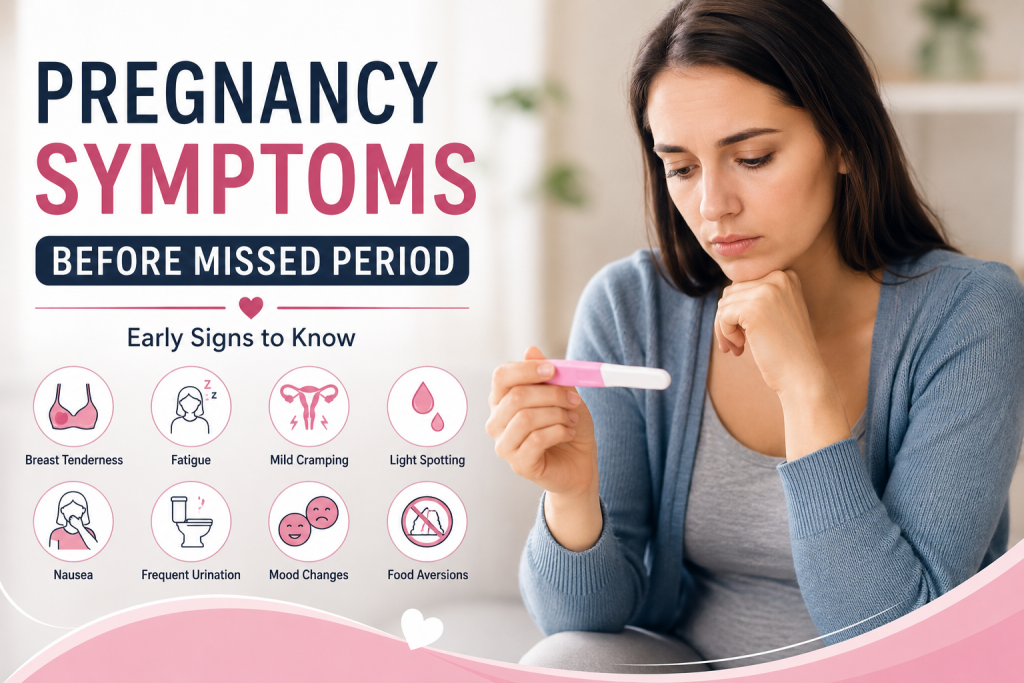
Pregnancy Symptoms Before Missed Period: Early Signs to Know
Wondering whether you could be pregnant before your period is due? Some people notice physical or hormonal changes very early, while others do not feel anything unusual. Pregnancy symptoms before missed period can sometimes provide clues, but they cannot confirm pregnancy on their own.
Early pregnancy symptoms can also be similar to premenstrual syndrome (PMS), stress, or other normal changes in the menstrual cycle. The most reliable way to find out whether you are pregnant is to take an appropriately timed pregnancy test.
Can Pregnancy Symptoms Start Before a Missed Period?
Yes, some people may notice changes before their expected period. After implantation, the body begins producing human chorionic gonadotropin (hCG), the hormone detected by pregnancy tests. However, the timing of implantation and the rise of hCG can vary, so symptoms and test results can differ from person to person.
Pregnancy symptoms before missed period may include breast tenderness, fatigue, mild cramping, light spotting, changes in taste or smell, increased urination, and changes in appetite.
It is also completely possible to be pregnant without experiencing noticeable symptoms at this stage. Every pregnancy is different.
1. Tender or Sensitive Breasts
One of the changes some people notice early is breast tenderness. Your breasts may feel sore, swollen, heavier, or more sensitive than usual.
Hormonal changes during early pregnancy can affect breast tissue. You may also notice that your nipples feel more sensitive or that the veins on your breasts appear more noticeable.
However, breast tenderness is not a definite pregnancy sign because it can also happen before your period. This is why pregnancy symptoms before missed period should be considered possible clues rather than proof of pregnancy.

2. Unusual Tiredness
Feeling unusually tired can occur during early pregnancy. Hormonal changes may contribute to fatigue, and some people describe feeling more exhausted than usual.
You might notice that normal activities seem more tiring or that you want to sleep earlier than you normally would.

Fatigue, however, has many possible causes. Poor sleep, stress, illness, changes in routine, and hormonal fluctuations can all make you tired. Therefore, tiredness alone cannot establish that pregnancy has occurred.
3. Mild Abdominal Cramping
Some people experience mild cramping during early pregnancy. It can feel similar to the mild cramps that occur before menstruation.
Because menstrual cramps and early pregnancy cramps can feel alike, it can be difficult to distinguish between them based only on how they feel.
Mild cramping can be one of the pregnancy symptoms before missed period, but severe or persistent pain should not simply be assumed to be a normal pregnancy symptom.
4. Light Spotting
Some people experience light spotting in early pregnancy. NHS guidance notes that light bleeding or spotting can occur during the early weeks of pregnancy.
Spotting may be pink, brown, or lighter than a typical menstrual flow. However, bleeding can have many causes, so spotting does not automatically mean pregnancy.
If you think you might be pregnant and experience bleeding, particularly if it is heavy or accompanied by pain, contact a healthcare professional for advice.
5. Changes in Taste and Smell
Hormonal changes can affect taste and smell during early pregnancy.
Some people notice a metallic taste in the mouth, become more sensitive to certain smells, or suddenly dislike foods and drinks they previously enjoyed. Others may experience new food cravings or changes in appetite.
These changes can occur during pregnancy, but they are not unique to pregnancy. Pregnancy symptoms before missed period vary significantly from one person to another.
6. Nausea
Nausea is commonly associated with pregnancy, but it does not necessarily appear immediately after conception.
According to the NHS, nausea and vomiting often begin around 4 to 6 weeks of pregnancy, although timing varies. Morning sickness can happen at any time of day, not just in the morning.
Because nausea often begins later than some other early symptoms, not having nausea before your expected period does not mean you are not pregnant.
Likewise, nausea by itself does not confirm pregnancy.
7. More Frequent Urination

Some people notice that they need to urinate more frequently during early pregnancy.
Hormonal and circulatory changes can contribute to this symptom. However, increased urination can also happen because of increased fluid intake, caffeine, certain medications, or urinary conditions.
If frequent urination occurs with burning, pain, fever, or other concerning symptoms, speak with a healthcare professional.
8. Constipation and Bloating
Hormonal changes can affect the digestive system during pregnancy. Some people experience constipation or a feeling of bloating.
Bloating can be particularly confusing because it is also common before menstruation. Therefore, digestive changes should be considered alongside other symptoms rather than used as a pregnancy test.
These are among the possible pregnancy symptoms before missed period, but they are not specific enough to confirm pregnancy.
9. Increased Sensitivity to Smells
A stronger reaction to smells is another change some people notice during early pregnancy.
Everyday smells such as cooking, coffee, perfume, or certain foods may suddenly seem stronger or unpleasant.
This symptom can occur with pregnancy, but not everyone experiences it. You may have several symptoms, only one symptom, or no noticeable symptoms at all.
10. Mood Changes
Hormonal changes can affect emotions during pregnancy. Some people experience mood changes, increased emotional sensitivity, or irritability.
However, mood changes are also common before a menstrual period and can be influenced by stress, sleep, and other factors.
For this reason, pregnancy symptoms before missed period should never be used alone to determine whether pregnancy has occurred.
How Early Can You Take a Pregnancy Test?

Pregnancy tests detect hCG in urine. The amount of hCG increases during early pregnancy, but testing too early can make it harder for a home test to detect pregnancy.
The NHS states that most pregnancy tests are most reliable from the first day of a missed period. If you do not know when your period is due, the NHS advises testing at least 21 days after the last time you had unprotected sex.
Some sensitive tests can be used before a missed period, but an early negative result does not necessarily rule out pregnancy.
Mayo Clinic also notes that home pregnancy tests are generally more accurate after the first day of a missed period because hCG has had more time to rise.
What If the Pregnancy Test Is Negative?
If you take a test early and receive a negative result but your period does not arrive, consider testing again.
A false-negative result can occur when testing is done too early. Mayo Clinic recommends repeating the test if you still think you may be pregnant, particularly after the missed period.
Always follow the instructions provided with your particular pregnancy test. Different tests can have different instructions and sensitivity.
If you continue to receive negative results and your period remains absent, speak with a healthcare professional. A missed period can have causes other than pregnancy, including stress, weight changes, hormonal conditions, excessive exercise, and other health issues.
Are Early Pregnancy Symptoms the Same for Everyone?
No. There is a wide range of normal experiences.
Some people notice several changes before their expected period, while others feel completely normal. The absence of pregnancy symptoms before missed period does not necessarily mean that pregnancy has not occurred.
Similarly, experiencing several symptoms does not prove pregnancy because many early pregnancy symptoms overlap with PMS.
This is why pregnancy testing is much more useful than trying to diagnose pregnancy based on symptoms alone.
When Should You Contact a Healthcare Professional?

If you have a positive pregnancy test, arranging appropriate healthcare is important. Early confirmation can help you begin appropriate prenatal care.
You should also seek medical advice if you think you may be pregnant and develop significant symptoms such as unusual bleeding or severe abdominal or pelvic pain.
An ectopic pregnancy can cause symptoms including abdominal or pelvic pain and vaginal bleeding, and urgent medical assessment is important when these symptoms occur.
Frequently Asked Questions
What are the earliest signs of pregnancy?
Possible early signs include breast tenderness, fatigue, mild cramping, light spotting, changes in taste or smell, increased urination, and digestive changes. However, symptoms vary and cannot confirm pregnancy.
Can I have pregnancy symptoms but get a negative test?
Yes. Testing too early can result in a false-negative because hCG may not yet be high enough for the test to detect. Consider repeating the test if your period does not arrive.
Can you be pregnant without symptoms?
Yes. Some people have few or no noticeable symptoms during very early pregnancy.
Is cramping before a missed period a sign of pregnancy?
Mild cramping can occur during early pregnancy, but it can also happen before menstruation. The symptom alone cannot determine whether you are pregnant.
When is the best time to take a pregnancy test?
For most home pregnancy tests, the first day of a missed period is a reliable time to test. If you do not know when your period is due, testing at least 21 days after the last unprotected sex is recommended by the NHS.
Final Thoughts
Noticing changes before your expected period can naturally make you wonder whether you are pregnant. While pregnancy symptoms before missed period can include several early changes, these symptoms often overlap with PMS and other normal conditions.
The most dependable approach is to take a pregnancy test at the appropriate time and follow the instructions carefully. If the result is negative but your period does not arrive, repeat the test or speak with a healthcare professional.
Remember that pregnancy symptoms before missed period are different for everyone. Some people notice changes very early, while others may not experience obvious symptoms until later.
If you are concerned about pain, bleeding, or other unusual symptoms, don’t rely on an online symptom list for diagnosis. Contact a qualified healthcare professional for personalized advice