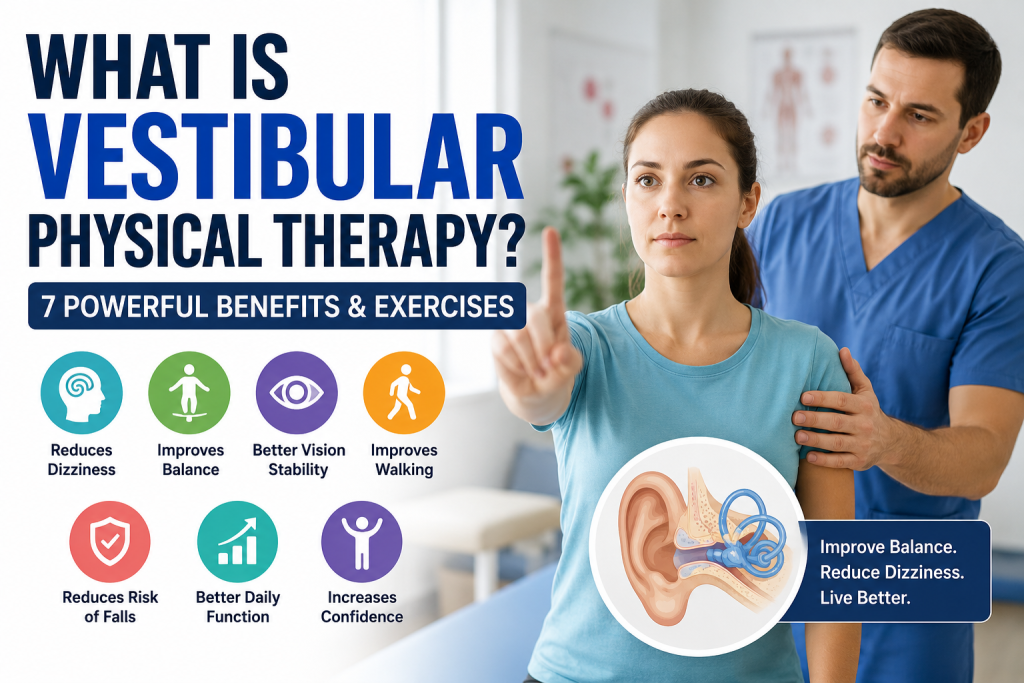
What Is Vestibular Physical Therapy? 7 Powerful Benefits & Exercises
Have you ever felt like the room was spinning, struggled to keep your balance, or become dizzy when turning your head? These symptoms can make simple activities such as walking, getting out of bed, shopping, or climbing stairs feel surprisingly difficult. One treatment approach that may help certain people with dizziness and balance problems is vestibular rehabilitation.
If you are wondering what is vestibular physical therapy, it is a specialized form of physical therapy designed to help people manage dizziness, balance problems, gaze instability, and movement-related symptoms. A trained physical therapist evaluates how the eyes, inner ear, brain, muscles, and joints work together to maintain balance and then creates an individualized exercise program.
Unlike a general exercise routine, vestibular therapy is based on the person’s symptoms and the underlying condition. Treatment may include gaze stabilization, balance training, walking exercises, habituation exercises, repositioning maneuvers, strengthening, and education.
What Is Vestibular Physical Therapy?

So, what is vestibular physical therapy in simple terms? It is a specialized rehabilitation program that uses carefully selected exercises and movement strategies to improve balance and reduce symptoms related to dizziness or vestibular problems.
The vestibular system is located primarily in the inner ear and helps your brain understand head movement and position. Your balance also depends on information from your eyes and sensory receptors throughout your body. The brain combines these signals so you can stand, walk, turn your head, and move through your environment without constantly losing your balance.
When these systems do not work together properly, you may experience dizziness, vertigo, unsteadiness, visual problems during movement, or difficulty walking.
Vestibular physical therapy aims to help the nervous system adapt to these problems and improve your ability to move safely.
Who Can Benefit From Vestibular Physical Therapy?

Understanding what is vestibular physical therapy also means understanding who may benefit from it.
Vestibular rehabilitation can be used for people experiencing conditions or symptoms such as:
- Vertigo
- Dizziness
- Balance problems
- Benign paroxysmal positional vertigo (BPPV)
- Vestibular hypofunction
- Ménière’s disease
- Vestibular neuritis
- Some migraine-related balance problems
- Balance difficulties after certain neurological injuries
- Increased risk of falling
Not everyone with dizziness needs vestibular physical therapy. Dizziness can have many different causes, so identifying the underlying problem is important before starting treatment.
A healthcare professional may first evaluate your symptoms and determine whether vestibular rehabilitation is appropriate.
7 Powerful Benefits of Vestibular Physical Therapy
1. It May Reduce Dizziness

One of the main reasons people seek vestibular rehabilitation is persistent dizziness.
Dizziness can make you feel uncomfortable even when you are sitting still. It may also become worse when you turn your head, walk through a busy environment, look up, or change positions.
Vestibular exercises are designed to help your brain process balance-related information more effectively. Depending on the cause of your symptoms, therapy may help reduce the frequency or intensity of dizziness.
However, results vary from person to person. Vestibular therapy is intended to manage symptoms and improve function rather than guarantee that every underlying condition will disappear.
2. It Can Improve Balance
Poor balance can affect confidence and make everyday movement feel unsafe.
You might find yourself holding onto walls, avoiding stairs, walking more slowly, or feeling nervous about stepping onto uneven ground.
A vestibular therapist can use progressive balance exercises based on your current ability. These may begin with relatively simple standing activities and gradually become more challenging.
The goal is to help your body respond more effectively when your position changes or when you encounter movement around you.
Cleveland Clinic notes that vestibular rehabilitation can improve balance and reduce the risk of falling in appropriate patients.
3. It May Improve Vision During Head Movement

Some people experience blurred or unstable vision when they move their head.
This can make activities such as walking, reading signs while moving, or turning quickly more difficult.
One common vestibular rehabilitation technique is gaze stabilization. During this type of exercise, you focus on a target while moving your head in a controlled manner.
The exercise is intended to improve coordination between your eyes and vestibular system.
The exact exercise, speed, duration, and progression should be selected according to your symptoms rather than copied from a random online routine.
4. It Can Help With Walking Confidence
Dizziness and imbalance can change the way you walk.
You may take smaller steps, avoid turning your head, look down constantly, or become overly cautious around other people.
Vestibular rehabilitation can include walking exercises that challenge balance in a controlled environment. A therapist may gradually introduce changes in speed, direction, head movement, or obstacles depending on your condition.
This type of training can help you become more comfortable with everyday movement.
APTA describes vestibular rehabilitation as an area of physical therapy that can help people regain balance and gait function while managing dizziness or vertigo.
5. It May Reduce the Risk of Falls

Falls are a major concern for people who have significant balance difficulties.
A person who feels dizzy or unsteady may avoid physical activity, become weaker over time, and lose confidence. That combination can make everyday movement even more challenging.
A personalized rehabilitation program may address balance, walking, strength, and movement strategies.
The therapist can also identify situations that increase your fall risk and teach safer ways to perform certain activities.
Vestibular rehabilitation is not a guarantee against falling, but improving balance and functional movement can be an important part of a broader fall-prevention plan.
6. It Can Improve Daily Function
Dizziness is not just a physical sensation. It can affect your normal routine.
For example, you may struggle with:
- Getting out of bed
- Turning around while walking
- Looking up
- Bending down
- Shopping
- Exercising
- Using stairs
- Working
- Driving or riding in a vehicle
A therapist focuses on the activities that matter most to you.
This is one reason what is vestibular physical therapy is more than simply asking someone to perform balance exercises. The program is designed around functional limitations and individual goals.
7. It Can Increase Confidence With Movement
Persistent dizziness can make people afraid of movement.

You may start avoiding activities because you expect certain positions to trigger symptoms. While temporary activity modification can sometimes be appropriate, excessive avoidance may reduce your physical abilities and confidence.
A therapist can gradually expose you to appropriate movements and exercises in a controlled way.
Over time, this may help you become more comfortable with movement and daily activities.
Johns Hopkins notes that vestibular rehabilitation can use exercise to address dizziness and balance impairments, with treatment tailored to the underlying problem.
What Exercises Are Used in Vestibular Physical Therapy?
If you search what is vestibular physical therapy, you will often see several different types of exercises mentioned. There is no single exercise routine that works for everyone.
Gaze Stabilization

Gaze stabilization exercises involve focusing on a stationary target while making controlled head movements.
These exercises are commonly used when problems with visual stability are present. The therapist determines the appropriate movement and progression based on the individual’s symptoms.
Balance Training
Balance exercises may include standing with different foot positions, shifting weight, or performing controlled movements while maintaining stability.
As balance improves, exercises can become progressively more challenging.
Walking Exercises
Walking can be incorporated into vestibular rehabilitation.
A therapist may ask you to walk while changing speed, direction, or head position. Some programs may also include navigating around obstacles.
Habituation Exercises
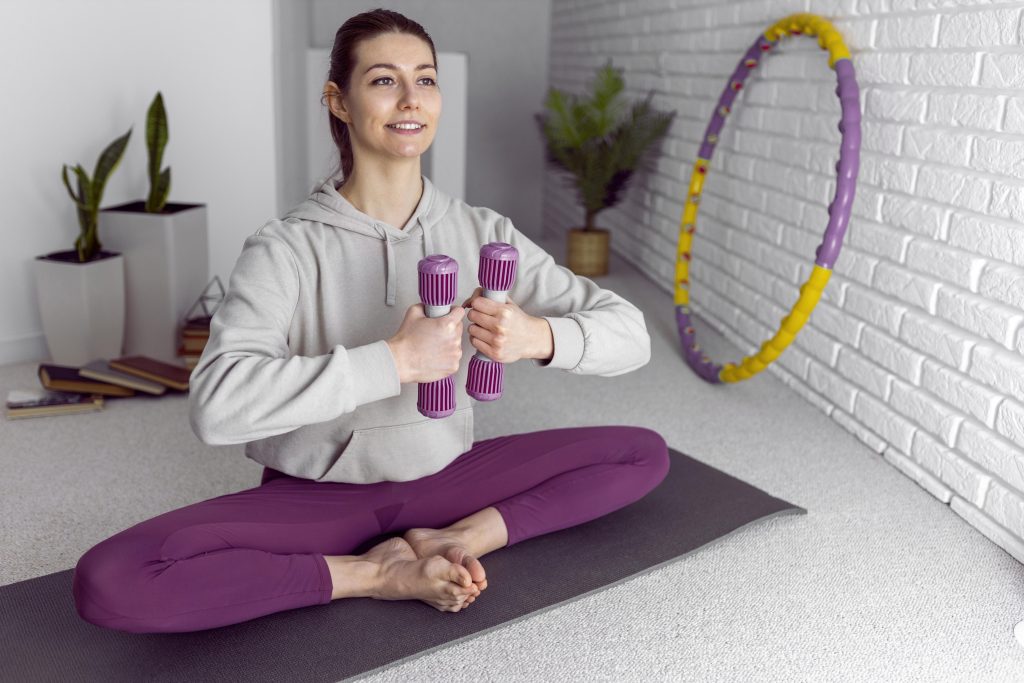
Habituation involves repeated exposure to certain movements or positions that bring on dizziness, with the goal of helping the nervous system become less sensitive to those movements.
This should be individualized because intentionally provoking dizziness is not appropriate for every person or every condition.
Repositioning Maneuvers
Certain people with BPPV may benefit from specific repositioning maneuvers designed to move displaced inner-ear particles.
These maneuvers are different from general balance exercises and should be selected based on an appropriate assessment.
Cleveland Clinic notes that repositioning procedures may be used for BPPV and that some people may also benefit from vestibular rehabilitation.
What Happens During a Vestibular Therapy Evaluation?

Another important part of understanding what is vestibular physical therapy is knowing what happens during an appointment.
Your therapist may begin by asking questions about your symptoms.
They may want to know:
- When did the dizziness begin?
- Does it happen constantly or occasionally?
- What movements trigger it?
- Do you feel spinning or lightheadedness?
- Have you experienced falls?
- Do you have difficulty walking?
- Does your vision become unstable during movement?
- Have you experienced hearing changes?
- Have you previously been diagnosed with a vestibular disorder?
The physical examination may include balance, walking, eye movement, head movement, strength, flexibility, and functional tests.
The exact assessment depends on your symptoms and medical history.
After the evaluation, the therapist develops a treatment plan that fits your specific needs. Cleveland Clinic describes vestibular rehabilitation as an individualized program based on problems such as balance, gait, visual stability, and other functional limitations.
How Long Does Vestibular Physical Therapy Take?
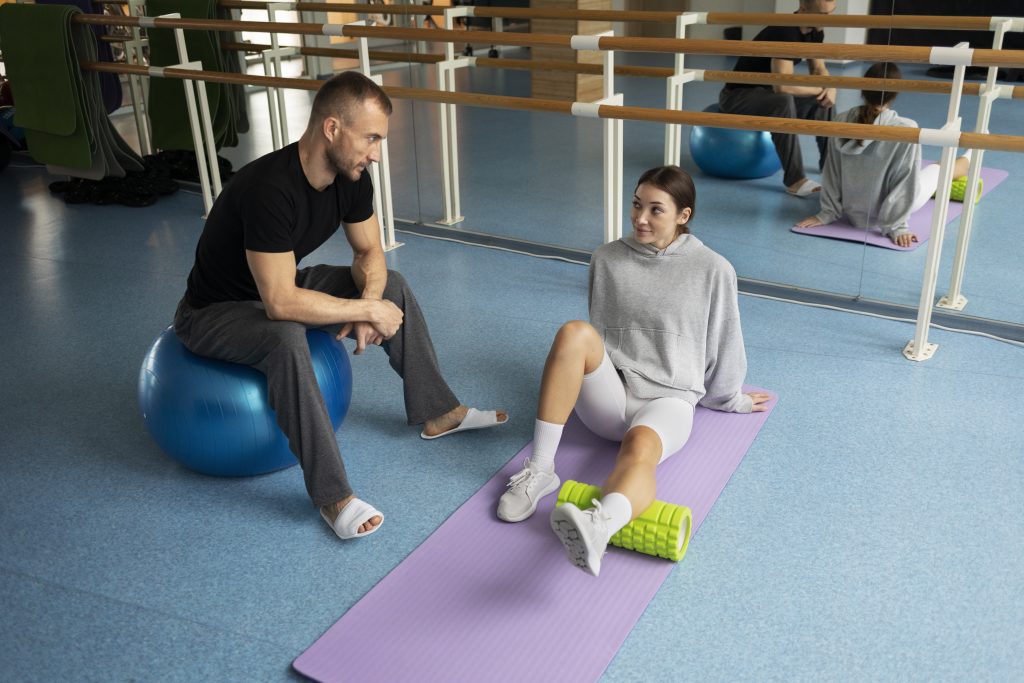
There is no universal treatment length.
Some people may need only a small number of sessions, while others may require treatment over several weeks or months.
Cleveland Clinic notes that many people have around six to eight weekly sessions, although some need only one or two visits and others may require longer treatment depending on the underlying problem and response to therapy.
Your progress can depend on the cause of your symptoms, how long you have had them, your overall health, your exercise consistency, and how your body responds to treatment.
Doing prescribed home exercises correctly can be an important part of the process.
Is Vestibular Physical Therapy Safe?
For many appropriate patients, vestibular rehabilitation is considered a safe form of exercise-based treatment. However, some exercises can temporarily make you feel dizzy or uncomfortable because they may deliberately challenge the balance system.
That does not mean you should push through severe or unusual symptoms.
Your therapist should explain what sensations are expected and what symptoms should prompt you to stop an exercise and contact your healthcare provider.
Cleveland Clinic advises contacting a healthcare provider if certain new or worsening symptoms occur during home vestibular exercises, including hearing changes, increased ringing in the ear, ear drainage, or new neck or back discomfort.
When Should You See a Healthcare Professional?
If dizziness or balance problems keep happening, it is a good idea to discuss them with a healthcare professional.
Do not assume that every episode of dizziness comes from the inner ear. Dizziness can have many possible causes, including vestibular disorders, medications, neurological conditions, cardiovascular problems, and other health issues.
Seek urgent medical attention if dizziness or vertigo occurs with concerning symptoms such as sudden weakness, difficulty speaking, severe new headache, fainting, chest pain, or other signs of a potentially serious medical problem.
The appropriate response depends on the symptoms and their cause.
Vestibular Physical Therapy vs. Regular Physical Therapy
Regular physical therapy can address many problems involving muscles, joints, strength, mobility, and physical function.
Vestibular physical therapy is more specialized. It focuses on problems involving dizziness, balance, gaze stability, and the interaction between the vestibular system and other sensory systems.
A person can sometimes need both approaches.
For example, someone recovering from an injury may have neck stiffness and balance problems. Their program could include mobility and strengthening exercises along with vestibular techniques.
The important point is that treatment should be based on the individual’s assessment rather than the name of the therapy alone.
Tips for Getting Better Results
If you are beginning vestibular rehabilitation, consistency matters.
Follow your therapist’s instructions rather than adding extra exercises without guidance. Keep track of your symptoms and let your therapist know if something becomes significantly worse.
Move at a controlled pace and use appropriate support when performing balance exercises.
It can also help to create a safe home environment. Remove loose objects from walking paths, improve lighting, and use handrails where appropriate if you are at risk of falling.
Most importantly, be patient. The nervous system may need time to adapt to new movement patterns.
Final Thoughts
Understanding what is vestibular physical therapy can make dizziness and balance problems feel less confusing.
Vestibular physical therapy is a specialized form of rehabilitation that uses individualized exercises and movement strategies to help manage dizziness, vertigo, balance problems, visual instability, and related functional limitations.
Depending on the person’s condition, treatment may involve gaze stabilization, balance training, walking exercises, habituation, repositioning maneuvers, strengthening, and home exercises. Research-based clinical guidance and major medical centers emphasize that treatment should be individualized according to the underlying condition and the person’s symptoms.
If dizziness or imbalance is affecting your daily life, speak with a qualified healthcare professional to determine the cause and whether vestibular rehabilitation is appropriate.