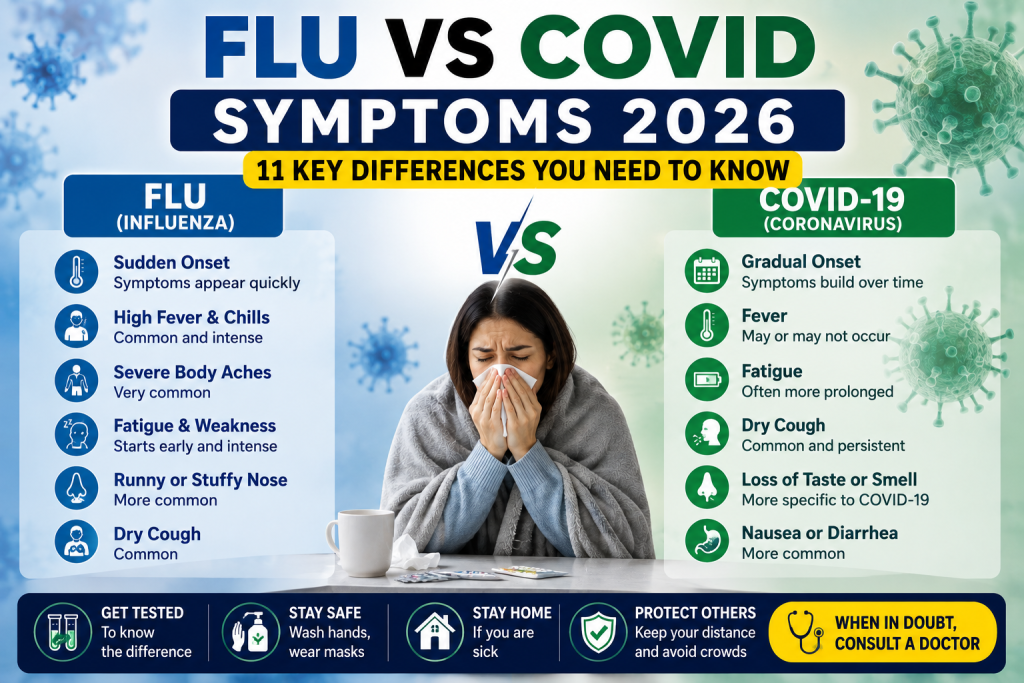
Flu vs COVID Symptoms 2026: 11 Key Differences You Need to Know
If you wake up with a sore throat, cough, fever, or unusual tiredness, you may wonder whether you have the flu or COVID-19. The symptoms can look remarkably similar, making it difficult to know which infection is responsible based on symptoms alone. Understanding the differences can help you decide when to test, how to protect other people, and when medical advice may be appropriate.
This guide to flu vs covid symptoms 2026 explains the major similarities and differences between the two respiratory infections, including common symptoms, how quickly they can appear, testing, contagiousness, treatment considerations, and warning signs.
Because recommendations can change as viruses evolve, always check current guidance from reputable health authorities and speak with a healthcare professional when you have concerns.
Flu and COVID-19: Why Are They So Similar?

Influenza and COVID-19 are caused by different viruses, but both primarily affect the respiratory system. Influenza is caused by influenza viruses, while COVID-19 is caused by SARS-CoV-2.
When comparing flu vs covid symptoms 2026, one of the biggest challenges is that both illnesses can cause fever, cough, fatigue, headache, muscle aches, sore throat, and congestion.
This overlap means that looking at symptoms alone is not a dependable way to determine which infection you have. A test may be needed, particularly when knowing the cause could affect treatment decisions or help prevent transmission to vulnerable people.
1. Fever and Chills

Fever can occur with both influenza and COVID-19. Flu often begins with a noticeable fever and chills, although not everyone with influenza develops a fever.
COVID-19 can also cause fever or chills, but the severity and duration can vary considerably from person to person.
If you develop a high or persistent fever, pay attention to other symptoms and how your overall condition changes. Fever combined with severe weakness, breathing problems, dehydration, or confusion deserves medical attention.
2. Cough
Cough is another major symptom shared by both infections.
Influenza commonly causes a dry cough that may develop along with other symptoms such as fever, body aches, and fatigue. COVID-19 can also cause a persistent cough, although the characteristics of the cough can differ among individuals.
A cough by itself cannot reliably tell you whether you have influenza or COVID-19.
If the cough becomes severe, causes breathing difficulty, or is accompanied by persistent chest pain, seek medical advice promptly.
3. Sore Throat

A sore or irritated throat may occur with both infections. It can also occur with many other respiratory illnesses, including common colds.
This is why a sore throat should not automatically be interpreted as evidence of either flu or COVID-19.
When considering flu vs covid symptoms 2026, look at the complete pattern of symptoms rather than relying on a single sign.
For example, a sore throat accompanied by fever, cough, fatigue, or body aches may indicate a respiratory infection, but testing may be necessary to identify the specific cause.
4. Fatigue and Weakness
Strong fatigue is common during both influenza and COVID-19.
With influenza, fatigue can appear suddenly and may be accompanied by significant body aches. COVID-19 can also cause substantial tiredness, and some people report lingering fatigue after the initial infection has improved.
If your tiredness is mild, rest and hydration may be helpful. However, extreme weakness, fainting, confusion, or difficulty staying awake should not be ignored.
5. Muscle and Body Aches
Body aches are particularly common with influenza, but they can also occur during COVID-19.
Flu is often associated with a sudden feeling of being unwell, accompanied by muscle aches and chills. COVID-19 can produce similar symptoms, but their intensity varies.
Body aches alone cannot establish which virus is responsible.
If muscle pain is severe or accompanied by other concerning symptoms, contact a healthcare professional.
6. Loss of Taste or Smell
Changes in taste or smell have been associated with COVID-19. They can still occur, although their frequency and presentation can vary.
Influenza and other respiratory infections may also affect the senses indirectly because nasal congestion can reduce the ability to smell.
A sudden change in taste or smell may therefore raise suspicion for COVID-19, but it is not sufficient to make a diagnosis.
When reviewing flu vs covid symptoms 2026, remember that symptoms can change over time and can differ depending on the individual and the circulating virus.
7. Headache

Headaches can occur with both influenza and COVID-19.
During influenza, headache may develop alongside fever, chills, muscle aches, and fatigue. COVID-19 may also cause headache, sometimes with other upper-respiratory symptoms.
A headache caused by a respiratory infection will often occur with other symptoms, but headaches have many possible causes.
Seek urgent medical attention if a headache is sudden and extremely severe, associated with confusion, fainting, neurological changes, or other unusual symptoms.
8. Nasal Congestion and Runny Nose
A blocked or runny nose can occur with influenza, COVID-19, and ordinary colds.
Nasal symptoms are therefore not particularly useful for distinguishing the two illnesses.
If you have congestion, staying hydrated and using appropriate supportive measures may help you feel more comfortable. People with certain medical conditions should ask a healthcare professional before using specific over-the-counter medications.
If nasal symptoms become severe or persist unusually long, consider discussing them with a healthcare professional.
9. Digestive Symptoms
COVID-19 can sometimes cause digestive symptoms such as nausea, vomiting, or diarrhea. Influenza can also cause gastrointestinal symptoms, although these symptoms may be more noticeable in some groups than others.
Digestive symptoms do not automatically indicate COVID-19.
If vomiting or diarrhea is significant, dehydration becomes an important concern. Watch for signs such as very dark urine, unusually little urination, dizziness, dry mouth, or severe weakness.
Children, older adults, and people with certain health conditions can become dehydrated more quickly and may need medical advice sooner.
10. How Quickly Symptoms Begin
The timing of symptom development can sometimes provide clues, although it cannot diagnose the infection.
Influenza often produces symptoms relatively suddenly. A person may remember feeling normal and then becoming significantly unwell over a short period.
COVID-19 can have a somewhat different incubation pattern, but the timing can vary depending on the circulating variant and individual factors.
For flu vs covid symptoms 2026, timing should be considered together with exposure history, symptoms, testing, and personal risk factors rather than used as a standalone diagnostic tool.
11. How Long Symptoms Can Last
The duration of symptoms varies considerably.
Many people with influenza improve over several days to around a week, although cough and tiredness can sometimes last longer. COVID-19 symptoms can also improve within days, but some people experience symptoms for longer.
Recovery depends on factors such as age, immune response, previous immunity, underlying health conditions, and the severity of the infection.
If you are not improving or your symptoms become worse after initially improving, contact a healthcare professional.
Flu vs COVID: Can You Tell Without a Test?

One of the most important points about flu vs covid symptoms 2026 is that symptoms alone may not provide a reliable answer.
Both illnesses can produce:
- Fever or chills
- Cough
- Sore throat
- Fatigue
- Headache
- Muscle aches
- Runny or blocked nose
- Breathing symptoms
- Sometimes digestive problems
Because of this overlap, testing can be useful when the result could influence treatment, isolation decisions, or protection of high-risk household members.
Combination tests that check for more than one respiratory virus may also be available in some locations.
When Should You Test?
Consider testing when you develop symptoms that could be caused by COVID-19, particularly if you have recently been exposed to someone with COVID-19 or live or work around people who are vulnerable to severe illness.
Testing may also be particularly important for people at higher risk because certain COVID-19 treatments work best when started early.
If an initial rapid test is negative but symptoms continue, follow the instructions for the specific test and consider whether repeat testing or professional testing is appropriate.
What About Testing for Flu?
Influenza testing may be recommended in certain healthcare settings, particularly when knowing whether a person has flu could influence treatment.
Not everyone with mild flu-like symptoms requires a laboratory diagnosis.
A healthcare professional can determine whether testing is appropriate based on symptoms, timing, exposure, local virus activity, and individual risk factors.
Can You Have Flu and COVID at the Same Time?
Yes. Infection with more than one respiratory virus can occur.
Having one infection does not automatically prevent another infection from occurring at the same time. A person with simultaneous infections may experience a more complicated illness, although the severity varies.
This is another reason not to rely entirely on symptoms when determining whether you have COVID-19 or influenza.
If you have significant symptoms or are at increased risk of complications, speak with a healthcare professional about testing and treatment options.
Treatment for Flu and COVID
Treatment depends on the illness, timing, severity, age, and individual risk factors.
For many people with mild respiratory infections, supportive care includes adequate fluids, rest, and symptom management.
However, antiviral medicines may be available for some people with influenza or COVID-19. These medications are not interchangeable and should be used according to professional medical advice.
Antibiotics do not treat influenza or COVID-19 because both are viral infections. Antibiotics may only be appropriate when a healthcare professional identifies a bacterial infection that requires treatment.
Do not start prescription medication simply because your symptoms resemble someone else’s illness.
Who Is at Higher Risk of Severe Illness?
Some people have a greater risk of complications from respiratory infections. Risk can increase with older age, certain chronic medical conditions, pregnancy, weakened immune function, or other individual factors.
If you fall into a higher-risk group and develop flu-like symptoms, contacting a healthcare professional early may be particularly important.
Early evaluation can help determine whether testing or antiviral treatment should be considered.
When Is Emergency Care Necessary?
Most respiratory infections do not require emergency treatment, but certain symptoms need immediate attention.
Seek emergency medical care if you experience:
- Serious difficulty breathing
- Persistent chest pain or pressure
- New confusion
- Inability to stay awake or difficulty waking
- Severe weakness or collapse
- Blue, gray, or unusually pale lips or skin
- A significant and rapidly worsening condition
Parents and caregivers should also seek urgent medical advice when a child appears seriously ill, has difficulty breathing, becomes unusually difficult to wake, or shows signs of severe dehydration.
How to Protect Other People
Whether your illness is flu or COVID-19, staying home when you are sick can help reduce transmission.
If you must be around other people, consider improving ventilation and using a well-fitting mask where appropriate. Avoid close contact with people who are especially vulnerable to severe respiratory infections.
Regular hand hygiene and covering coughs and sneezes can also reduce the spread of respiratory germs.
Cleaning frequently touched surfaces may be useful when someone in the household is sick, although ventilation and reducing close exposure are also important.
Can You Prevent Both Flu and COVID-19?
Prevention strategies overlap in several ways.
Staying up to date with vaccines recommended for your age and health circumstances can reduce the risk of severe disease. Vaccination recommendations can change, so check current guidance from your local health authority or healthcare professional.
Other useful measures include improving indoor ventilation, avoiding close contact with people who are actively sick, washing hands regularly, and staying home when you are unwell.
Healthy habits such as adequate sleep, balanced nutrition, and regular physical activity support general health, although they do not guarantee protection from infection.
Frequently Asked Questions
Are flu symptoms worse than COVID symptoms?
Neither illness is automatically more severe for everyone. Severity varies based on the individual, the virus or strain involved, immunity, age, underlying health conditions, and other factors.
Is a cough more common with flu or COVID?
Both can cause cough. The presence or absence of cough alone cannot reliably distinguish the two infections.
Can COVID look exactly like the flu?
Yes. There can be substantial overlap between the symptoms of COVID-19 and influenza. Testing may be needed to determine which infection is responsible.
Should I take antibiotics for flu-like symptoms?
Not unless a healthcare professional determines that you have a bacterial infection that requires antibiotics. Antibiotics do not treat viral infections such as influenza or COVID-19.
Can I go to work if I have flu or COVID symptoms?
If you are sick, staying home when possible helps reduce transmission. Follow current local public-health guidance regarding when to return to work, school, or other activities.
What is the biggest difference between flu and COVID?
There is no single symptom that reliably separates them. Differences can involve incubation, contagiousness, duration, complications, and available treatments, but individual experiences vary.
Final Takeaway
Understanding flu vs covid symptoms 2026 can help you recognize when you may have a respiratory infection, but symptoms alone usually cannot tell you which virus is responsible. Fever, cough, fatigue, headache, sore throat, congestion, and body aches can occur with both illnesses.
Testing can provide more useful information, particularly when the result could affect treatment or help protect people at higher risk. If symptoms are severe, worsening, or accompanied by breathing difficulty, persistent chest pain, confusion, or unusual difficulty staying awake, seek urgent medical attention.
For people at higher risk of complications, early contact with a healthcare professional is especially important because some antiviral treatments may need to be started soon after symptoms begin.
Health recommendations can change as new evidence becomes available. For the most current advice, rely on reputable public-health authorities and qualified healthcare professionals rather than social-media claims or unverified home remedies.
This article is for general educational purposes and does not replace personalized medical diagnosis or treatment.