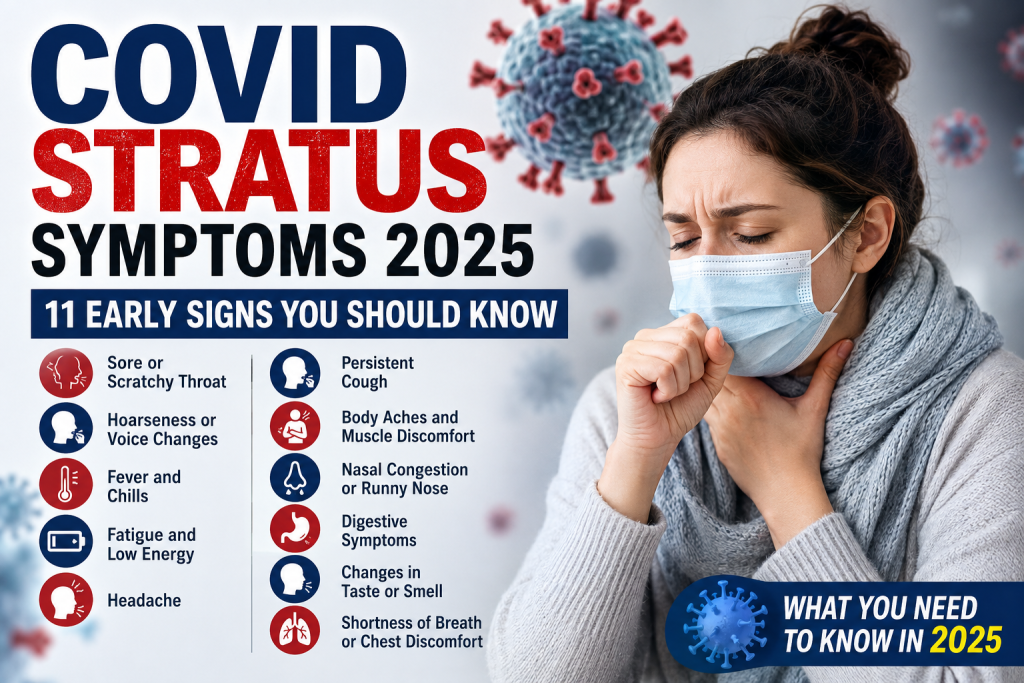
COVID Stratus Symptoms 2025: 11 Early Signs You Should Know
COVID-19 continues to evolve, and new variants can attract attention when they begin circulating more widely. One variant that received significant attention during 2025 was XFG, commonly referred to as Stratus. It was identified in early 2025 and was placed by the World Health Organization on its list of variants under monitoring.
If you are searching for covid stratus symptoms 2025, it is important to understand that Stratus does not appear to cause a completely new disease. Available evidence indicates that its clinical presentation is broadly similar to other recent Omicron-lineage infections. Symptoms can include sore throat, cough, congestion, fatigue, headache, fever, and body aches. Some reports have also highlighted hoarseness or a scratchy throat.
This article explains the symptoms associated with Stratus, what makes them noticeable, how the variant compares with earlier COVID-19 infections, when testing may be useful, and which warning signs require medical attention.
What Is the COVID Stratus Variant?

Stratus is the informal name for the SARS-CoV-2 lineage XFG. It is a recombinant lineage that emerged from genetic material associated with two earlier Omicron descendants. The earliest reports placed its detection in early 2025, and the WHO subsequently classified XFG as a variant under monitoring.
The appearance of a new variant does not automatically mean that it causes more serious illness. In fact, available assessments did not show evidence that XFG caused more severe disease than other circulating variants. The UK Health Security Agency reported that available data did not indicate greater severity from XFG compared with other variants in circulation.
Understanding this distinction is important. A variant can spread efficiently or become more common without necessarily causing more severe symptoms.
1. Sore or Scratchy Throat

One of the symptoms frequently discussed when examining covid stratus symptoms 2025 is a sore, irritated, or scratchy throat.
Some reports have described people experiencing throat irritation or hoarseness early in the illness. However, a sore throat is not unique to Stratus. It can occur with other COVID-19 variants, influenza, common colds, allergies, and other respiratory infections.
You may notice discomfort while swallowing or a dry sensation in the throat. Some people may describe their voice as rough or unusually weak.
Because these symptoms have many possible causes, a sore throat alone cannot confirm that someone has Stratus.
2. Hoarseness or Voice Changes

Hoarseness received particular attention in reports about Stratus.
A person may notice that their voice sounds rough, raspy, weak, or different from normal. Some reports suggested that throat and voice symptoms may be more noticeable with XFG, although this does not mean that hoarseness is exclusive to this variant.
Inflammation around the throat and upper airways can affect the voice. Speaking for long periods while sick may also make irritation more noticeable.
If voice changes are accompanied by significant breathing difficulty, swelling, or an inability to swallow properly, seek medical evaluation.
3. Persistent Cough
Another commonly reported symptom in covid stratus symptoms 2025 is coughing.
The cough may be dry or irritating and can continue even after some other symptoms begin to improve. A cough can also occur with influenza, allergies, bronchitis, and other respiratory illnesses, so it is not a reliable way to distinguish COVID-19 from other infections.
Rest, fluids, and appropriate supportive care may help with mild respiratory symptoms. People with asthma or another respiratory condition should follow their existing medical plan and contact their healthcare professional if symptoms become difficult to control.
A cough accompanied by serious breathing difficulty or persistent chest pressure requires prompt medical attention.
4. Fever and Chills
Fever is another possible sign of infection.
Some people with Stratus may develop a mild fever, while others may experience chills or feel unusually hot and cold. Not everyone with COVID-19 develops a fever, so having a normal temperature does not rule out infection.
When evaluating covid stratus symptoms 2025, it is more useful to consider the complete pattern of symptoms rather than focusing on one sign.
If a fever is persistent, unusually high, or accompanied by worsening weakness, dehydration, confusion, or breathing problems, contact a healthcare professional.
5. Fatigue and Low Energy
Fatigue can occur during COVID-19 and is one of the symptoms reported with Stratus.
You may feel unusually tired, have less energy for normal activities, or find that you need more sleep than usual. The degree of fatigue varies significantly from person to person.
Rest is important during an acute respiratory infection. Avoid pushing yourself through intense exercise if you are experiencing fever, significant weakness, dizziness, or worsening symptoms.
If severe fatigue continues after other symptoms improve or prevents you from performing normal daily activities, discuss it with a healthcare professional.
6. Headache
Headaches have also been reported among people with COVID-19 infections, including recent variants.
A headache may occur alongside fever, fatigue, congestion, sore throat, or body aches. However, headaches are extremely common and can result from many conditions unrelated to COVID-19.
Therefore, a headache cannot establish whether someone has Stratus.
A sudden, extremely severe headache, especially when associated with confusion, fainting, weakness, vision changes, or other neurological symptoms, requires urgent medical evaluation.
7. Body Aches and Muscle Discomfort
Some people with covid stratus symptoms 2025 may experience muscle aches or generalized body discomfort.
These symptoms can resemble influenza and other viral infections. They may be more noticeable during the first few days of illness.
Rest, adequate fluid intake, and appropriate symptom management can help many people feel more comfortable.
If muscle pain is unusually severe or occurs with significant weakness, dark urine, difficulty breathing, or other concerning symptoms, medical evaluation is appropriate.
8. Nasal Congestion or Runny Nose
COVID-19 can cause upper-respiratory symptoms such as nasal congestion and a runny nose.
These symptoms can make the illness resemble a common cold. Because congestion is common with many respiratory conditions, it cannot be used to identify Stratus specifically.
Keeping hydrated and using suitable supportive measures may help relieve discomfort.
If nasal symptoms are accompanied by severe facial pain, persistent high fever, significant breathing problems, or symptoms that are rapidly worsening, speak with a healthcare professional.
9. Shortness of Breath or Chest Discomfort
Shortness of breath can occur with COVID-19, although it is not necessarily present in mild infections.
Some people may experience chest tightness or discomfort, particularly when coughing. However, chest symptoms should always be taken seriously because they can have many causes.
If you develop significant difficulty breathing, persistent chest pain or pressure, bluish or grayish lips or skin, confusion, or difficulty staying awake, seek emergency medical care.
Do not assume that serious breathing symptoms are simply a normal part of COVID-19.
10. Digestive Symptoms
Some people with COVID-19 can experience digestive symptoms such as nausea, reduced appetite, vomiting, or diarrhea.
These symptoms are not unique to Stratus and can occur with many infections and gastrointestinal conditions.
The main concern with significant vomiting or diarrhea is dehydration. Watch for dizziness, very little urination, dry mouth, unusual weakness, or other signs that you may not be getting enough fluids.
Children, older adults, and people with certain medical conditions may become dehydrated more quickly.
11. Changes in Taste or Smell
Changes in taste or smell remain possible with COVID-19, although they are generally less prominent than they were during some earlier phases of the pandemic.
Some people may notice reduced ability to smell or a change in how foods taste. Nasal congestion itself can also temporarily reduce the sense of smell.
A change in taste or smell may increase suspicion of COVID-19, but it cannot establish that a person has the Stratus variant.
Variant identification generally requires specialized laboratory surveillance rather than an ordinary home symptom check.
Are Stratus Symptoms Different From Other COVID Variants?
One of the most important points about covid stratus symptoms 2025 is that there is no single symptom that uniquely identifies XFG.
The available evidence suggests that Stratus produces symptoms broadly similar to previous Omicron-lineage infections. Sore throat, cough, congestion, fatigue, headache, and fever can all occur. Some reports have highlighted hoarseness, but researchers continue to monitor whether this represents a meaningful difference.
This means you should not assume that a particular symptom automatically means you have Stratus.
Testing and professional evaluation are more useful when confirmation is important.
Is Stratus More Severe?
Current evidence does not show that Stratus causes more severe illness than other recently circulating variants.
The UK Health Security Agency stated that available data did not indicate increased severity compared with other circulating variants. A scientific review also reported no evidence of increased clinical severity associated with XFG.
However, COVID-19 can still become serious, particularly for people who have a higher risk of complications.
Older adults, people with certain chronic medical conditions, and people with weakened immune systems may need to take symptoms more seriously and seek medical advice earlier.
How Do You Know If You Have Stratus?
Symptoms cannot tell you which SARS-CoV-2 variant you have.
A standard COVID-19 test can help determine whether SARS-CoV-2 infection is present, but routine home tests generally do not identify the specific variant.
Variant identification is primarily performed through specialized laboratory surveillance and genomic sequencing.
Therefore, if you have symptoms that could be COVID-19, the practical question is usually whether you have a current COVID-19 infection rather than whether you can identify the exact variant at home.
When Should You Take a COVID Test?
If you develop symptoms consistent with COVID-19, testing may help you make decisions about staying away from others and contacting a healthcare professional.
Testing can be especially important when you live with or frequently interact with someone who has a higher risk of severe illness.
A negative rapid test does not always exclude infection, particularly when symptoms are very early. Follow the instructions for your specific test and consider professional guidance if symptoms continue.
What Should You Do If Your Test Is Positive?
If you test positive for COVID-19, try to reduce close contact with other people while you are sick.
Stay home when you feel unwell, improve ventilation, and consider wearing a well-fitting mask when you must be around others. Follow current public-health recommendations applicable to your location.
If you are at increased risk of severe disease, contact a healthcare professional promptly. Some COVID-19 treatments are most useful when started early.
Do not use antibiotics simply because you have COVID-19. Antibiotics treat certain bacterial infections and do not directly treat viral infections such as COVID-19.
How Can You Reduce the Risk of Infection?
Preventive strategies remain useful even as COVID-19 variants change.
Consider staying up to date with recommended COVID-19 vaccination according to current guidance for your age and health circumstances. Vaccination recommendations can change, so consult a healthcare professional or public-health authority for current information.
Other practical measures include improving indoor ventilation, avoiding close contact with people who are actively sick, staying home when ill, and using masks in situations where they are appropriate.
Good hand hygiene and covering coughs and sneezes can also reduce the spread of respiratory viruses.
Who Should Be Especially Careful?
Not everyone has the same risk from COVID-19.
People who are older, immunocompromised, pregnant, or living with certain chronic conditions may have a greater risk of complications. If you belong to a higher-risk group and develop covid stratus symptoms 2025, contacting a healthcare professional early can be particularly important.
A healthcare professional can assess your symptoms and personal risk factors and determine whether testing, treatment, or additional monitoring is appropriate.
When Should You Seek Emergency Care?
Most people with mild COVID-19 symptoms can recover without emergency treatment. However, certain symptoms require immediate medical attention.
Seek urgent or emergency care if you develop:
- Severe difficulty breathing
- Persistent chest pain or pressure
- New confusion
- Difficulty staying awake or being awakened
- Severe weakness or collapse
- Blue, gray, or unusually pale lips or skin
- A rapidly worsening condition
Do not wait for symptoms to become extreme if you feel that something is seriously wrong.
How Long Do Stratus Symptoms Last?
There is no guaranteed timeline for recovery.
Some people experience mild symptoms that improve within several days, while others may need longer to feel completely recovered. The duration can depend on age, immune response, previous infection or vaccination, underlying health conditions, and the severity of illness.
Fatigue or cough may sometimes persist after other symptoms have improved.
If symptoms are getting worse rather than better, or if you develop new concerning symptoms, contact a healthcare professional.
Can You Prevent Stratus?
You cannot guarantee that you will never become infected, but several measures can reduce risk.
Keeping vaccinations up to date when recommended, improving indoor air quality, avoiding close exposure when people are sick, and staying home while ill can all help reduce transmission.
Public-health recommendations may change as surveillance data changes, so use current guidance rather than relying on outdated information.
Frequently Asked Questions
What are the most common Stratus symptoms?
Reported symptoms include sore throat, cough, congestion, fatigue, headache, fever, and body aches. Hoarseness has also received attention in reports about XFG, although it is not unique to this variant.
Is Stratus the same as XFG?
Yes. Stratus is an informal name used for the SARS-CoV-2 lineage XFG.
Can Stratus cause a sore throat?
Yes. Sore or scratchy throat has been reported among people infected with XFG and other recent COVID-19 variants.
Is hoarseness a definite sign of Stratus?
No. Hoarseness can occur with many respiratory infections and other conditions. It should not be used by itself to diagnose Stratus.
Is Stratus more dangerous than previous variants?
Current evidence does not indicate that XFG causes more severe disease than other circulating variants. However, individual risk varies, and COVID-19 can still cause serious illness in higher-risk people.
Can a home test identify Stratus?
No. A typical home COVID-19 test can indicate SARS-CoV-2 infection but does not generally identify the specific variant.
Should I see a doctor if I have mild symptoms?
Many mild respiratory infections can be managed at home, but people at higher risk of severe disease should contact a healthcare professional early. Anyone with serious or rapidly worsening symptoms should seek medical attention.
Final Thoughts
Understanding covid stratus symptoms 2025 can help you recognize signs that may occur with the XFG variant, but it is important not to assume that every sore throat, cough, or fever is caused by Stratus.
The available evidence indicates that XFG symptoms are generally similar to those seen with other recent Omicron-lineage infections. Sore throat, hoarseness, cough, fatigue, fever, headache, congestion, and body aches can all occur. At the same time, there is no reliable symptom that can identify XFG without appropriate testing or laboratory surveillance.
If you become sick, focus on monitoring your overall condition, reducing exposure to other people, and getting medical advice when appropriate. People with higher risk factors should seek professional guidance early, while anyone experiencing severe breathing difficulty, persistent chest pain, confusion, or difficulty staying awake should seek emergency care.
COVID-19 continues to evolve, so information about circulating variants can change. For that reason, always check current guidance from reputable health authorities when making decisions about testing, treatment, vaccination, and prevention.