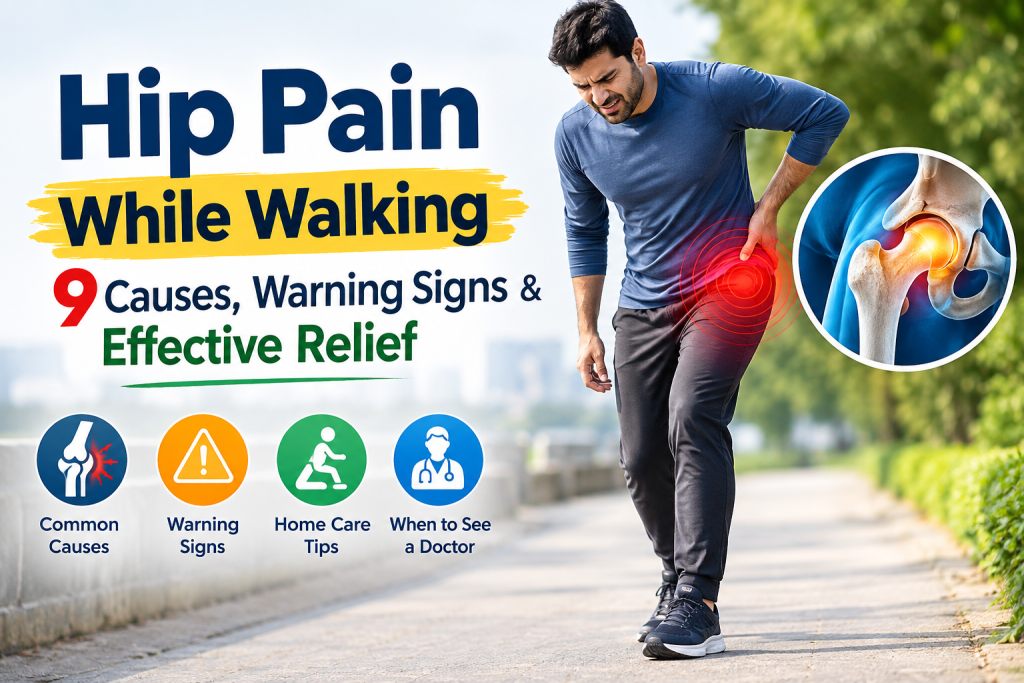
Hip Pain While Walking: 9 Causes, Warning Signs & Effective Relief
Walking is one of the simplest ways to stay active, but discomfort around the hip can make every step difficult. Hip Pain While Walking may develop suddenly after an injury or gradually because of joint problems, muscle strain, poor movement patterns, or other conditions. Understanding the possible cause can help you choose appropriate next steps and know when professional assessment may be necessary.
The hip is a major weight-bearing joint. It connects the upper body to the legs and helps you stand, walk, climb stairs, and change direction. Because the hip works with the lower back, pelvis, knees, and surrounding muscles, pain in this area can sometimes be related to problems outside the hip joint itself.
This guide explains common causes, symptoms, risk factors, home-care strategies, and warning signs associated with walking-related hip discomfort.
What Does Hip Pain While Walking Feel Like?

The sensation can vary depending on its underlying cause. Some people notice a dull ache, while others experience sharp, burning, or pulling discomfort. Pain may occur in the front of the hip, on the outside of the hip, around the buttock, or sometimes toward the thigh.
You may notice discomfort when taking your first few steps, walking for a long distance, climbing stairs, standing from a chair, or putting weight on one leg.
The location and pattern of the pain can provide useful clues, but they cannot confirm a diagnosis by themselves. A healthcare professional may need to examine your movement, strength, range of motion, and medical history.
9 Common Causes of Hip Pain While Walking
1. Muscle Strain

The muscles surrounding the hip help stabilize the pelvis and move the leg. A sudden increase in exercise, running, lifting, or repetitive activity can strain these muscles.
A mild strain may cause soreness during walking, particularly when the affected muscles are working. Resting from aggravating activities and gradually returning to normal movement may help mild cases.
2. Hip Osteoarthritis
Osteoarthritis occurs when the tissues within a joint gradually undergo changes over time. The hip can become painful or stiff, particularly with weight-bearing activities.
People with hip osteoarthritis may experience discomfort while walking, reduced hip mobility, stiffness after periods of inactivity, or difficulty with activities such as climbing stairs.
The risk of osteoarthritis generally increases with age, although younger people can also develop joint problems for various reasons.
3. Bursitis
Small fluid-filled sacs called bursae help reduce friction between tissues around joints. When a bursa becomes irritated, it can cause localized pain.
Hip bursitis often affects the outside of the hip. The area may become particularly uncomfortable when walking, climbing stairs, lying on the affected side, or repeatedly moving the hip.
Reducing activities that aggravate the area can sometimes help, but persistent symptoms should be evaluated by a healthcare professional.
4. Tendon Problems

Tendons connect muscles to bones. Repetitive loading can irritate tendons around the hip, especially when activity levels increase quickly.
Tendon-related pain may develop gradually rather than appearing immediately after one specific incident. Walking uphill, climbing stairs, running, or repeatedly moving the hip can sometimes make symptoms more noticeable.
A structured rehabilitation program may be recommended depending on the affected tendon and severity of the problem.
5. Hip Labral Problems
The hip contains a ring of cartilage called the labrum that helps support the joint. Injury or degeneration involving this tissue can sometimes produce pain, clicking, catching, or a sensation of instability.
Some people notice symptoms during walking or activities that involve twisting the hip. Labral problems can have different causes, so a proper clinical assessment is important when symptoms persist.
6. Previous Injury

A previous fall, sports injury, accident, or surgical procedure can affect the hip and surrounding tissues. Even after an injury appears to heal, weakness or altered movement may remain.
If pain started after an injury, consider the severity and whether you can comfortably bear weight. Significant trauma, severe pain, or inability to walk normally requires prompt medical evaluation.
7. Muscle Weakness and Poor Movement Mechanics
The muscles around the hips and pelvis contribute to stability while walking. Weakness or poor coordination may place additional stress on certain tissues.
For example, weakness around the hip can affect how the pelvis and leg move during each step. Over time, repetitive loading may contribute to discomfort.
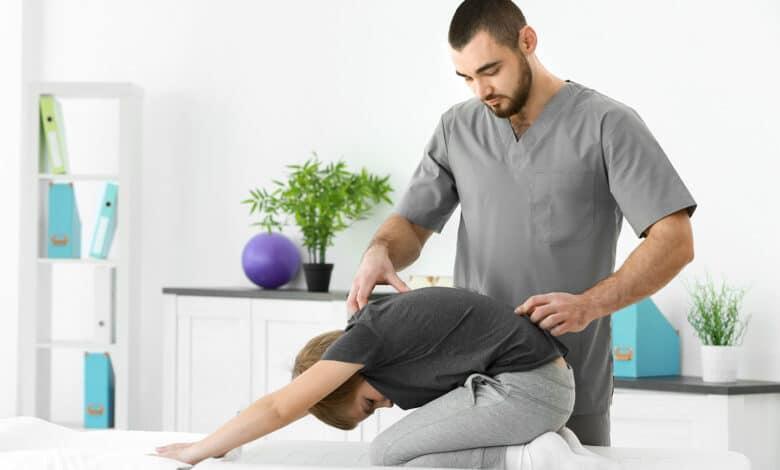
A physical therapist can assess walking mechanics and identify strength or mobility limitations that may be contributing to symptoms.
8. Referred Pain
Not every problem that feels like hip pain actually originates in the hip joint. Issues involving the lower back can sometimes cause discomfort around the buttock, hip, or upper leg.
Nerve irritation may also produce sensations such as tingling, burning, numbness, or pain traveling down the leg.
When symptoms involve both the lower back and leg, a professional assessment can help determine whether the hip or another region is contributing to the problem.
9. Less Common Medical Conditions
Although many causes of walking-related hip discomfort involve muscles, tendons, joints, or movement patterns, some less common medical conditions can also cause pain.
Persistent pain without an obvious explanation should not automatically be attributed to exercise or aging. A healthcare professional can consider your symptoms, medical history, and examination findings to determine whether additional testing is appropriate.
Where Is the Pain Located?
The location of discomfort can provide clues.
Front of the hip: Pain in the groin or front of the hip can sometimes be associated with the hip joint itself.
Outside of the hip: Discomfort on the outer side may involve structures such as bursae or tendons.
Buttock area: Pain around the buttock can sometimes be related to muscles, the lower back, or other nearby structures.
Thigh: Hip-related problems can sometimes cause discomfort that spreads into the upper thigh.
However, pain location alone is not enough to determine the cause. Several conditions can produce similar symptoms.
Why Does Walking Make Hip Pain Worse?
Walking repeatedly loads the hip. Every step requires the hip muscles to stabilize the pelvis and control movement of the leg.
If a joint, muscle, tendon, or other structure is irritated, repetitive loading may increase discomfort. Walking speed, distance, hills, footwear, recent activity changes, body mechanics, and muscle conditioning can all influence symptoms.
If pain consistently increases as you walk, it is reasonable to temporarily reduce activities that clearly aggravate it rather than repeatedly pushing through significant discomfort.
Risk Factors That May Increase Hip Problems
Several factors can contribute to hip discomfort:
- Increasing exercise intensity too quickly
- Repetitive running or high-impact activity
- Previous hip or lower-limb injuries
- Muscle weakness
- Reduced joint mobility
- Certain structural hip conditions
- Increasing age
- Excessive or prolonged physical loading
- Poor recovery between demanding activities
Having one or more risk factors does not mean you will develop a hip condition. It simply means that appropriate activity management and strengthening may be particularly important.
How Can You Relieve Hip Pain at Home?
The right approach depends on the underlying cause. For mild discomfort that is not associated with serious injury, several general strategies may be useful.
Reduce Aggravating Activities
Temporarily reduce activities that clearly increase pain. You do not necessarily need complete bed rest. Gentle movement within a comfortable range may be preferable to remaining inactive for long periods.
Use Relative Rest
Relative rest means modifying activities rather than stopping all movement. For example, you may temporarily reduce long walks, hills, running, or repeated stair climbing while maintaining comfortable daily movement.
Apply Cold or Heat Carefully
Cold packs may be useful for some people after an activity-related flare-up, while gentle heat may feel more comfortable for stiffness. Avoid placing either directly against bare skin, and stop if it increases discomfort.
Maintain Comfortable Movement
Gentle mobility can help prevent excessive stiffness. However, exercises should not cause significant or worsening pain.
If an exercise repeatedly makes symptoms worse, stop and discuss it with a healthcare professional or physical therapist.
Improve Activity Gradually
Once symptoms begin improving, return to normal walking progressively. Increasing distance and intensity gradually can reduce the chance of suddenly overloading the tissues.
Exercises That May Help
Exercise selection should depend on the cause of the pain. General strengthening programs may include movements that target the glutes, hip stabilizers, and core.
Examples sometimes used in rehabilitation include:
- Gentle hip range-of-motion exercises
- Glute bridges
- Side-lying hip strengthening
- Controlled sit-to-stand movements
- Gentle stretching when appropriate
- Balance exercises
Not every exercise is appropriate for every person. If you have significant pain, recent surgery, a major injury, or unexplained symptoms, seek professional advice before starting a new exercise program Hip Pain While Walking.
When Should You See a Healthcare Professional?
You should consider professional evaluation if Hip Pain While Walking continues, repeatedly returns, or interferes with normal daily activities.
An assessment may be especially useful if:
- Pain lasts despite activity modification
- Walking becomes increasingly difficult
- You develop noticeable weakness
- Your hip movement becomes restricted
- You experience repeated clicking or catching
- Pain regularly affects sleep
- Symptoms began after an injury
- You cannot return to your normal activities
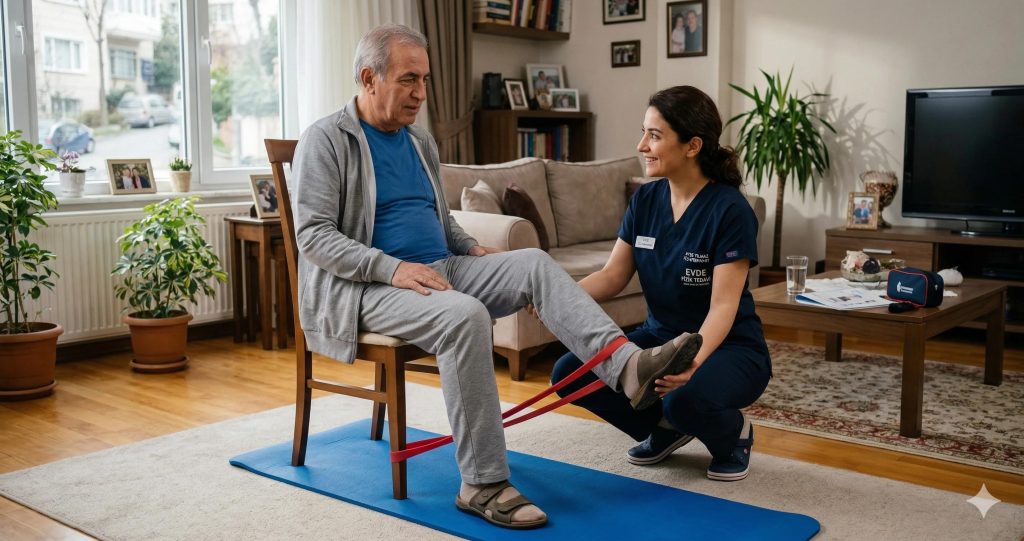
A physical therapist may assess strength, flexibility, joint movement, walking mechanics, and functional limitations. Depending on the findings, treatment may include education, exercise, activity modification, and other appropriate rehabilitation strategies Hip Pain While Walking.
Warning Signs That Need Prompt Medical Attention
Some symptoms should not be ignored. Seek prompt medical care if you have severe pain after significant trauma, cannot put weight on the leg, notice major swelling or deformity, or develop sudden severe symptoms Hip Pain While Walking.
Medical attention is also important when hip or leg pain occurs with symptoms such as fever, unexplained weight loss, significant weakness, numbness, or other concerning systemic symptoms.
If you are unsure whether your symptoms require urgent care, contacting a qualified healthcare professional is the safest option.
How Can You Prevent Hip Pain?
Prevention focuses on keeping the body strong, mobile, and capable of handling the activities you perform Hip Pain While Walking.
Start new exercise programs gradually instead of immediately increasing distance or intensity. Include appropriate strength training and allow enough recovery between demanding sessions.
Good general habits include:
- Warm up before demanding exercise
- Increase activity gradually
- Strengthen the hips and legs
- Maintain comfortable mobility
- Avoid sudden changes in training volume
- Wear suitable footwear for your activity
- Pay attention to persistent pain
- Take recovery days when needed
These strategies cannot prevent every hip condition, but they can help support healthy movement and reduce avoidable overload Hip Pain While Walking.
Hip Pain While Walking in Older Adults
Age-related changes can affect joints, muscles, and movement patterns. Osteoarthritis becomes more common with age, but hip discomfort should not automatically be considered a normal part of getting older.
Older adults may also have a higher risk of falls and fractures. If pain begins after a fall or minor accident, particularly when walking becomes difficult, medical assessment is important.
Maintaining strength, balance, mobility, and safe physical activity can help support independence as people age Hip Pain While Walking.
Hip Pain While Walking in Active People
Athletes and physically active people can experience hip symptoms because of repetitive loading, sudden training increases, muscle imbalance, or inadequate recovery.
A common mistake is continuing the same activity despite progressively worsening pain. Instead, identifying the activity that triggers symptoms and modifying training may help prevent further irritation Hip Pain While Walking.
A gradual return-to-activity plan can be useful after an injury. The appropriate timeline depends on the underlying problem and should be individualized.
Frequently Asked Questions
Is Hip Pain While Walking always caused by arthritis?
No. Arthritis is one possible cause, but muscle strains, tendon problems, bursitis, previous injuries, referred pain, and other conditions can also cause symptoms Hip Pain While Walking.
Can walking make hip problems worse?
Walking may aggravate certain hip conditions because it repeatedly loads the joint and surrounding tissues. If walking consistently increases your pain, reducing the intensity or distance temporarily may be appropriate while you determine the cause Hip Pain While Walking.
Should I stop exercising if my hip hurts?
Not necessarily. Complete inactivity is not always required. However, exercises that significantly worsen symptoms should generally be modified or stopped until you receive appropriate guidance.
Can physical therapy help?
Physical therapy may help when symptoms are related to weakness, mobility restrictions, movement patterns, injury recovery, or certain musculoskeletal conditions. A physical therapist can develop an individualized program based on an assessment Hip Pain While Walking.
How long does hip pain take to improve?
Recovery varies considerably. A mild muscle-related problem may improve relatively quickly, while joint conditions or significant injuries may require longer-term management. Persistent or worsening symptoms deserve professional evaluation rather than relying on a fixed recovery timeline.
Final Thoughts
Hip Pain While Walking can have many possible causes, ranging from temporary muscle irritation to joint conditions and referred pain. Paying attention to where the discomfort occurs, when it appears, and what activities make it worse can provide useful information.
For mild symptoms, modifying aggravating activities, maintaining comfortable movement, and gradually rebuilding activity may be helpful. However, persistent, severe, or unexplained pain should be assessed by a qualified healthcare professional.
Most importantly, do not ignore symptoms that significantly affect your ability to walk or occur after a serious injury. Early evaluation can help identify the underlying problem and guide an appropriate treatment or rehabilitation plan.