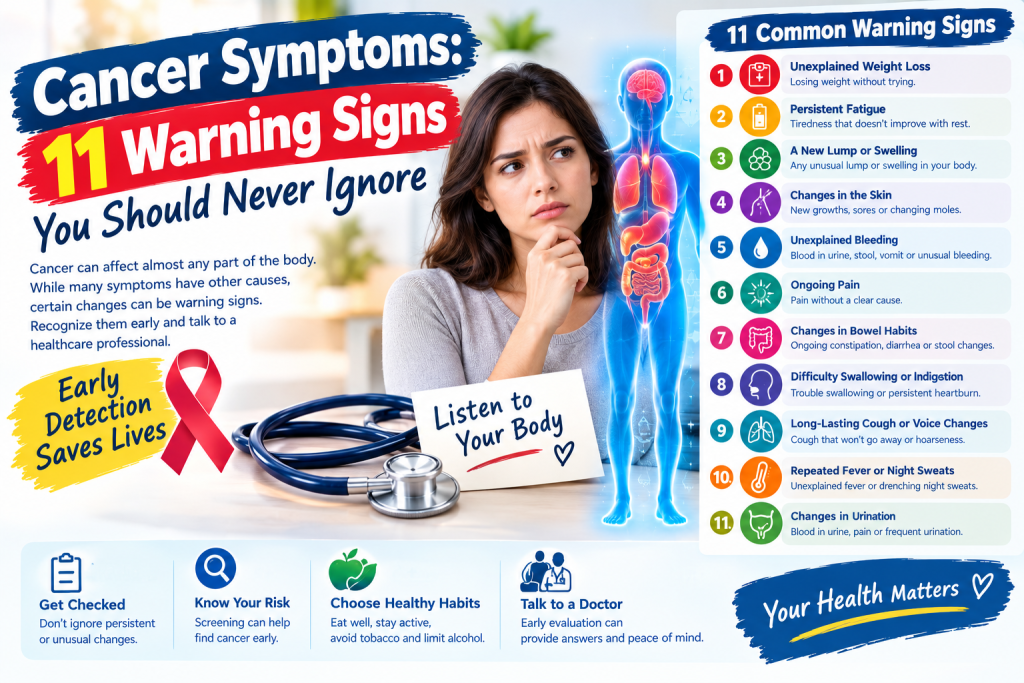
Cancer Symptoms: 11 Warning Signs You Should Never Ignore
Cancer is a broad group of diseases that can affect almost any part of the body. It develops when abnormal cells begin growing and dividing in an uncontrolled way. Because there are many different types of cancer, the signs can vary greatly from one person to another.
Some changes may be caused by cancer, while many others are linked to infections, hormonal changes, digestive problems, stress, medications, or other non-cancerous conditions. Having one possible warning sign does not automatically mean that someone has cancer. However, symptoms that are unusual, persistent, worsening, or difficult to explain deserve medical attention.
Understanding cancer symptoms can help people recognize changes in their health and know when it may be appropriate to speak with a healthcare professional. Early evaluation can be especially important because some cancers are easier to treat when discovered at an earlier stage.
What Are Cancer Symptoms?
Cancer symptoms are physical or functional changes that may occur when abnormal cells affect tissues, organs, or normal body processes. The symptoms depend on the location of the cancer, its size, how quickly it is growing, and whether it has affected other parts of the body.
Some cancers produce noticeable changes early, while others may cause few or no symptoms at first. This is one reason routine health checks and recommended screening tests can be important.
Symptoms can also overlap with ordinary health conditions. For example, tiredness may occur because of poor sleep or an infection, while unexplained weight loss may have many possible causes. The important factor is not to assume the cause without proper evaluation.
1. Unexplained Weight Loss
Losing weight without intentionally changing your diet or activity level can sometimes be a warning sign that needs investigation.
A small fluctuation in body weight is common. However, significant or continuing weight loss without an obvious explanation may occur with certain cancers and several other medical conditions.
Cancer can influence appetite, metabolism, digestion, and the body’s energy requirements. Some people may also experience reduced appetite or difficulty eating.
If you are losing weight despite making no deliberate effort to do so, especially when the change continues over time, discuss it with a healthcare professional.
2. Persistent or Unusual Fatigue
Everyone becomes tired occasionally. Lack of sleep, demanding work, stress, dehydration, and infections can all contribute to temporary fatigue.
Cancer-related fatigue can be different because it may persist despite adequate rest and interfere with normal daily activities.
Persistent tiredness can occur for many reasons, including anemia, thyroid disorders, nutritional deficiencies, infections, sleep problems, and other health conditions. Therefore, fatigue alone does not establish a cancer diagnosis.
If unexplained exhaustion continues or becomes severe, medical evaluation can help identify the underlying cause.
3. A New Lump or Swelling
A newly appearing lump or area of swelling can have many explanations. Cysts, infections, inflammation, injuries, and harmless growths can all produce lumps.
Nevertheless, a new lump that persists, becomes larger, feels unusual, or is associated with other changes should be examined.
Breast, neck, armpit, abdomen, and other areas of the body can develop noticeable masses for different reasons. Some cancers may produce a lump that is painless, meaning the absence of pain does not necessarily determine whether a lump is serious.
Do not try to diagnose a lump by its appearance or texture alone. A healthcare professional can decide whether additional testing is necessary.
4. Changes in the Skin
The skin can sometimes provide clues about changes occurring in the body.
Possible concerning changes include a new growth, a sore that does not heal, unusual bleeding, persistent scaling, or a mole that changes in size, shape, or color.
For skin cancer specifically, changes in an existing mole or the appearance of a new unusual skin lesion may require professional assessment.
Not every skin change is related to cancer. Sun exposure, eczema, infections, allergies, and minor injuries can cause similar findings.
Still, a skin change that remains present, evolves over time, or looks significantly different from your other spots should not be ignored.
5. Unexplained Bleeding
Unexpected bleeding can be another symptom that deserves attention.
Depending on where it occurs, bleeding may appear in urine, stool, vomit, sputum, or through abnormal vaginal bleeding. Persistent or unexplained bleeding can have many causes, including infections, hemorrhoids, ulcers, hormonal changes, medications, and other conditions.
In some situations, however, unusual bleeding may be associated with cancer.
The location, amount, frequency, and accompanying symptoms are important. For example, blood in the stool may look bright red or make stools appear darker, while blood in urine can change its color.
Any unexplained bleeding that continues or returns should be discussed with a healthcare professional.
6. Ongoing Pain Without a Clear Cause
Pain is extremely common and usually has a non-cancerous explanation. Muscle strain, arthritis, injuries, nerve irritation, headaches, and infections can all cause discomfort.
However, persistent pain that has no clear explanation, does not improve as expected, or progressively becomes worse may require further assessment.
The location of pain can sometimes provide useful information. Persistent headaches, abdominal discomfort, bone pain, or other unusual pain patterns may have numerous possible causes.
Pain by itself is not a reliable way to identify cancer. A medical professional considers the complete history, physical findings, and other symptoms before deciding whether further testing is appropriate.
7. Changes in Bowel Habits
A noticeable change in normal bowel function can occur for many reasons.
Dietary changes, stress, infections, medications, dehydration, food intolerances, and digestive disorders may cause constipation or diarrhea.
However, a bowel habit change that persists for several weeks or occurs together with other concerning symptoms should be evaluated.
Potential warning changes include ongoing constipation, persistent diarrhea, a major alteration in stool consistency, or a feeling that the bowel has not completely emptied.
Blood in the stool, unexplained weight loss, or persistent abdominal discomfort can make medical evaluation particularly important.
8. Difficulty Swallowing or Persistent Indigestion
Occasional heartburn or indigestion is common. Eating large meals, certain foods, stress, and acid reflux can all produce digestive discomfort.
Persistent difficulty swallowing, repeated discomfort when eating, or ongoing indigestion should not simply be dismissed when it does not improve.
Some conditions affecting the digestive tract can cause swallowing problems, and in certain cases these symptoms can be associated with cancer.
Other possible causes include acid reflux, inflammation, infections, narrowing of the esophagus, or certain neurological conditions.
If swallowing becomes increasingly difficult, professional assessment is important so the underlying cause can be identified.
9. Long-Lasting Cough or Voice Changes
A cough is often caused by respiratory infections, allergies, asthma, acid reflux, or environmental irritation.
Most short-term coughs eventually improve. A cough that continues for an extended period, repeatedly returns, or occurs with other unusual symptoms deserves medical attention.
Changes in the voice can also have many explanations, including infections, vocal strain, reflux, and irritation. Persistent hoarseness, particularly when there is no obvious reason for it, should be checked.
A healthcare professional may consider the duration of symptoms, smoking history, medications, exposure to irritants, and other health factors when determining what evaluation is needed.
10. Repeated Fever or Night Sweats
Fever usually indicates that the immune system is responding to an infection or another inflammatory process.
In some circumstances, persistent or recurring fever without an identifiable cause can be associated with certain cancers. Night sweats may also occur in a variety of conditions.
However, these symptoms are not specific to cancer. Tuberculosis, infections, hormonal changes, medications, and autoimmune disorders can also cause fever or sweating.
If unexplained fever keeps returning, lasts longer than expected, or is accompanied by weight loss, weakness, swollen lymph nodes, or other unusual changes, medical advice is appropriate.
11. Persistent Changes in Urination
Changes in urination are common and can result from dehydration, urinary infections, prostate problems, diabetes, medications, or changes in fluid intake.
Some symptoms that deserve attention include blood in the urine, persistent pain during urination, a major change in urinary frequency, difficulty starting or maintaining urine flow, or other unusual urinary changes.
These symptoms do not necessarily indicate cancer. For example, urinary tract infections can cause burning and frequent urination, while prostate enlargement can affect urine flow.
Nevertheless, persistent or unexplained urinary changes should be evaluated rather than ignored.
Why Early Evaluation Matters
One of the most important things to understand about cancer symptoms is that early symptoms can sometimes be subtle.
A person may notice a small change and assume it is caused by stress, aging, diet, or a minor illness. In many cases, that assumption is correct. But when a symptom persists or changes over time, checking with a healthcare professional can provide clarity.
Early evaluation does not mean that cancer is expected. It simply means that the possible causes are being investigated instead of being left unexplained.
Depending on the situation, a healthcare professional may perform a physical examination and recommend blood tests, imaging, laboratory testing, or other investigations.
When Should You Talk to a Doctor?
You should consider medical advice when a symptom is:
- New and unexplained
- Persistent or repeatedly returning
- Becoming more severe
- Associated with unexplained weight loss
- Accompanied by unusual bleeding
- Associated with a new lump or swelling
- Interfering with eating, sleeping, breathing, or normal activities
- Significantly different from your usual health pattern
You do not need to wait until symptoms become severe before seeking advice.
At the same time, it is important not to panic after noticing one symptom from a cancer warning-sign list. Most individual symptoms have several possible explanations, many of which are treatable and non-cancerous.
How Cancer Is Diagnosed
Symptoms alone cannot confirm cancer.
If a healthcare professional believes further investigation is necessary, the diagnostic process may involve several steps. These can include discussing your medical history, examining the affected area, performing laboratory tests, and using imaging techniques.
Depending on the suspected condition, doctors may use ultrasound, X-rays, CT scans, MRI scans, endoscopy, mammography, or other diagnostic methods.
In some cases, a biopsy is required. During a biopsy, a sample of tissue is collected and examined in a laboratory. This can help determine whether abnormal cells are present and what type they may be.
The exact process depends on the symptoms and suspected type of disease.
Cancer Screening and Prevention
Not every cancer causes obvious symptoms in its early stages. Screening can therefore play an important role for certain cancers.
Screening recommendations vary according to factors such as age, sex, personal history, family history, and individual risk.
Common screening approaches may include tests for colorectal cancer, breast cancer, cervical cancer, and lung cancer for people who meet specific eligibility criteria.
Healthy lifestyle choices may also reduce the risk of developing some cancers. These include avoiding tobacco, maintaining a healthy body weight, staying physically active, eating a balanced diet, limiting excessive alcohol consumption, protecting the skin from excessive ultraviolet exposure, and following recommended vaccination guidance.
Prevention cannot eliminate cancer risk completely, but healthy habits can contribute to overall health.
Common Misunderstandings About Cancer Symptoms
There are many misconceptions about cancer.
One common misunderstanding is that cancer always causes severe pain. This is not true. Some cancers may cause little or no pain during their early stages.
Another misconception is that every lump is cancerous. In reality, many lumps are benign and may be caused by cysts, inflammation, infections, or other conditions.
Some people also believe that feeling healthy means cancer is impossible. Certain cancers can remain unnoticed for some time, which is why appropriate screening and medical evaluation are important.
It is equally unhelpful to assume that every unusual symptom is cancer. Doing so can create unnecessary fear. The best approach is balanced: recognize persistent changes, avoid self-diagnosis, and seek professional evaluation when appropriate.
What You Should Remember
Recognizing possible cancer symptoms is about awareness rather than fear.
Unexplained weight loss, persistent fatigue, unusual bleeding, new lumps, ongoing pain, bowel changes, swallowing difficulties, prolonged cough, persistent fever, skin changes, and urinary changes can all have many different causes.
The key is to pay attention when something is unusual for you and does not resolve as expected.
A symptom cannot tell you by itself whether cancer is present. Only appropriate medical evaluation and diagnostic testing can determine the cause.
If you notice a persistent or concerning change in your health, contact a qualified healthcare professional. Getting checked does not mean you have cancer—it means you are taking your health seriously.
Final Thoughts
Learning about cancer symptoms can help people become more aware of changes that should receive medical attention. Cancer is not one single disease, so symptoms can differ considerably depending on the type and location.
The most useful approach is to avoid both extremes: do not ignore persistent warning signs, but do not assume that every unusual symptom means cancer.
Pay attention to changes in your body, follow recommended screening guidance, maintain healthy habits, and speak with a healthcare professional when something feels unusual or continues without an obvious explanation.
Early medical advice can provide reassurance when the cause is harmless and can help identify problems that require treatment.