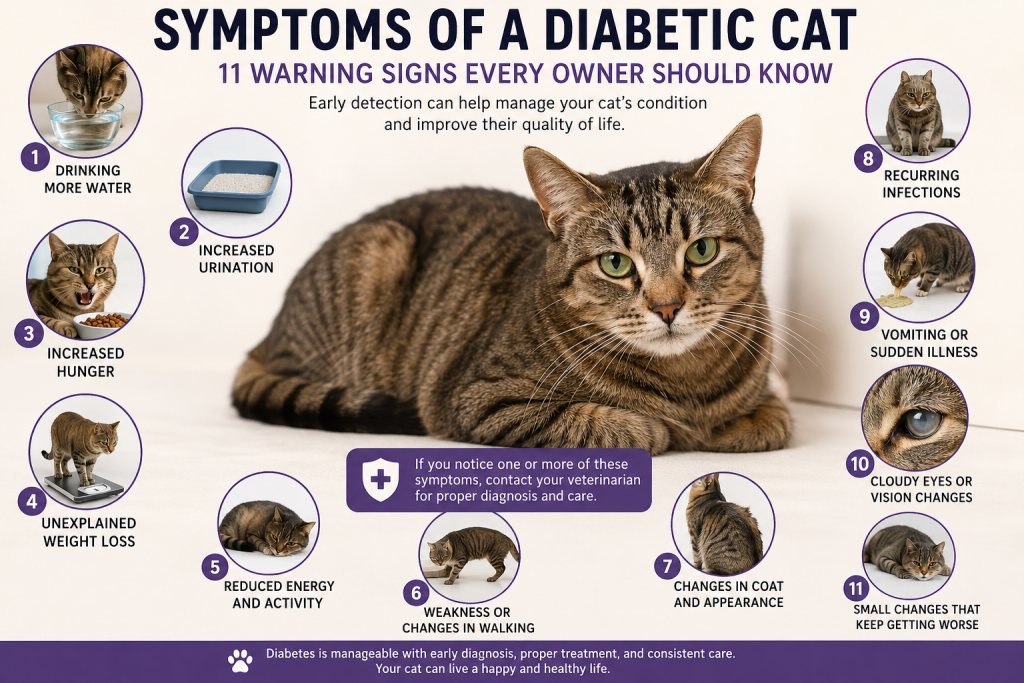
Symptoms of a Diabetic Cat: 11 Warning Signs Every Owner Should Know
Cats can develop diabetes mellitus just like humans. The condition affects the way a cat’s body uses glucose, which is an important source of energy. When insulin is insufficient or the body’s cells do not respond properly to it, glucose can remain in the bloodstream instead of being used efficiently by the body’s tissues.
Recognizing the symptoms of a diabetic cat can help owners seek veterinary care sooner. The most noticeable changes often involve drinking, urination, appetite, and body weight. However, other changes in behavior, energy, movement, and general health may also develop.
Feline diabetes is a manageable condition when it is identified and treated appropriately. Cats with diabetes may continue to have a good quality of life when their condition is carefully monitored with veterinary guidance.
What Is Diabetes in Cats?
Diabetes mellitus occurs when a cat’s body cannot regulate blood glucose properly.
Insulin is produced by the pancreas and helps glucose move from the bloodstream into cells where it can be used for energy. When insulin production is inadequate or the body’s tissues become resistant to insulin, glucose accumulates in the blood.
Cats most commonly develop a form of diabetes resembling type 2 diabetes in humans. Several factors can increase the risk, including excess body weight, increasing age, reduced physical activity, and certain medications or underlying health conditions.
Because high blood glucose affects several body systems, owners may notice multiple changes at home.
1. Drinking Much More Water
One of the most recognizable symptoms of a diabetic cat is increased thirst.
A cat that suddenly spends much more time at the water bowl may be trying to replace fluid lost through increased urination. High blood glucose can cause glucose to enter the urine, and this can increase the amount of water lost from the body.
You may notice your cat visiting the water bowl more frequently, drinking from sinks, or seeking water from unusual places.
Cats can have different drinking habits depending on their diet. Cats eating wet food may naturally obtain a substantial amount of water from their meals, which can make changes in drinking behavior less obvious.
If your cat begins drinking noticeably more than usual, particularly when the change continues, contact a veterinarian for advice.
2. Increased Urination
Frequent urination is another important warning sign.
When excess glucose enters the urine, it can draw additional water into the urine. This may result in larger amounts of urine and more frequent trips to the litter box.
Owners may notice that the litter box becomes wetter than normal or needs cleaning more frequently.
Some cats may also begin having accidents outside the litter box. While inappropriate urination can have many causes, a sudden increase in urine production should not be ignored.
Urinary infections, kidney disease, hormonal disorders, and other conditions can produce similar changes, so veterinary testing is necessary to determine the cause.
3. Increased Hunger
Another classic sign is an unusually strong appetite.
A diabetic cat may appear hungry even after eating a normal meal. The reason is related to how glucose is being used by the body’s cells.
When glucose cannot enter cells efficiently, the body may behave as though it does not have enough available energy. This can increase appetite even when plenty of food is being consumed.
You may notice your cat finishing meals faster, begging for food, searching for food, or appearing interested in eating more frequently.
An increased appetite by itself does not prove diabetes. Parasites, thyroid disease, dietary changes, and other health conditions can also affect appetite.
4. Unexplained Weight Loss
Weight loss despite a strong appetite is one of the most important symptoms of a diabetic cat.
Normally, food provides nutrients that are processed and delivered to the body’s cells. With diabetes, glucose may remain in the bloodstream instead of being effectively used for energy.
The body may then begin breaking down stored fat and protein to meet its energy needs. As a result, a cat can lose body weight even while eating well.
This can be particularly easy to miss in cats that were previously overweight.
Regularly monitoring your cat’s weight can help you notice gradual changes that may otherwise be difficult to see.
If your cat is losing weight without an intentional diet change, arrange a veterinary examination.
5. Reduced Energy and Activity
Some diabetic cats become less active.
You might notice your cat sleeping more, playing less, avoiding stairs, or showing less interest in activities that previously excited them.
Reduced energy can occur because the body’s cells are not using glucose effectively for energy. However, lethargy is a very general symptom and can be caused by numerous illnesses.
Older cats in particular may gradually become less active, so it can be easy to dismiss the change as normal aging.
A clear decline in activity, especially when combined with increased thirst, urination, appetite, or weight loss, deserves veterinary attention.
6. Weakness or Changes in Walking
Uncontrolled diabetes can occasionally affect the nerves of the hind limbs.
Some cats may develop a characteristic walking or standing posture in which the hocks are closer to the ground than usual. This condition is known as a plantigrade stance. Cornell notes that this nerve-related complication can improve when diabetes is treated appropriately.
An unusual gait can also result from arthritis, injury, neurological disorders, or other problems.
For that reason, owners should not assume that a walking change is caused by diabetes. A veterinarian should examine the cat to determine what is happening.
7. Changes in Coat and General Appearance
A cat that does not feel well may gradually look different.
The coat may appear less well-groomed, dull, or unkempt. Cats are normally meticulous groomers, so a noticeable reduction in grooming behavior can be a sign that something is wrong.
Changes in appearance are not specific to diabetes. Dental disease, arthritis, pain, kidney disease, infections, and many other conditions can reduce grooming.
When coat changes occur together with increased thirst, frequent urination, appetite changes, or weight loss, a veterinary checkup becomes especially important.
8. Recurring Infections
Cats with diabetes may be more susceptible to certain infections.
Recurring urinary or skin problems can sometimes occur when blood glucose remains poorly controlled. VCA notes that chronic or recurring infections may occur in diabetic pets.
Possible signs may include repeated urinary problems, changes in urination behavior, skin irritation, or other recurring infections.
However, recurrent infections can also have many other causes. A veterinarian may recommend blood and urine testing to determine whether diabetes or another underlying condition is involved.
9. Vomiting or Sudden Illness
Vomiting is not one of the classic early signs of uncomplicated feline diabetes, but it can become important when diabetes is poorly controlled or complications develop.
A diabetic cat that suddenly becomes very weak, stops eating, vomits repeatedly, or appears severely unwell may require urgent veterinary care.
One serious complication is diabetic ketoacidosis. This develops when the body begins breaking down large amounts of fat for energy, producing ketones that can make the blood dangerously acidic. Cornell describes diabetic ketoacidosis as a medical emergency requiring veterinary treatment.
Do not attempt to manage a seriously ill cat at home.
10. Cloudy Eyes or Vision Changes
Changes involving the eyes can occur with diabetes, although they are more characteristic of diabetic dogs than cats.
Cloudiness, vision changes, or unusual eye appearance should always be evaluated by a veterinarian because eye problems can have many causes.
A cat that suddenly bumps into objects, becomes hesitant in unfamiliar areas, or behaves as though it cannot see properly needs prompt professional assessment.
Eye changes should never be diagnosed solely from an online symptom list.
11. Changes That Seem Small but Keep Getting Worse
Sometimes the earliest symptoms of a diabetic cat are not dramatic.
Instead of one obvious problem, an owner may notice several small changes:
- The water bowl empties faster.
- The litter box becomes wetter.
- The cat asks for food more often.
- The cat loses a little weight.
- Playtime becomes shorter.
- The cat sleeps more.
- Grooming becomes less frequent.
Each change may seem harmless when considered separately. Together, however, they may indicate that your cat needs a health assessment.
Keeping notes about changes in drinking, eating, urination, activity, and weight can give your veterinarian useful information.
Why Diabetes Can Cause These Symptoms
Understanding the basic mechanism can make the signs easier to recognize.
Glucose is an important energy source for the body. Insulin helps move glucose from the bloodstream into cells.
When insulin is not working properly, glucose can accumulate in the bloodstream. Once blood glucose becomes sufficiently high, the kidneys may begin passing glucose into the urine.
This contributes to increased urine production and fluid loss. The cat then becomes thirstier and drinks more water.
At the same time, cells may not receive glucose efficiently for energy. The body can respond by breaking down stored fat and protein, contributing to weight loss.
This explains why increased thirst, increased urination, increased appetite, and weight loss often appear together in diabetic cats.
Which Cats Are More at Risk?
Diabetes can affect different cats, but some factors increase the likelihood.
Excess body weight is an important risk factor. Obesity can contribute to insulin resistance, making it harder for the body to regulate blood glucose. Older age and low physical activity are also recognized risk factors.
Certain medications, including glucocorticoids, can also influence diabetes risk in susceptible cats.
This does not mean that every overweight or older cat will develop diabetes. It simply means that owners and veterinarians may need to pay closer attention to changes in health.
How Is Diabetes Diagnosed in a Cat?
The symptoms of a diabetic cat can suggest that diabetes may be present, but symptoms alone cannot confirm the diagnosis.
Veterinarians generally use blood and urine testing to investigate suspected diabetes. Persistent elevation of blood glucose together with glucose in the urine and compatible clinical signs can support a diagnosis.
Cats can experience stress-related increases in blood glucose during veterinary visits. Because of this, a single elevated blood glucose measurement may not always be enough.
A veterinarian may recommend additional testing, such as a fructosamine test, which can provide information about average blood glucose levels over a period of time.
Other tests may also be recommended to look for conditions that can cause similar symptoms or occur alongside diabetes.
What Treatment May Involve
Treatment depends on the individual cat and the veterinarian’s assessment.
Traditional management may involve insulin therapy combined with dietary changes. Some cats may also be candidates for newer oral medications, depending on their health and veterinary evaluation.
The goal of treatment is to control blood glucose while avoiding dangerously low blood sugar.
Owners should never change an insulin dose independently unless instructed by their veterinarian. Giving too much insulin can cause hypoglycemia, which can become life-threatening.
Consistent monitoring and communication with the veterinary team are important parts of diabetes management.
Can a Diabetic Cat Live a Normal Life?
Many diabetic cats can maintain a good quality of life when their condition is managed carefully.
Cornell notes that some cats can enter diabetic remission, meaning they can maintain normal blood glucose without ongoing insulin injections for a period of time. However, remission is not guaranteed, and cats that achieve remission still require monitoring.
The earlier the condition is recognized and appropriately managed, the better the opportunity to control symptoms and complications.
Owners can help by following the veterinarian’s instructions, monitoring appetite and water intake, tracking body weight, giving medications exactly as prescribed, and attending recommended follow-up appointments.
When Is a Diabetic Cat an Emergency?
Certain symptoms require immediate veterinary attention.
Seek urgent veterinary care if a cat with suspected or diagnosed diabetes develops severe weakness, collapse, repeated vomiting, seizures, major coordination problems, or becomes difficult to wake.
These signs can occur with dangerously low blood sugar or serious diabetic complications. Hypoglycemia can cause weakness, lethargy, shaking, unsteadiness, seizures, and potentially coma.
If your cat receives insulin and then develops concerning symptoms, contact your veterinarian or an emergency veterinary service immediately.
Never give additional insulin because you think the symptoms indicate high blood sugar unless your veterinarian specifically instructs you to do so.
How Owners Can Monitor Their Cat
Once diabetes is diagnosed, observation at home becomes very valuable.
Keep track of:
- Daily appetite
- Water consumption
- Litter box habits
- Body weight
- Activity level
- General behavior
- Medication or insulin given
- Any vomiting or unusual symptoms
A simple written record can help identify trends.
Cornell recommends monitoring factors such as water intake, urine production, appetite, body weight, activity, and medication as part of diabetic cat care.
Home glucose monitoring may also be useful for some cats, but it should be performed according to veterinary guidance.
Final Thoughts
Knowing the symptoms of a diabetic cat can help owners recognize potentially important changes before they become severe.
The most common signs include increased thirst, increased urination, increased appetite, and unexplained weight loss. Reduced activity, weakness, recurring infections, changes in grooming, and other health changes may also occur.
However, these symptoms are not unique to diabetes. Kidney disease, thyroid problems, urinary conditions, infections, digestive disorders, and other illnesses can produce similar signs.
If your cat is drinking considerably more water, urinating more often, losing weight despite eating, or showing several unusual changes at once, arrange a veterinary examination.
Diabetes cannot be diagnosed reliably from symptoms alone. Proper blood and urine testing is needed, and treatment should be guided by a veterinarian.
Most importantly, do not panic when you notice one possible warning sign. Instead, pay attention to persistent changes, keep useful records, and seek professional veterinary advice when something about your cat’s health does not seem normal.