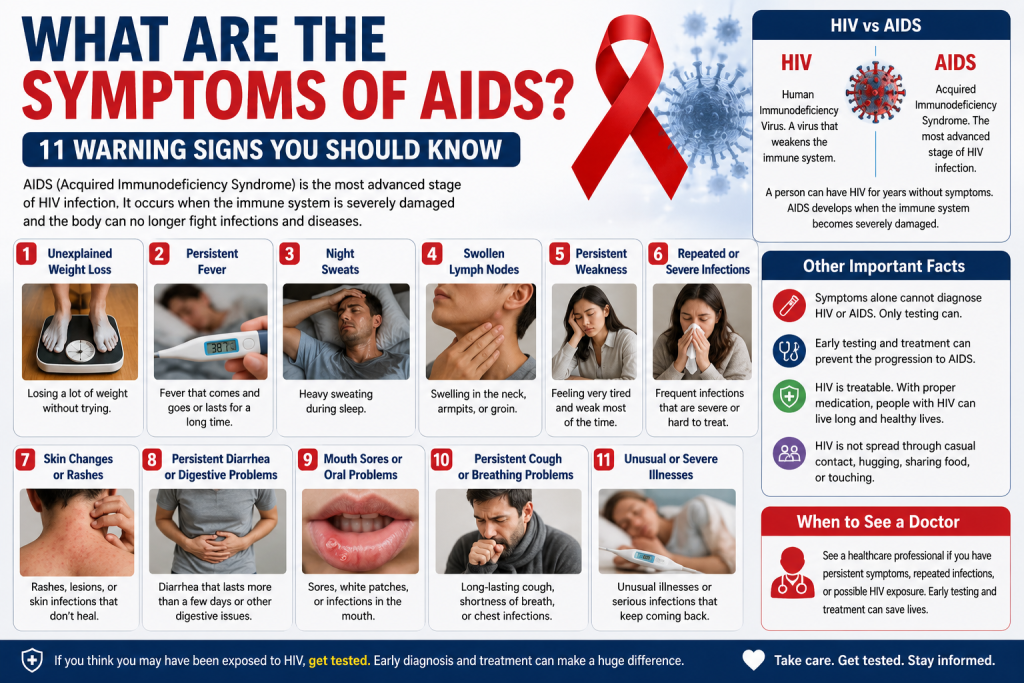
What Are the Symptoms of AIDS? 11 Warning Signs You Should Know
What are the symptoms of AIDS? This is an important health question because HIV and AIDS are closely connected but are not exactly the same thing. HIV is a virus that attacks the body’s immune system, while AIDS, or acquired immunodeficiency syndrome, is the most advanced stage of HIV infection.
Without effective treatment, HIV can gradually weaken the immune system and may eventually progress to AIDS. Modern HIV treatment can greatly slow or prevent this progression, allowing people living with HIV to maintain their health for many years.
The symptoms associated with advanced HIV and AIDS can vary from person to person. Some people may experience significant weight loss, persistent fever, night sweats, swollen lymph nodes, weakness, or repeated infections. However, these symptoms can also occur with many other health conditions.
Importantly, symptoms alone cannot tell someone whether they have HIV or AIDS. Testing and medical evaluation are necessary for an accurate diagnosis.
What Is the Difference Between HIV and AIDS?
Before discussing what are the symptoms of AIDS, it is important to understand the difference between HIV and AIDS.
HIV stands for human immunodeficiency virus. The virus attacks CD4 cells, which are an important part of the immune system. As HIV damages these cells, the body can become less capable of fighting infections and certain diseases.
AIDS stands for acquired immunodeficiency syndrome. It is the most advanced stage of HIV infection and occurs when the immune system has become severely damaged. According to the National Institutes of Health, a person with HIV can be diagnosed with AIDS when their CD4 count falls below 200 cells/mm³ or when certain opportunistic infections or other AIDS-defining conditions occur.
A person can have HIV without having AIDS. With appropriate antiretroviral therapy, many people with HIV never develop AIDS.
1. Significant or Unexplained Weight Loss
One of the possible warning signs associated with advanced HIV infection is unexplained weight loss.
A person may lose weight without intentionally changing their diet or exercise routine. This can happen for several reasons, including reduced appetite, persistent infections, digestive problems, or the body’s increased energy demands during illness.
Unexplained weight loss is not specific to AIDS. Cancer, thyroid disorders, digestive diseases, infections, stress, and many other conditions can cause similar changes.
If weight loss is significant or continues without an obvious explanation, it should be evaluated by a healthcare professional.
2. Persistent Fever
Another possible symptom is a fever that continues or repeatedly returns without an obvious cause.
A fever is usually the body’s response to infection or inflammation. When the immune system becomes severely weakened, the body may have difficulty controlling certain infections.
People with advanced HIV can develop opportunistic infections, which are infections that may occur more frequently or become more severe when the immune system is weakened.
A persistent fever does not automatically indicate AIDS. Many common infections can cause fever, so medical testing is needed to identify the reason.
3. Night Sweats
Heavy sweating during sleep can occur in people with a variety of health conditions.
When night sweats repeatedly soak clothing or bedding without an obvious environmental explanation, medical evaluation may be appropriate.
Night sweats can occur with infections, hormonal changes, certain medications, cancers, and other conditions. They may also occur during HIV infection.
When night sweats appear together with unexplained weight loss, persistent fever, swollen lymph nodes, or repeated infections, a healthcare professional may recommend further testing.
4. Swollen Lymph Nodes
Lymph nodes are small structures that help the immune system identify and respond to infections.
Swollen lymph nodes can occur during many infections, including HIV. They may appear in areas such as the neck, armpits, or groin.
Swollen lymph nodes do not mean that a person has AIDS. Viral infections, bacterial infections, dental problems, inflammation, and other conditions can also cause lymph node enlargement.
However, lymph nodes that remain enlarged, become painful, continue growing, or occur together with other unexplained symptoms should be medically assessed.
5. Persistent Weakness and Fatigue
Severe or ongoing fatigue can occur when the body is dealing with chronic infection or other health problems.
A person may feel unusually weak, have little energy, or find normal activities more difficult than before.
Fatigue is one of the least specific symptoms because it can result from poor sleep, anemia, depression, nutritional deficiencies, infections, medication effects, and many other conditions.
However, persistent weakness combined with other concerning symptoms should not be ignored.
A healthcare professional can determine whether blood tests, HIV testing, or other investigations are appropriate.
6. Repeated or Severe Infections
When HIV severely damages the immune system, the body becomes more vulnerable to infections.
These are often called opportunistic infections because they can take advantage of a weakened immune system. Some infections may be more frequent, more severe, or more difficult to treat in people with advanced HIV.
Examples of serious illnesses associated with advanced HIV can include tuberculosis, certain forms of pneumonia, and other infections.
Repeated infections do not automatically mean someone has AIDS. People without HIV can also experience recurrent infections for many reasons.
However, unexplained or unusually severe infections warrant medical evaluation.
7. Persistent Skin Changes or Rashes
Skin problems can occur at different stages of HIV infection.
A person may experience rashes, persistent skin irritation, infections, or other changes. Some skin conditions can become more severe when the immune system is weakened.
Certain cancers, including Kaposi sarcoma, can also be associated with advanced HIV infection.
It is important not to diagnose HIV or AIDS from a skin rash. Allergies, eczema, infections, medications, and many other conditions can produce similar appearances.
A new, persistent, unusual, or rapidly changing skin lesion should be examined by a healthcare professional.
8. Persistent Diarrhea or Digestive Problems
Ongoing diarrhea can have many causes, including food poisoning, infections, medications, food intolerances, inflammatory bowel conditions, and other digestive problems.
In people with advanced HIV, weakened immunity can increase vulnerability to certain gastrointestinal infections.
Persistent diarrhea can lead to dehydration, electrolyte abnormalities, weakness, and weight loss.
If diarrhea continues for an extended period, repeatedly returns, contains blood, or occurs together with fever or significant weight loss, medical assessment is important.
9. Mouth Sores or Persistent Oral Problems
Changes inside the mouth can sometimes occur in people with weakened immune systems.
Possible problems include persistent mouth ulcers, infections, painful swallowing, or unusual patches in the mouth.
Some oral infections can become more common or severe when immune defenses are reduced.
However, mouth sores are extremely common and can occur because of minor injuries, nutritional deficiencies, stress, viral infections, dental problems, or other causes.
Persistent or recurrent oral problems should be evaluated rather than assumed to indicate AIDS.
10. Persistent Cough or Breathing Problems
Respiratory symptoms may become particularly concerning when the immune system is severely weakened.
A persistent cough, shortness of breath, chest discomfort, fever, or recurring respiratory infections can have many possible causes.
People with advanced HIV can be more susceptible to certain infections that may affect the lungs. Tuberculosis and certain types of pneumonia are examples of illnesses that can become serious in people with weakened immunity.
Breathing difficulty should never be ignored. Severe shortness of breath, chest pain, confusion, or blue or gray lips or skin requires urgent medical attention.
11. Unusual or Severe Illnesses
The most important point when considering what are the symptoms of AIDS is that advanced HIV may be associated with illnesses that are unusual, persistent, severe, or difficult to treat.
This happens because AIDS involves substantial immune-system damage.
A person may develop opportunistic infections or certain cancers that occur more frequently or behave more severely when immune defenses are compromised.
The presence of one unusual illness does not automatically mean AIDS. Doctors consider the person’s medical history, HIV status, CD4 count, laboratory findings, and the presence of AIDS-defining conditions.
Can HIV Have Symptoms Before AIDS?
Yes. HIV can cause symptoms before a person develops AIDS.
During acute HIV infection, which generally occurs about two to four weeks after infection, some people develop a flu-like illness. Possible symptoms include fever, chills, rash, sore throat, headache, muscle aches, fatigue, swollen lymph nodes, diarrhea, and mouth ulcers.
Other people may have mild symptoms or no noticeable symptoms at all.
After the acute stage, HIV can enter a chronic stage during which a person may have few or no symptoms for a long period. Without treatment, HIV can eventually progress to AIDS.
This is why a person cannot reliably determine their HIV status from symptoms alone.
Can You Have HIV Without Symptoms?
Yes.
Some people with HIV may not feel sick, particularly during the chronic stage. This means someone can have HIV without obvious warning signs.
Because symptoms are unreliable for identifying HIV, testing is the appropriate way to determine whether infection is present.
People who believe they may have been exposed to HIV should speak with a healthcare professional about the appropriate test and timing.
How Is AIDS Diagnosed?
Symptoms alone cannot diagnose AIDS.
Healthcare professionals consider laboratory results and clinical findings. According to NIH, AIDS can be diagnosed when a person with HIV has a CD4 count below 200 cells/mm³ or develops certain opportunistic infections or other AIDS-defining conditions.
HIV testing can determine whether someone has HIV infection, while additional medical evaluation can determine the stage of the infection and assess immune-system health.
A healthcare provider may evaluate CD4 cell counts, viral load, symptoms, infections, medical history, and other laboratory findings.
Why HIV Testing Matters
If someone has had a possible HIV exposure, waiting for symptoms is not a reliable strategy.
Some people experience no noticeable symptoms after infection, while others may develop symptoms that look like common illnesses.
Testing can provide information that symptoms cannot.
Early diagnosis also creates an opportunity to begin treatment promptly. NIH recommends HIV treatment for everyone with HIV, and treatment should generally begin as soon as possible after diagnosis.
How Is HIV Treated?
HIV is treated with antiretroviral therapy, commonly called ART.
ART uses HIV medicines to reduce the amount of virus in the body. Lowering the viral load helps protect the immune system and reduces the risk of HIV progressing to more advanced disease.
Modern HIV treatment can be highly effective. People who take their medication as prescribed can often maintain strong immune function and live long, healthy lives.
Treatment does not currently eliminate HIV from the body completely, but it can suppress the virus to very low or undetectable levels.
Can HIV Progress to AIDS?
Untreated HIV can progress through stages and eventually lead to AIDS.
The progression is not inevitable for people who receive effective treatment. ART can slow or prevent HIV from progressing to advanced stages.
This is one of the major reasons early HIV diagnosis and treatment are so important.
Even people who have already developed AIDS can benefit from HIV treatment. HIV medicines can suppress the virus and allow the immune system to recover to some degree.
When Should You See a Doctor?
Medical advice is particularly important if you experience unexplained symptoms that persist or worsen.
Consider speaking with a healthcare professional if you have:
- Unexplained weight loss
- Persistent fever
- Repeated night sweats
- Enlarged lymph nodes
- Ongoing weakness
- Recurrent or severe infections
- Persistent diarrhea
- Unusual mouth or skin changes
- Long-lasting cough
- Unexplained breathing problems
These symptoms do not prove HIV or AIDS, but they may require medical investigation.
If you believe you have recently been exposed to HIV, contact a healthcare provider promptly rather than waiting for symptoms to appear.
Emergency Symptoms
Some symptoms require immediate medical attention regardless of whether HIV is suspected.
Seek urgent care for severe difficulty breathing, chest pain, fainting, confusion, seizures, severe dehydration, sudden weakness, or other rapidly worsening symptoms.
People with known HIV who develop severe or unusual infections should also contact their healthcare team promptly.
How Can HIV Be Prevented?
HIV prevention involves reducing opportunities for exposure.
Depending on individual circumstances, prevention strategies can include using condoms correctly, avoiding sharing injection equipment, getting tested for HIV and other sexually transmitted infections, and discussing preventive medications such as PrEP with a healthcare professional.
People living with HIV can also reduce transmission risk by taking ART consistently and maintaining an undetectable viral load. CDC and NIH state that people with HIV who maintain an undetectable viral load through effective treatment do not transmit HIV through sex.
Prevention strategies should be personalized according to a person’s health, relationships, and potential exposure risks.
Important Facts About HIV and AIDS
There are several misconceptions about HIV and AIDS.
HIV is not spread through ordinary casual contact such as sharing dishes, toilet seats, or door handles. It is also not spread through the air, water, mosquitoes, ticks, or other insects.
A person should not be judged or isolated because they have HIV.
With modern treatment, HIV is a manageable chronic health condition for many people. Treatment can protect immune function and help people live long, healthy lives.
Final Thoughts
So, what are the symptoms of AIDS?
Advanced HIV infection and AIDS can be associated with symptoms such as unexplained weight loss, persistent fever, night sweats, swollen lymph nodes, weakness, recurrent infections, skin changes, digestive problems, mouth problems, respiratory symptoms, and unusual or severe illnesses.
However, none of these symptoms alone can confirm AIDS.
HIV and AIDS are different. HIV is the virus, while AIDS is the most advanced stage of HIV infection. A person can have HIV without having AIDS, and effective treatment can prevent HIV from progressing to AIDS in many people.
If you are concerned about a possible HIV exposure or persistent symptoms, do not rely on an online symptom list. Speak with a qualified healthcare professional and ask about appropriate HIV testing.
Early diagnosis and treatment can make a major difference. Modern antiretroviral therapy can suppress HIV, protect the immune system, reduce the risk of progression, and help people with HIV live long and healthy lives.