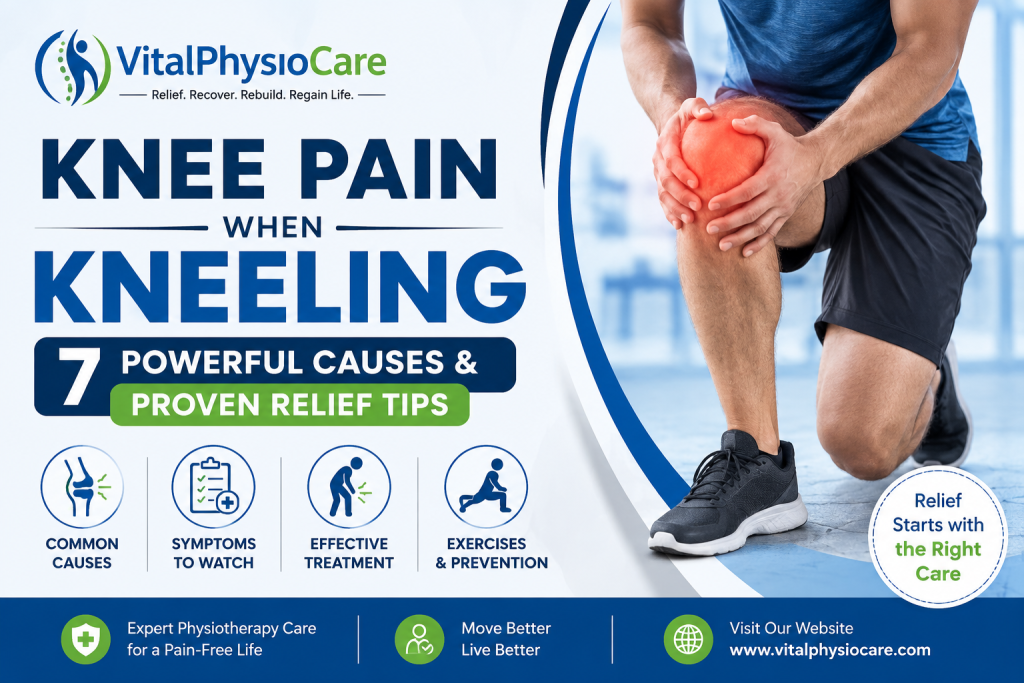
Knee Pain When Kneeling: 7 Powerful Causes & Proven Relief Tips
Knee pain when kneeling is a common problem that can make everyday activities uncomfortable. Kneeling may be necessary while gardening, praying, cleaning, exercising, working on the floor, or playing with children. When the knee hurts every time you put pressure on it, even a simple movement can become frustrating.
The pain may occur directly over the kneecap, underneath it, around the joint, or deeper inside the knee. Some people experience a sharp sensation as soon as their knee touches the floor, while others notice aching, swelling, stiffness, burning, or tenderness afterward.
Several conditions can cause this type of discomfort. Sometimes the problem is related to prolonged pressure on the front of the knee. In other cases, inflammation, arthritis, cartilage problems, injury, or irritation of surrounding tissues may be involved.
Understanding the possible causes can help you decide whether simple activity modification may be enough or whether you should seek professional assessment.
Medical note: This article provides general educational information and is not a diagnosis. Persistent, severe, or unexplained knee pain should be assessed by a qualified healthcare professional.
What Is Knee Pain When Kneeling?
Kneeling places direct pressure on the front of the knee and also requires substantial knee flexion. If tissues around the kneecap or inside the joint are irritated, this position may reproduce symptoms.
The pain can vary considerably from person to person.
You may experience:
- Sharp pain when the knee touches the ground
- Aching after kneeling
- Swelling around the kneecap
- Tenderness at the front of the knee
- Stiffness after getting up
- Burning or pressure
- Pain during deep knee bending
- Discomfort when sitting on your heels
- Difficulty returning to standing
The location and behavior of the pain can provide useful clues, but they cannot confirm the exact cause without an assessment.
7 Common Causes of Knee Pain When Kneeling
1. Prepatellar Bursitis
One of the most common reasons for knee pain when kneeling is irritation of the prepatellar bursa.
A bursa is a small fluid-filled sac that helps reduce friction between tissues. The prepatellar bursa is located in front of the kneecap.
Repeated kneeling can irritate this structure. For this reason, prepatellar bursitis is sometimes associated with occupations or activities that involve frequent kneeling.
You may notice:
- Swelling directly over the kneecap
- Tenderness
- Pain when pressure is applied
- Warmth around the area
- Difficulty kneeling comfortably
Repeated pressure can make symptoms worse, so temporarily reducing kneeling activities may help.
If the swelling becomes hot, red, increasingly painful, or is accompanied by fever, medical assessment is important because an infected bursa can require treatment.
2. Osteoarthritis
Osteoarthritis can affect the knee and cause pain, stiffness, swelling, and difficulty with movement.
People with knee arthritis may experience discomfort during activities that place stress on the joint, including squatting, stairs, prolonged standing, and kneeling.
Other possible symptoms include:
- Stiffness after inactivity
- Reduced knee movement
- Aching after activity
- Swelling
- Clicking or grinding sensations
Kneeling can become uncomfortable because the knee is placed into deep flexion while pressure is also applied.
Exercise, strengthening, weight management when appropriate, and professional rehabilitation may help many people manage symptoms associated with knee osteoarthritis.
3. Patellofemoral Pain
Patellofemoral pain involves the area around or behind the kneecap.
It can be associated with activities that repeatedly load the knee, particularly movements involving bending and straightening.
People may experience pain during:
- Squatting
- Climbing stairs
- Running
- Sitting for long periods
- Getting up from a chair
- Kneeling
Weakness or reduced control in the muscles around the hip and knee can sometimes contribute to movement problems.
A physiotherapist can assess lower-limb movement and develop an individualized strengthening program.
4. Meniscus Problems
The menisci are pieces of cartilage located between the thighbone and shinbone. They help distribute loads and contribute to knee stability.
A meniscus can be injured during twisting or pivoting movements. Degenerative changes can also occur over time.
Possible symptoms include:
- Knee pain
- Swelling
- Clicking
- Catching
- Difficulty fully bending the knee
- Difficulty straightening the knee
- A sensation of locking
Kneeling may aggravate symptoms because it requires substantial knee flexion.
If your pain started after a twisting injury, particularly if you heard a pop or developed significant swelling, professional assessment is recommended.
5. Tendon Irritation
Several tendons around the knee can become irritated after repetitive activity or sudden increases in training.
For example, the patellar tendon connects the kneecap to the shinbone. Irritation in this region may cause pain below the kneecap, particularly during activities involving jumping, running, or repeated bending.
Although tendon-related pain is not caused specifically by kneeling, putting pressure on an already sensitive area may make symptoms more noticeable.
Managing training load and gradually strengthening the affected tissues are often important components of rehabilitation.
6. Previous Knee Injury
An old knee injury can sometimes continue to affect how the joint tolerates certain positions.
Previous ligament injuries, fractures, cartilage damage, or surgery may result in changes in strength, mobility, or movement patterns.
Someone who previously injured their knee may find that kneeling remains uncomfortable even after normal walking has become pain-free.
This does not necessarily mean the knee is permanently damaged. Rehabilitation can sometimes improve strength, mobility, and tolerance to activities.
7. Repetitive Pressure and Overuse
Not every case of knee pain when kneeling is caused by a specific injury or medical condition.
Sometimes repeated pressure is simply too much for the tissues at the front of the knee.
Examples include:
- Gardening for several hours
- Cleaning floors
- Construction work
- Repeated sports drills
- Frequent kneeling at work
- Long periods of floor-based activities
If symptoms appeared after increasing the amount of kneeling you do, reducing the exposure temporarily may help.
Why Does Kneeling Hurt More Than Walking?
Walking distributes body weight differently from kneeling.
When you kneel, the knee moves into deeper flexion and the front of the joint may receive direct pressure. This can irritate tissues that are not heavily loaded during ordinary walking.
For example, someone with irritation around the kneecap may be able to walk normally but experience considerable discomfort when placing the knee directly onto a hard floor.
Similarly, someone with a sensitive bursa may experience pain primarily when external pressure is applied.
This difference between activities can be useful information for a physiotherapist when determining what structures may be contributing to your symptoms.
How to Relieve Knee Pain When Kneeling
Treatment should depend on the cause, but several general strategies may help mild symptoms.
Avoid Direct Pressure Temporarily
If kneeling clearly causes pain, temporarily reduce the activity rather than repeatedly testing the painful position.
If kneeling is unavoidable, use a thick cushion or padded surface to reduce direct pressure.
This can be particularly helpful for people who spend significant amounts of time kneeling at work.
Apply Cold After Irritating Activity
If the knee becomes sore or mildly swollen after activity, a wrapped cold pack may help reduce discomfort.
Do not apply ice directly to the skin.
For some people, heat may feel more comfortable when stiffness is the main problem and swelling is not present.
Keep Moving
Avoid keeping the knee completely still for prolonged periods unless advised by a healthcare professional.
Gentle movement can help maintain mobility.
Try comfortable knee bends and straightening movements without forcing the joint into painful positions.
Modify Your Exercise Routine
If running, jumping, squatting, or leg workouts make symptoms worse, temporarily reduce the intensity or frequency.
As symptoms improve, gradually increase activity rather than returning immediately to your previous training volume.
Exercises That May Help
Exercises should be selected according to the cause of the pain. If an exercise increases your symptoms significantly, stop and seek professional advice.
1. Heel Slides
Lie comfortably on your back with your legs extended.
Slowly slide one heel toward your buttocks, allowing your knee to bend.
Then slowly slide the heel away until the leg is comfortable again.
Perform several controlled repetitions.
This exercise provides gentle knee movement without placing direct pressure on the kneecap.
2. Quadriceps Sets
Sit or lie with your leg extended.
Tighten the muscles at the front of your thigh and gently press the back of your knee toward the surface.
Hold for several seconds and then relax.
Repeat several times.
This simple exercise can help maintain quadriceps activation when painful activities have been reduced.
3. Straight-Leg Raises
Lie on your back with one knee bent and the other leg straight.
Tighten the thigh of the straight leg.
Slowly lift the leg a short distance while keeping the knee straight.
Lower it with control.
Start with a small number of repetitions and increase gradually if comfortable.
4. Glute Bridges
Lie on your back with both knees bent and your feet flat on the floor.
Tighten your abdominal and gluteal muscles.
Slowly lift your hips from the floor.
Pause briefly, then lower your hips.
Strong hip muscles can contribute to better control of the lower limb during functional movements.
5. Gentle Calf Stretch
Stand facing a wall and place your hands against it.
Move one foot backward while keeping the heel down.
Gently lean forward until you feel a mild stretch in the calf.
Hold the position for approximately 20–30 seconds.
Do not bounce or force the stretch.
When Should You See a Physiotherapist?
You should consider seeing a physiotherapist if knee pain when kneeling keeps returning or begins affecting everyday activities.
Professional assessment may be especially useful if:
- The pain lasts for several weeks
- You have recurring swelling
- The knee feels unstable
- You experience clicking or catching
- You cannot fully bend or straighten the knee
- Pain is interfering with exercise
- Symptoms developed after an injury
- You are avoiding normal activities because of pain
A physiotherapist can evaluate knee mobility, muscle strength, flexibility, balance, movement patterns, and activity levels.
Based on the findings, they may recommend exercises, activity modifications, manual therapy, or a progressive rehabilitation program.
When Is Knee Pain an Emergency?
Most knee pain is not an emergency, but some symptoms require prompt medical attention.
Seek urgent medical assessment if you have:
- Severe pain following a major injury
- A visibly deformed knee
- Inability to put weight on the leg
- Rapid or significant swelling
- A knee that locks and cannot move
- A hot, red knee with fever
- Severe worsening pain
Sudden swelling and pain in one leg can also have causes outside the knee joint, including a blood clot. If you develop sudden leg swelling, warmth, or significant pain, seek urgent medical advice.
Chest pain or sudden difficulty breathing together with leg symptoms requires emergency medical care.
How to Prevent Knee Pain When Kneeling
Prevention starts with managing the amount of stress placed on the knee.
Use Knee Padding
If your work or hobbies require frequent kneeling, use a thick, supportive pad.
Reducing direct pressure can make kneeling more comfortable.
Take Regular Breaks
Avoid staying in a kneeling position continuously for long periods.
Stand up, walk around, and gently move your knees between periods of kneeling.
Strengthen Your Legs
A balanced exercise program can improve the strength of the quadriceps, hamstrings, glutes, and calf muscles.
Stronger muscles can help you perform everyday movements more efficiently.
Increase Training Gradually
If you are returning to exercise, avoid suddenly increasing running, jumping, squatting, or resistance training.
Gradual progression gives the body time to adapt.
Maintain a Healthy Body Weight
For people who are overweight, gradual weight reduction may reduce mechanical stress on weight-bearing joints.
If weight management is a concern, consider discussing a safe approach with a qualified healthcare professional.
Frequently Asked Questions
Why does my knee hurt only when I kneel?
Pain that occurs primarily during kneeling can be related to direct pressure on structures at the front of the knee, such as the prepatellar bursa. Other problems, including arthritis or patellofemoral pain, can also become more noticeable during deep knee flexion.
Is it okay to kneel if my knee hurts?
If kneeling consistently causes pain, it is better to reduce or modify the activity temporarily rather than repeatedly pushing through it. A padded surface may reduce pressure, but persistent symptoms should be assessed.
Can knee exercises make the pain better?
Appropriate strengthening and mobility exercises can help some causes of knee pain. However, the right exercises depend on the underlying problem. Exercises that significantly worsen pain should not be continued without professional guidance.
Does knee pain always mean arthritis?
No. Knee pain can have many causes, including bursitis, tendon irritation, muscle problems, meniscus injuries, overuse, and other conditions.
Can a physiotherapist help with knee pain?
Yes. A physiotherapist can assess movement, strength, flexibility, and functional limitations and create an individualized rehabilitation program when appropriate.
Final Thoughts
Knee pain when kneeling can make ordinary activities surprisingly difficult, but the cause is not always serious. Repeated pressure, prepatellar bursitis, arthritis, patellofemoral pain, tendon irritation, meniscus problems, previous injuries, and overuse can all contribute to symptoms.
Start by paying attention to when the pain occurs and which activities make it worse. Reducing aggravating activities, using padding, maintaining comfortable movement, and gradually strengthening the leg may help some mild cases.
However, persistent pain, significant swelling, instability, locking, or symptoms following an injury deserve professional assessment.
If the knee becomes hot and red with fever, you cannot bear weight, or you develop sudden swelling and pain in one leg, seek medical attention promptly.
A proper assessment can help identify the underlying cause and guide you toward the safest and most effective treatment.