9 Important Measles Symptoms Parents Should Know
Measles is a highly contagious viral infection that can cause significant illness, particularly in young children and people who are not immune. Knowing the common measles symptoms can help parents recognize a possible infection early and contact a healthcare professional promptly.
Measles often begins like an ordinary respiratory illness. Fever, cough, runny nose, and red or watery eyes can appear before the characteristic rash develops. According to the Centers for Disease Control and Prevention (CDC), symptoms generally begin about 7 to 14 days after infection.
Because measles spreads easily through the air, recognizing symptoms and taking appropriate precautions can help reduce exposure to others.
What Is Measles?
Measles, also called rubeola, is a contagious disease caused by the measles virus. It spreads when an infected person breathes, coughs, or sneezes, allowing virus-containing particles to enter the air.
The infection is especially concerning because a person can spread measles before the rash becomes obvious. The CDC notes that measles can spread up to four days before the rash appears and remains highly contagious afterward.
Vaccination is the primary way to prevent measles. The CDC states that two doses of the measles, mumps, and rubella (MMR) vaccine provide the best protection against measles.
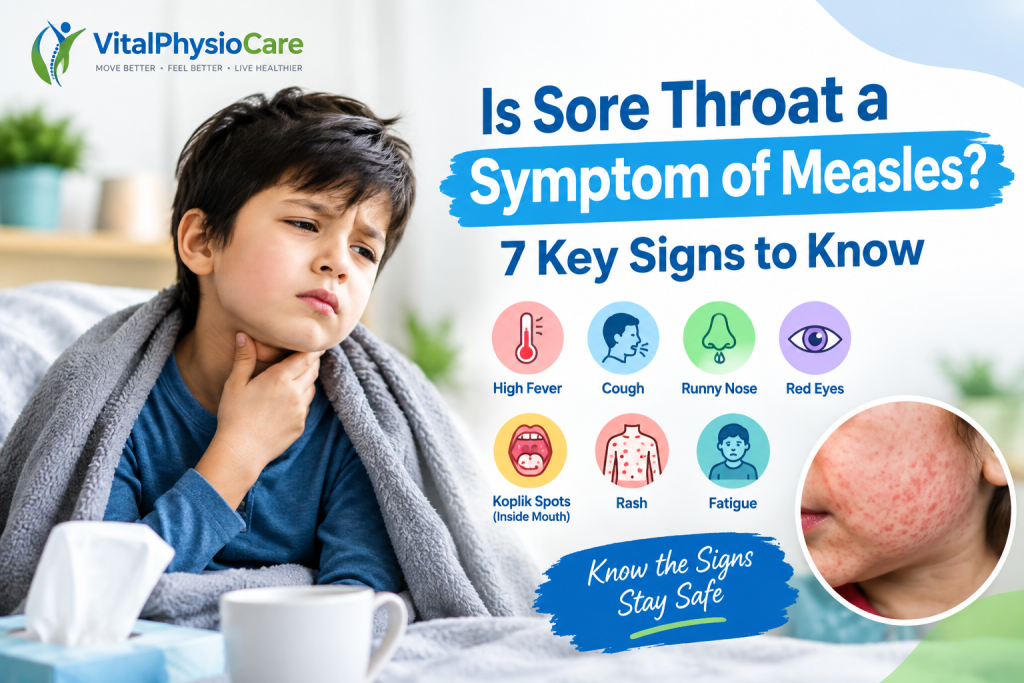
1. High Fever
One of the earliest measles symptoms is fever.
The fever can become high and may occur together with other respiratory symptoms. CDC information notes that measles can cause a high fever that may rise above 104°F in some cases.
A fever by itself does not mean that a child has measles. Many infections can cause fever, so parents should consider the complete pattern of symptoms and any possible exposure.
If a child develops a significant fever together with cough, runny nose, red eyes, and later a rash, contacting a healthcare provider is important.
2. Persistent Cough
A dry or persistent cough can occur early during measles infection.
Because cough is common with many respiratory illnesses, it can be difficult to identify measles based on this symptom alone. However, when cough occurs together with high fever, runny nose, red eyes, and a developing rash, measles should be considered, particularly if the child has been exposed to someone with the infection.
Parents should avoid assuming that every cough is measles. A healthcare professional can determine whether further evaluation is needed.
3. Runny Nose
A runny nose is another common early symptom.
The CDC lists runny nose, medically called coryza, among the typical early signs of measles.
This symptom can make measles initially resemble a common cold. The combination of symptoms is therefore more useful than any single symptom.
If a child has a runny nose together with fever, cough, red eyes, and a known measles exposure, parents should contact a healthcare provider before taking the child to a clinic.
Calling ahead is important because measles is highly contagious and healthcare facilities may need to take precautions to protect other patients and staff.
4. Red or Watery Eyes
Red, watery eyes are another recognizable early sign.
Measles can cause conjunctivitis, commonly described as red or pink eyes. The eyes may become watery or irritated while the child is also experiencing fever and respiratory symptoms.
Again, red eyes alone do not establish a measles diagnosis. Allergies, other viral infections, and several eye conditions can cause similar symptoms.
The combination of red eyes with fever, cough, and runny nose is more concerning when there has also been possible exposure to measles.
5. Tiny White Spots Inside the Mouth
Some people with measles develop small white spots inside the mouth called Koplik spots.
According to the CDC, these spots may appear about two to three days after the initial symptoms begin.
They may be difficult for parents to recognize, especially in young children. Their presence can provide an important clinical clue, but parents should not attempt to diagnose measles themselves based on mouth spots.
If you notice unusual spots inside your child’s mouth together with fever and respiratory symptoms, contact a healthcare professional for guidance.
6. The Characteristic Measles Rash
The rash is one of the most recognizable measles symptoms.
The CDC explains that the rash generally develops about three to five days after the initial symptoms. It commonly begins on the face near the hairline and then spreads downward to the neck, trunk, arms, legs, and feet.
The rash may consist of flat red spots, with some raised bumps appearing on top of them. Areas of the rash can eventually join together as it spreads.
A rash can have many different causes, including allergies, other infections, and medication reactions. Therefore, seeing a rash does not automatically mean that a person has measles.
When a rash appears alongside high fever, cough, runny nose, red eyes, and possible exposure, medical advice should be obtained promptly.
7. Feeling Very Tired or Weak
Children with measles may feel unusually tired or weak because the body is responding to the infection.
A child who normally plays and interacts normally may become less active, sleep more, or show less interest in food and activities.
Fatigue is not specific to measles, but it can occur alongside the other symptoms. Parents should pay attention to changes in their child’s overall behavior and energy level.
Severe weakness, decreased alertness, confusion, or difficulty waking a child can be emergency warning signs and require immediate medical attention.
8. Reduced Appetite and Dehydration
Illness can reduce a child’s appetite and make it harder to maintain normal fluid intake.
Fever and other symptoms can increase the importance of watching for signs of dehydration. The CDC lists dry mouth, reduced urination, and crying without tears among warning signs that can occur with dehydration in a person who is sick with measles.
Parents can encourage appropriate fluids according to their child’s age and healthcare guidance.
If a child is unable to drink, is urinating much less than usual, becomes unusually sleepy, or shows other concerning signs of dehydration, seek medical care promptly.
9. Breathing Problems or Other Serious Symptoms
Most importantly, parents should recognize symptoms that may indicate a serious complication.
Measles can lead to complications such as pneumonia and inflammation of the brain. The CDC identifies trouble breathing, pain when breathing or coughing, severe dehydration, persistent fever or headache, confusion, decreased alertness, and severe weakness as reasons to seek emergency care in someone with measles.
Young children, particularly those under five, are among the groups at higher risk for complications.
If a child has serious breathing difficulty, becomes confused, has a significant change in alertness, or develops another emergency warning sign, seek emergency medical attention immediately.
When Do Measles Symptoms Usually Appear?
Symptoms do not usually appear immediately after exposure.
The CDC reports that initial symptoms generally develop about 7 to 14 days after infection. The first symptoms commonly include fever, cough, runny nose, and red or watery eyes. The rash generally appears several days later.
This timeline means someone who has been exposed may feel completely well for several days before symptoms begin.
If you know that your child has been exposed to measles, contact a healthcare provider promptly rather than waiting for symptoms to develop. The provider can advise you about monitoring, testing, vaccination status, and other appropriate steps.
Is Measles Contagious?
Yes. Measles is extremely contagious.
The virus spreads through the air and can remain in an indoor space after an infected person leaves. The CDC states that measles can spread up to four days before the rash appears, which makes early recognition and appropriate precautions especially important.
If measles is suspected, calling the healthcare facility before arriving can help staff make arrangements that reduce exposure to other people.
A person with measles should generally stay home and avoid contact with others according to healthcare and public-health guidance. CDC guidance currently advises staying home until the fifth day after the rash develops.
What Should Parents Do If They Suspect Measles?
If your child develops several measles symptoms, especially fever, cough, runny nose, red eyes, and a characteristic rash, contact a healthcare professional.
Do not simply walk into a busy clinic or doctor’s office without informing them about the possible exposure.
The CDC recommends calling a doctor or hospital right away if you are sick with measles symptoms so the healthcare team can provide instructions and make appropriate arrangements.
Until you receive professional guidance, keep the child away from people who may be vulnerable to serious infection.
How Can Measles Be Prevented?
Vaccination is the main way to prevent measles.
The CDC states that children are routinely recommended to receive two doses of MMR vaccine, with the first dose generally given at 12–15 months and the second at 4–6 years. Specific recommendations can vary in situations such as international travel or outbreaks.
Parents should discuss their child’s vaccination record with a healthcare provider rather than relying on online information to determine whether an additional dose is needed.
If someone has been exposed and does not have evidence of immunity, a healthcare professional can advise whether post-exposure vaccination or immune globulin may be appropriate.
Can Measles Cause Complications?
Although some people recover without major complications, measles can become serious.
Potential complications include ear infections, diarrhea, pneumonia, and encephalitis, which is inflammation of the brain. The risk can be higher in young children, pregnant people, adults over 20, and people with weakened immune systems.
This is one reason parents should take suspected measles seriously and seek appropriate medical guidance.
A child who appears to be getting rapidly worse should not be managed solely with online information.
Final Thoughts
Recognizing measles symptoms can help parents respond appropriately when a child develops a combination of fever, cough, runny nose, red or watery eyes, and a spreading rash.
Because these symptoms can overlap with other illnesses, parents should not attempt to confirm measles based only on an online symptom list. If measles is suspected or there has been known exposure, contact a healthcare professional promptly and call ahead before visiting a medical facility.
Vaccination remains the primary protection against measles. Keeping children’s vaccinations up to date and following guidance from qualified healthcare professionals can help reduce the risk of infection and transmission.
Medical Disclaimer: This article is for general educational purposes and does not replace professional medical advice, diagnosis, or treatment. If you or your child has concerning symptoms or a medical emergency, contact a qualified healthcare professional or local emergency service immediately.