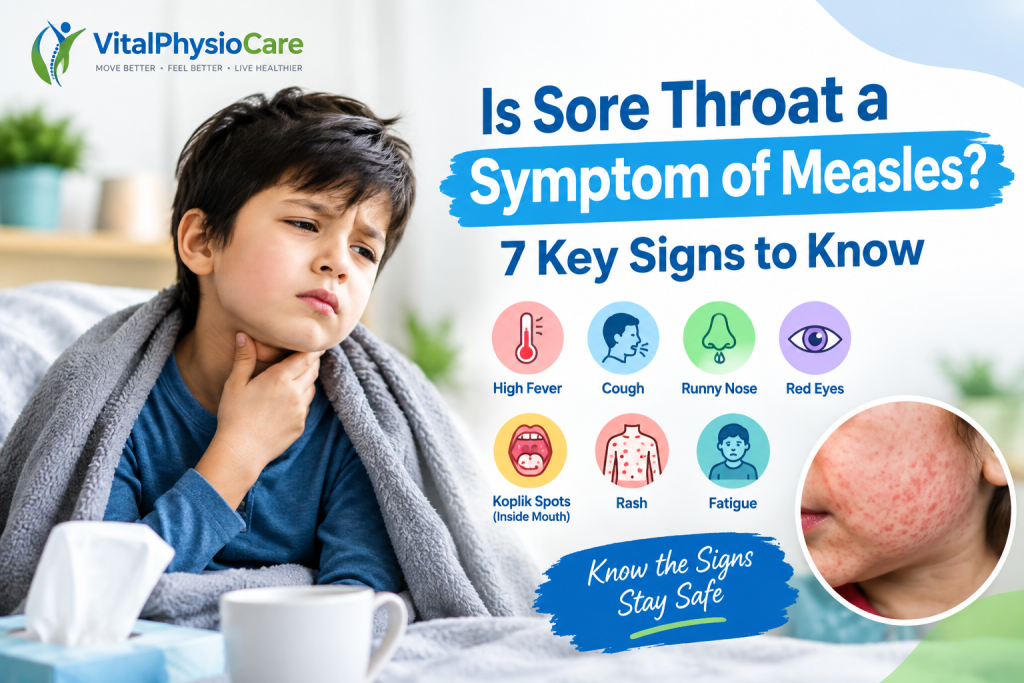
Is Sore Throat a Symptom of Measles? 7 Key Signs to Know
If you are wondering is sore throat a symptom of measles, the answer is not as straightforward as it may seem. A sore or irritated throat can occur alongside many respiratory infections, but it is not one of the main classic symptoms used to identify measles.
Measles is a highly contagious viral infection that typically begins with high fever, cough, runny nose, and red or watery eyes. A characteristic rash usually develops several days after these early symptoms begin. Small white spots inside the cheeks, known as Koplik spots, can also occur.
Because several illnesses can cause throat discomfort, it is important not to assume that a sore throat alone means someone has measles. Instead, look at the complete pattern of symptoms, recent exposure, vaccination status, and medical advice.
Is Sore Throat a Symptom of Measles?

Is sore throat a symptom of measles? A sore throat is not considered one of the classic primary symptoms of measles. The Centers for Disease Control and Prevention (CDC) identifies high fever, cough, runny nose, red or watery eyes, and a characteristic rash among the typical symptoms.
However, measles affects the respiratory system, and people can experience symptoms involving the nose, mouth, and throat during the illness. This means throat discomfort may occur in some people, but it should not be used by itself to diagnose measles.
A sore throat is much more commonly associated with conditions such as viral upper respiratory infections, influenza, COVID-19, strep throat, allergies, or other infections.
If a person has a sore throat together with a high fever, cough, runny nose, red eyes, and a developing rash, measles should be considered—especially if the person has recently been exposed to someone with measles or is not protected by vaccination.
7 Key Signs of Measles to Know
Understanding the typical progression of measles can help you recognize when medical advice may be necessary.
1. High Fever
Fever is usually one of the earliest and most noticeable signs of measles. According to the CDC, measles can cause a high fever that may rise above 104°F (40°C).
The fever generally develops before the characteristic rash. It may occur together with tiredness, cough, runny nose, and irritated eyes.
A high fever does not automatically mean measles because many infections can cause fever. The combination of symptoms is more informative than fever alone.
2. Cough
A persistent cough is one of the classic early symptoms of measles.
Measles is a viral respiratory infection, so symptoms may initially resemble an ordinary cold or another respiratory illness. The cough can occur before the rash becomes visible.
If someone develops a cough together with high fever, runny nose, and red or watery eyes, it is important to consider the possibility of measles when there has been a known exposure or the person is not immune.
3. Runny Nose
A runny nose, medically called coryza, is another common early measles symptom.
This symptom can make measles difficult to distinguish from other respiratory illnesses during the first few days. A runny nose by itself is not a reason to assume that someone has measles.
The CDC describes the typical early combination as fever, cough, runny nose, and red or watery eyes.
4. Red or Watery Eyes
Red, irritated, or watery eyes can occur during the early stage of measles. This condition is sometimes described as conjunctivitis or “pink eye.”
When red or watery eyes occur together with fever, cough, and runny nose, the combination can be more suggestive of measles than an isolated symptom.
People should avoid close contact with others if measles is suspected because the infection spreads extremely easily.
5. Koplik Spots Inside the Mouth
Koplik spots are tiny white spots that can appear inside the mouth, particularly on the inner cheek.
The CDC notes that these spots may appear around two to three days after the initial symptoms begin.
They are an important clinical clue because they can appear before the characteristic skin rash.
However, not everyone will necessarily notice them at home. A healthcare professional may be better able to recognize these findings during an examination.
6. Measles Rash
The characteristic measles rash usually develops several days after the initial symptoms.
According to the CDC, the rash generally appears about three to five days after the first symptoms. It often begins as flat red spots around the face or hairline and then spreads downward to the neck, trunk, arms, legs, and feet.
WHO similarly describes the rash as beginning around the face and upper neck before spreading downward.
A rash can have many different causes, so its presence alone does not confirm measles.
7. Increasing Fatigue or Feeling Unwell
Measles can make a person feel significantly unwell. Fever, respiratory symptoms, reduced appetite, and general discomfort can contribute to fatigue.
Feeling tired is not specific to measles, but it can accompany the other symptoms.
The important point is to consider the overall pattern rather than focusing on one symptom.
How Does Measles Usually Progress?
Measles symptoms usually do not appear immediately after exposure.
The CDC reports that symptoms generally begin about 7–14 days after exposure to the virus.
The illness commonly starts with fever and respiratory symptoms such as cough and runny nose. Red or watery eyes may also develop. Small Koplik spots may appear inside the mouth, followed several days later by the characteristic rash.
The rash generally starts on the face and then spreads downward across the body.
This progression is one reason why recognizing measles based only on a sore throat can be misleading.
What Can Cause a Sore Throat?
A sore throat is extremely common and can result from many different conditions.
Common causes include:
- Viral respiratory infections
- Influenza
- COVID-19
- Strep throat
- Allergies
- Postnasal drainage
- Dry air
- Irritation from smoke or other environmental factors
- Other respiratory infections
Because these conditions can overlap with some early measles symptoms, symptoms alone may not always provide a definitive answer.
For example, someone with a sore throat and cough may simply have a common viral infection. Someone with a sore throat, high fever, cough, runny nose, red eyes, and a developing rash may need prompt medical evaluation for possible measles.
When Should You Suspect Measles?
The possibility of measles becomes more important when several typical symptoms occur together.
Consider seeking medical advice promptly if someone develops:
High fever + cough + runny nose + red or watery eyes + a spreading rash.
The concern is even greater when there has been known contact with a person who has measles or when the person is not adequately protected against measles.
The CDC recommends contacting a healthcare provider immediately if you think you or your child may have been exposed to measles.
Do not simply walk into a doctor’s office or hospital without calling first if measles is suspected. Because measles is highly contagious, healthcare staff may need to make arrangements to prevent exposure to other patients.
How Contagious Is Measles?
Measles is one of the most contagious infectious diseases.
WHO explains that the virus spreads through the air and through respiratory secretions when an infected person breathes, coughs, or sneezes. The virus can remain active in the air or on contaminated surfaces for up to two hours under certain circumstances.
A person can spread measles before the rash becomes obvious. According to CDC guidance, people are generally considered contagious from four days before through four days after the rash appears.
This is why early recognition and appropriate precautions matter.
What Should You Do If You Think You Have Measles?
If measles is possible, the first step is to contact a healthcare professional.
Tell the healthcare provider:
- What symptoms you have
- When the symptoms started
- Whether you have developed a rash
- Whether you may have been exposed to measles
- Whether you have received measles vaccination, if known
- Whether anyone around you has recently been diagnosed with measles
The CDC advises people with possible measles to call a doctor or hospital before arriving so appropriate arrangements can be made.
Until you receive medical guidance, avoid unnecessary close contact with other people, particularly infants, pregnant people, and individuals who may have weakened immune systems.
Can Measles Cause Serious Complications?
Although many people recover from measles, it can cause serious complications.
According to WHO, complications can include pneumonia, ear infections, severe diarrhea and dehydration, encephalitis, and vision-related complications.
Children younger than five years are among those at greater risk of serious complications. Adults and people with weakened immune systems can also experience severe illness.
Pregnancy can also make measles particularly concerning, which is why pregnant people who may have been exposed should seek medical advice promptly.
When Is Emergency Care Needed?
Possible measles requires medical attention, and emergency care may be necessary if severe symptoms develop.
The CDC advises urgent emergency evaluation for warning signs such as difficulty breathing, pain with breathing or coughing, dehydration, persistent severe fever or headache, confusion, reduced alertness, severe weakness, or signs of serious illness in a young child.
If an emergency department visit is necessary and measles is suspected, calling ahead can help the facility prepare and reduce exposure to other people.
How Is Measles Diagnosed?
A healthcare professional considers the person’s symptoms, exposure history, vaccination history, physical examination, and appropriate laboratory testing.
The CDC states that laboratory confirmation is important for suspected measles cases. Testing can include detection of measles RNA by RT-PCR and measles-specific antibody testing.
This is important because several other illnesses can produce fever, respiratory symptoms, or a rash that may look similar to measles.
For this reason, trying to confirm measles based solely on a sore throat or rash is not reliable.
How Can Measles Be Prevented?
Vaccination is the primary way to prevent measles.
The CDC states that two doses of the measles, mumps, and rubella (MMR) vaccine provide the best protection against measles.
WHO also recommends routine measles vaccination as a key strategy for preventing measles and reducing deaths from the disease.
If you are unsure about your vaccination history, speak with a healthcare professional or local health authority. They can help determine whether additional vaccination or other preventive measures are appropriate.
What About Exposure to Someone With Measles?
If you have been exposed to someone with confirmed or suspected measles, contact a healthcare provider promptly.
For people who are not immune, certain measures may reduce the risk of developing measles after exposure. The CDC notes that MMR vaccination or immune globulin may be appropriate in certain circumstances, depending on the timing and individual situation.
Do not wait for a rash to appear before asking for advice after a known exposure.
Final Thoughts
So, is sore throat a symptom of measles? A sore throat is not one of the classic hallmark symptoms of measles, although throat or respiratory discomfort can occur during an illness affecting the respiratory tract.
The more recognizable pattern of measles is high fever, cough, runny nose, red or watery eyes, possible Koplik spots, and a characteristic rash that develops several days after the early symptoms.
Because measles is highly contagious and can cause serious complications, suspected cases should be discussed with a healthcare professional promptly. Calling ahead before visiting a clinic or hospital can help protect other patients and healthcare workers.
Most importantly, do not try to diagnose measles based on a single symptom such as a sore throat. Consider the complete symptom pattern, possible exposure, and vaccination history, and follow advice from a qualified healthcare professional.