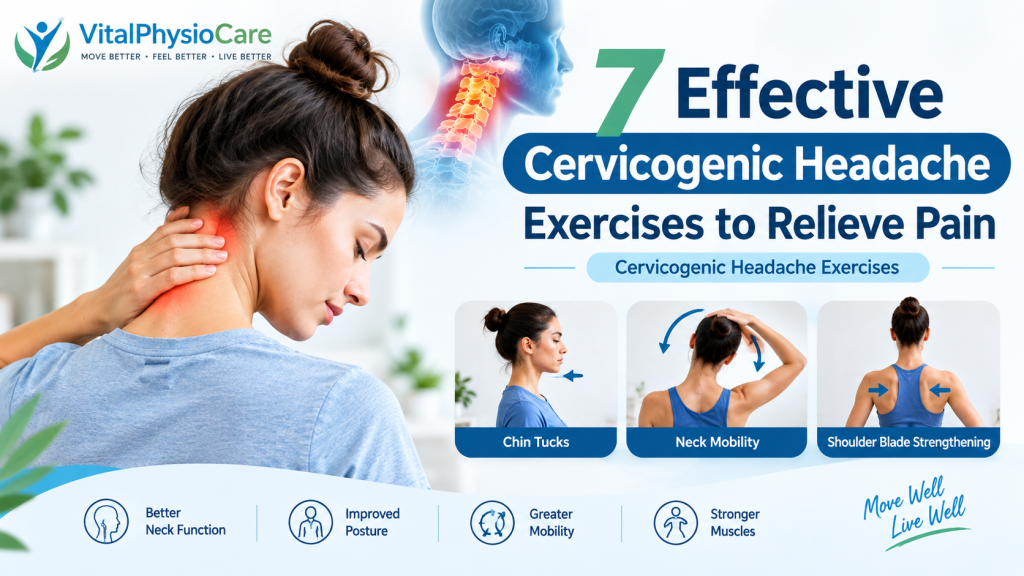
7 Effective Cervicogenic Headache Exercises to Relieve Pain
Cervicogenic headaches are headaches that originate from problems involving the neck or cervical spine. Unlike many primary headaches, the source of the pain is in the neck, although the discomfort may be felt in the head, behind the eye, or along one side of the head. Neck movement may also aggravate symptoms.
For appropriate patients, physical therapy can be an important part of managing cervicogenic headaches. Treatment may include mobility exercises, strengthening, posture education, manual therapy, and a personalized home-exercise program.
This guide explains 7 cervicogenic headache exercises that may help improve neck mobility, posture, and muscular control. Exercises should be comfortable and appropriate for your individual condition. If an exercise significantly increases your headache, neck pain, dizziness, numbness, or other symptoms, stop and seek professional guidance.
What Is a Cervicogenic Headache?
A cervicogenic headache is a type of secondary headache in which the pain originates from structures in the neck. Problems involving cervical joints, muscles, nerves, or other neck structures can contribute to referred pain in the head.
Common features can include one-sided head pain, reduced neck movement, and headache symptoms that become worse with certain neck movements. However, cervicogenic headaches can resemble other headache disorders, so proper assessment is important.
A physical therapist can assess neck movement, posture, muscle strength, and other factors to determine whether the symptoms appear consistent with a neck-related headache.
7 Cervicogenic Headache Exercises
1. Chin Tucks
Chin tucks are commonly used to encourage better head and neck positioning and activate the deep neck muscles.
How to perform:
Sit or stand upright with your shoulders relaxed. Look straight ahead and gently draw your chin backward, as though making a small “double chin.” Avoid looking down.
Hold the position for several seconds, then relax.
Start with a small movement rather than forcing your neck backward. Perform several comfortable repetitions and gradually build up according to your therapist’s recommendations.
Why it may help:
Improving cervical muscle control can support better posture and neck stability. Physical therapy programs for headache management may include exercises designed to improve neck strength and function.
2. Gentle Neck Rotation
Limited cervical mobility can contribute to difficulty with everyday activities and may aggravate symptoms in some people.
How to perform:
Sit upright with your shoulders relaxed. Slowly turn your head toward one side until you feel a gentle stretch or reach a comfortable range. Return to the center and repeat on the opposite side.
Keep the movement slow and controlled. Do not force your head into a painful position.
Why it may help:
Gentle mobility exercises can help maintain or improve neck movement. Physical therapists commonly include cervical range-of-motion exercises as part of individualized treatment programs.
3. Neck Side Bend
This exercise gently moves the cervical spine through side-bending.
How to perform:
Sit or stand with your head in a neutral position. Slowly bring your right ear toward your right shoulder without lifting the shoulder. Return to the center and repeat on the other side.
Keep the movement comfortable and avoid pulling aggressively on your head.
Why it may help:
Gentle movement can help address stiffness and maintain cervical mobility. Your physical therapist may modify the movement depending on your symptoms and examination findings.
4. Shoulder Blade Squeezes
The muscles around your shoulder blades play an important role in upper-body posture and movement.
How to perform:
Sit or stand tall with your arms relaxed. Gently draw your shoulder blades backward and slightly downward, as if trying to bring them toward each other.
Do not shrug your shoulders or force the movement. Hold briefly, relax, and repeat.
Why it may help:
Strengthening the muscles that support the upper back and shoulders can contribute to improved posture and endurance. Physical therapy guidance for headaches commonly includes strengthening and posture-focused exercises.
5. Upper Trapezius Stretch
Tension around the upper shoulder and neck area can accompany neck-related discomfort.
How to perform:
Sit upright. Keep one shoulder relaxed while gently tilt your head toward the opposite side. You should feel a mild stretch along the side of the neck and upper shoulder.
Hold briefly, then return to the starting position and repeat on the other side.
The stretch should feel gentle rather than painful. Avoid bouncing or aggressively pulling your head.
6. Levator Scapulae Stretch
The levator scapulae connects the neck region with the shoulder blade and can become tight with prolonged sitting or certain postural habits.
How to perform:
Sit upright and gently turn your head toward one side. Then angle your gaze slightly downward, as though looking toward your pocket. You may feel a stretch along the back and side of your neck.
Hold the position comfortably before returning to neutral.
Perform the exercise slowly and avoid forcing the range.
7. Thoracic Extension
Although cervicogenic headaches involve the cervical region, upper-back posture can influence how the neck is positioned during sitting and daily activities.
How to perform:
Sit on a supportive chair with your feet on the floor. Place your hands comfortably behind your head or across your chest. Gently extend your upper back over the back of the chair without forcing your neck backward.
Return to a neutral sitting position and repeat slowly.
Why it may help:
Improving upper-back mobility and posture may reduce the tendency to hold the neck in an inefficient position. Physical therapists may address workstation setup, posture, and movement habits as part of headache management.
How Often Should You Do These Exercises?
There is no single exercise schedule that works for everyone with a cervicogenic headache.
Your exercise frequency should depend on your symptoms, physical condition, diagnosis, and treatment plan. A physical therapist can determine which exercises are appropriate and how many repetitions or sets you should perform.
Start gently. If your symptoms remain comfortable, your program can gradually progress.
It is also important to remember that exercise is only one part of physical therapy. A professional treatment plan may include education, manual therapy, posture correction, strengthening, and other interventions.
Tips for Better Neck Posture
Your everyday habits can influence neck discomfort. If you spend many hours working at a computer, try to avoid staying in one position for extended periods.
Keep your screen at a comfortable height, take regular movement breaks, and avoid repeatedly bending your neck downward for long periods.
A physical therapist can also assess your workstation and recommend changes that suit your body and work demands.
When using a phone, consider bringing the device closer to eye level instead of keeping your head bent forward for prolonged periods.
Good sleep habits and regular physical activity may also support overall musculoskeletal health.
Can Physical Therapy Help Cervicogenic Headaches?
Physical therapy can be useful for many people with neck-related headaches. A physical therapist can first determine whether the headache appears to be related to the cervical region and then create an individualized treatment plan.
Treatment may include:
- Neck mobility exercises
- Strengthening exercises
- Postural training
- Manual therapy
- Home exercises
- Education about movement and daily activities
The goal is not simply to stretch the neck. A comprehensive program may address mobility, strength, endurance, posture, and the factors that contribute to symptoms.
For additional information, see the Choose PT guide to headaches and the Cleveland Clinic guide to cervicogenic headache.
When Should You Stop Exercising?
Exercises should not cause significant or progressively worsening symptoms.
Stop an exercise and seek professional advice if you develop severe pain, increasing headache symptoms, significant dizziness, numbness, weakness, visual changes, or other unusual symptoms.
A headache that develops after a significant injury should also be medically evaluated. Persistent or worsening headaches deserve professional assessment rather than repeated self-treatment.
Sudden, extremely severe headache or neurological symptoms can indicate a medical emergency and require urgent evaluation.
Cervicogenic Headache vs. Other Headaches
Not every headache associated with neck discomfort is a cervicogenic headache.
Migraines, tension-type headaches, sinus-related headaches, and other conditions can produce overlapping symptoms. Cervicogenic headache diagnosis can therefore be challenging, and healthcare professionals may need to assess the person’s history, symptoms, neck movement, and other findings.
This is why exercises should not be used as a substitute for diagnosis when headaches are frequent, severe, or unexplained.
Frequently Asked Questions
What are the best cervicogenic headache exercises?
There is no single best exercise for everyone. Chin tucks, gentle neck mobility, shoulder-blade strengthening, and posture-focused exercises may be included in an individualized physical therapy program.
Can exercises completely cure a cervicogenic headache?
Exercise may help reduce symptoms and improve movement and muscular function, but results depend on the underlying cause. Some people require additional treatment or medical evaluation.
Should I exercise during a headache?
It depends on the severity and cause of the headache. Gentle movement may be appropriate for some people, but exercising through worsening symptoms is not recommended.
How long does a cervicogenic headache last?
Duration varies between individuals and depends on the underlying cause and treatment. Persistent or worsening headaches should be evaluated by a healthcare professional.
Final Thoughts
Cervicogenic headache exercises can be a useful part of a broader approach to managing headaches that originate from the neck. Gentle mobility, chin tucks, shoulder-blade exercises, stretching, and posture-focused movements may help improve cervical function when appropriately prescribed.
However, the right exercises depend on the reason for your symptoms. A physical therapist or other qualified healthcare professional can assess your neck and develop an individualized program.
If headaches are severe, recurring, worsening, or accompanied by neurological symptoms, don’t rely solely on home exercises. Professional evaluation can help identify the cause and determine the safest treatment approach.