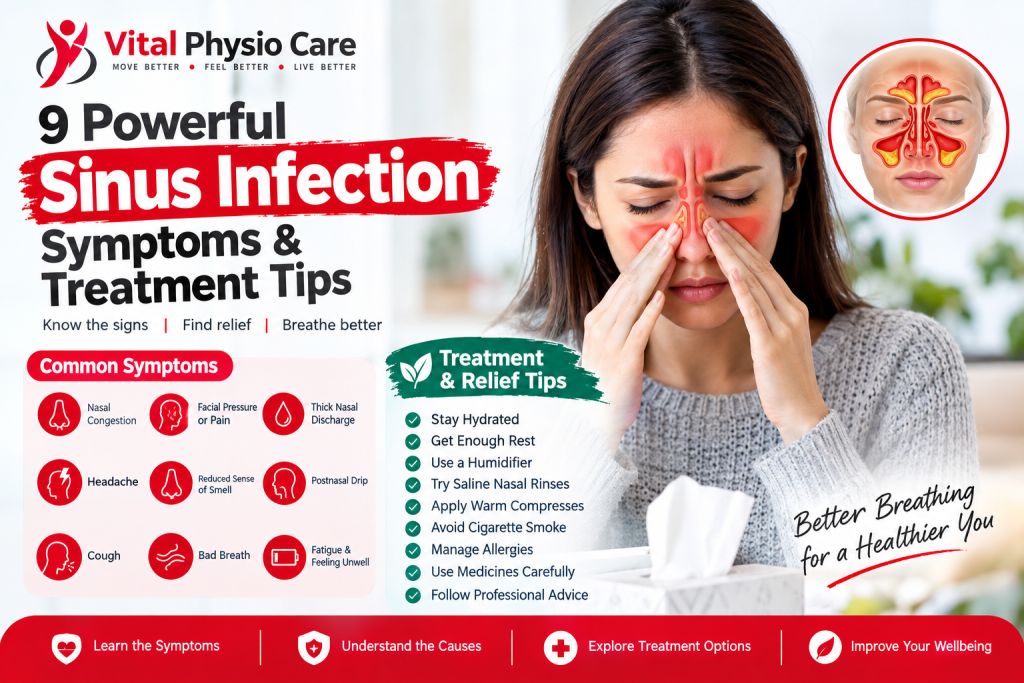
9 Powerful Sinus Infection Symptoms & Treatment Tips
A sinus infection can make everyday life uncomfortable. Pressure around the face, a blocked nose, headaches, thick nasal mucus, and difficulty breathing through the nose can affect sleep, concentration, work, and daily activities. In many cases, sinus problems improve with simple self-care, but some symptoms may require medical attention.
Understanding the common symptoms, possible causes, and treatment options can help you recognize what may be happening and decide when it is appropriate to speak with a healthcare professional.
What Is a Sinus Infection?

A sinus infection, also called sinusitis, occurs when the tissues lining the sinuses become inflamed. The sinuses are air-filled spaces located around the nose, cheeks, forehead, and eyes. Normally, they produce mucus that drains through small openings into the nasal passages.
When these passages become swollen or blocked, mucus may not drain properly. This can create pressure and congestion and may contribute to an infection.
Sinusitis can be caused by viral infections, allergies, nasal inflammation, or other factors. A viral illness such as a common cold is a frequent trigger, and not every case requires antibiotics.
9 Common Sinus Infection Symptoms
The symptoms can vary from person to person. Some people experience several symptoms at the same time, while others may have only a few.
1. Nasal Congestion

A blocked or stuffy nose is one of the most common signs of a sinus infection. Swelling inside the nasal passages can make it difficult for air to move normally.
You may feel as though your nose is constantly blocked, making it harder to breathe comfortably, especially when lying down.
2. Facial Pressure or Pain
Inflammation around the sinuses can create pressure in the forehead, cheeks, nose, or area around the eyes.
Some people notice that facial discomfort becomes more noticeable when bending forward. Persistent or severe facial pain should be discussed with a healthcare professional.
3. Thick Nasal Discharge

A sinus infection can sometimes cause thick mucus from the nose. The mucus may appear yellowish or greenish, although mucus color alone does not prove that an infection is bacterial.
Other symptoms and the duration of illness are more useful when determining what may be causing the problem.
4. Headache
Sinus inflammation and pressure can contribute to headaches, particularly around the forehead, cheeks, or behind the eyes.
However, many different conditions can cause headaches. If headaches are severe, unusual, persistent, or accompanied by other concerning symptoms, medical evaluation may be appropriate.
5. Reduced Sense of Smell
Nasal swelling and congestion can interfere with the ability to smell normally. Food may also seem to have less flavor because smell contributes significantly to our sense of taste.
This symptom often improves as the underlying congestion and inflammation settle.
6. Postnasal Drip
Postnasal drip occurs when mucus travels from the back of the nose toward the throat. It may create a sensation of mucus running down the throat.
Some people develop throat irritation or a cough as a result, particularly at night.
7. Cough
A cough can occur when mucus drains into the throat. It may become more noticeable when lying down.
A persistent cough can have many causes, however, so it should not automatically be attributed to sinusitis.
8. Bad Breath
Mucus buildup, mouth breathing, and changes in the normal environment of the mouth and nose can contribute to unpleasant breath.
Maintaining good oral hygiene and staying hydrated may help while the underlying nasal symptoms improve.
9. Fatigue and Feeling Unwell
A sinus infection can leave you feeling tired or generally unwell. Congestion may interfere with sleep, while headaches and facial pressure can make normal activities more difficult.
Getting adequate rest and maintaining hydration can support recovery.
What Causes a Sinus Infection?
Several factors can contribute to sinus inflammation.
Viral Infections
Colds and other respiratory viruses can cause inflammation and swelling in the nasal passages. In many cases, sinus symptoms following a cold improve gradually without antibiotic treatment.
Allergies
Allergic reactions can cause nasal swelling, congestion, sneezing, and increased mucus production. Repeated inflammation may contribute to sinus problems.
Nasal Polyps
Nasal polyps are soft growths that can develop inside the nasal passages or sinuses. Larger polyps may interfere with normal drainage and breathing.
Deviated Septum
A deviated nasal septum can affect airflow and drainage through the nose. Depending on the severity, it may contribute to recurring nasal or sinus problems.
Environmental Irritants
Smoke, air pollution, dust, and other irritants can aggravate the nasal passages and contribute to inflammation.
How Long Does a Sinus Infection Last?
The duration depends on the underlying cause.
Symptoms associated with a common viral illness may gradually improve as the respiratory infection resolves. Some cases last longer and may become recurrent or chronic.
If symptoms continue for an unusually long time, repeatedly return, become significantly worse, or interfere with normal daily activities, it is sensible to seek medical advice.
A healthcare professional can assess your symptoms and determine whether additional evaluation or treatment is necessary.
9 Treatment and Relief Tips
Treatment depends on the cause and severity of the symptoms. Here are practical approaches that may provide relief.
1. Drink Enough Fluids
Staying hydrated can help prevent dehydration and may make mucus less thick. Water and other suitable fluids can be useful when you are feeling unwell.
2. Get Adequate Rest
Your body needs energy to recover from illness. Getting enough sleep and reducing unnecessary physical strain may help you feel better.
3. Use a Humidifier
Dry air can irritate the nose and throat. A clean humidifier may help add moisture to indoor air.
Humidifiers should be cleaned according to the manufacturer’s instructions because poorly maintained devices can encourage microbial growth.
4. Consider Saline Nasal Rinses
Saline nasal sprays or rinses may help remove mucus and reduce nasal congestion.
If you use a nasal irrigation device, follow product instructions carefully and use appropriately prepared water. Unsafe water can introduce harmful organisms into the nasal passages.
5. Warm Compresses
A warm compress placed gently over the face may provide temporary comfort for some people experiencing facial pressure.
The compress should be comfortably warm rather than hot enough to burn the skin.
6. Avoid Cigarette Smoke
Smoke can irritate the respiratory system and may make nasal symptoms worse. Avoiding smoking and secondhand smoke can support healthier breathing.
7. Manage Allergies
If allergies contribute to repeated sinus symptoms, identifying and managing allergy triggers may help reduce nasal inflammation.
A healthcare professional can recommend appropriate allergy management based on your symptoms.
8. Use Medicines Carefully
Depending on the cause, healthcare professionals may recommend medicines for pain, allergies, congestion, or inflammation.
Not every sinus infection needs antibiotics. Antibiotics work against certain bacterial infections, not viruses, so they should only be used when medically appropriate.
Always follow the directions on medications and seek professional advice if you are unsure whether a medicine is suitable for you.
9. Follow Professional Medical Advice
If symptoms are severe, persistent, recurrent, or getting worse, professional evaluation is important.
A clinician can assess your symptoms, medical history, and other factors before recommending treatment.
When Should You See a Doctor?
Many mild sinus symptoms improve with time and supportive care. However, medical advice may be appropriate when symptoms are severe, persistent, frequently recurring, or significantly affecting daily life.
Seek urgent medical attention if sinus symptoms occur with serious warning signs such as swelling or redness around the eye, vision changes, severe headache unlike your usual headaches, confusion, neck stiffness, or significant deterioration.
People with weakened immune systems or certain underlying medical conditions may also need earlier medical evaluation.
Sinus Infection vs. Common Cold
A cold and sinusitis can share several symptoms, including congestion, runny nose, cough, and fatigue.
The difference is that sinusitis involves inflammation of the sinus tissues. Symptoms that persist, become severe, or worsen after initially improving may require assessment by a health