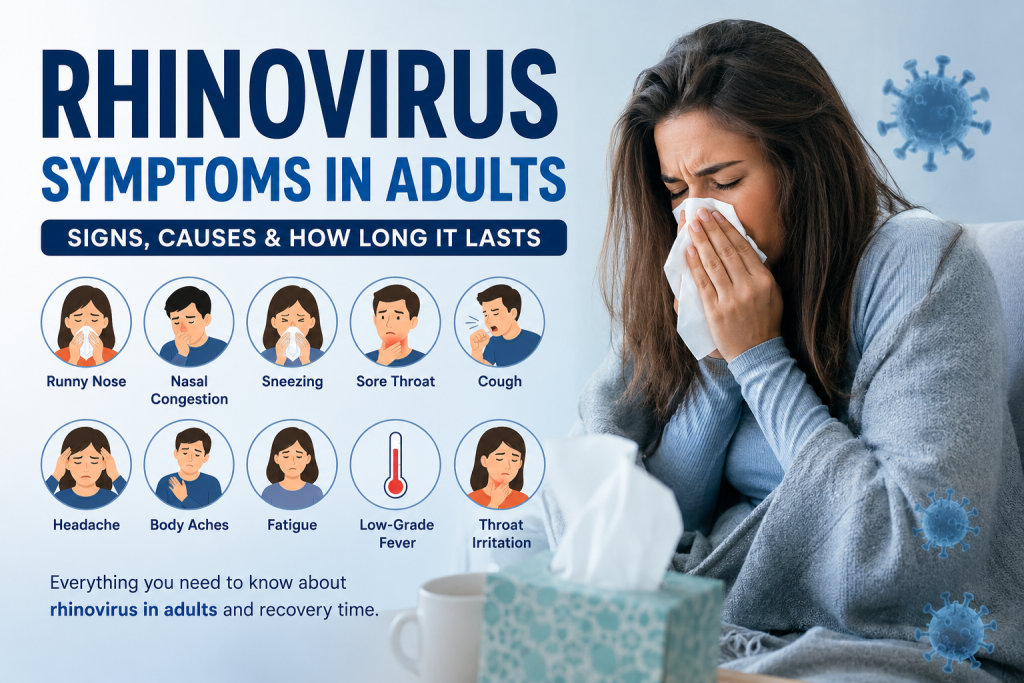
Rhinovirus Symptoms in Adults: 11 Warning Signs, Causes & How Long It Lasts
Rhinovirus is one of the most common causes of the common cold. Although it is usually mild, its symptoms can be uncomfortable and may interfere with sleep, work, exercise, and daily activities. Adults can experience rhinovirus infections several times throughout their lives because many different rhinovirus types circulate in the community.
Understanding rhinovirus symptoms in adults can help you recognize what may be causing a sore throat, runny nose, congestion, coughing, or fatigue. In most healthy adults, symptoms gradually improve without specific antiviral treatment. However, knowing the warning signs is important because some symptoms can indicate a more serious respiratory infection or a complication.
This guide explains the common signs, causes, contagious period, expected recovery time, home-care measures, and situations when medical attention may be appropriate.
What Is Rhinovirus?

Rhinovirus is a group of viruses that commonly causes the common cold. It primarily infects the upper respiratory tract, including the nose and throat. Rhinoviruses spread easily from person to person, especially in places where people are in close contact.
The virus can spread through respiratory droplets and contaminated hands or surfaces. Touching your eyes, nose, or mouth after coming into contact with the virus can provide an opportunity for infection.
Unlike influenza, rhinovirus infections are generally associated with milder illness in healthy adults. However, the symptoms can still be significant, especially during the first few days.
11 Common Rhinovirus Symptoms in Adults
The symptoms can vary from person to person. Some people develop several symptoms at once, while others experience only a few. Here are some of the most common signs.
1. Runny Nose

A runny nose is one of the classic symptoms of a rhinovirus infection. Nasal discharge may initially be clear and watery. As the immune system responds to the infection, the amount and consistency of mucus can change.
A runny nose may continue for several days and is often accompanied by sneezing or nasal congestion.
2. Nasal Congestion

Nasal congestion occurs when the tissues inside the nose become inflamed and swollen. This can make breathing through the nose difficult.
Congestion may become particularly annoying at night because it can interfere with comfortable breathing and sleep. Drinking enough fluids and using saline nasal products may provide temporary relief.
3. Sneezing
Frequent sneezing is another common sign. It occurs because the nasal passages become irritated by the infection.
Sneezing can also contribute to spreading the virus. Covering coughs and sneezes and washing your hands regularly can help reduce transmission to other people.
4. Sore Throat
A scratchy or painful throat may occur during the early stage of infection. Some adults notice throat discomfort before their nasal symptoms become more noticeable.
Warm fluids, adequate hydration, and soothing foods may make a sore throat easier to tolerate.
5. Cough
A cough may develop as the infection progresses. It can result from irritation in the throat or mucus draining from the nose into the back of the throat.
A mild cough may remain even after other cold symptoms begin to improve. If a cough becomes severe, causes breathing difficulty, or continues for an unusually long period, medical evaluation may be appropriate.
6. Headache
Some adults develop a mild headache during a cold. Nasal congestion, poor sleep, dehydration, and the body’s immune response can all contribute to feeling head discomfort.
Rest and adequate fluid intake can support recovery and may help reduce discomfort.
7. Mild Body Aches

Although strong muscle aches are more characteristic of influenza and some other infections, mild body discomfort can occur with a rhinovirus infection.
If body aches are severe or are accompanied by a high fever, pronounced weakness, or other concerning symptoms, it may be worth considering whether another infection is responsible.
8. Fatigue
Feeling tired is common when your immune system is fighting an infection. Even a relatively mild cold can leave you feeling less energetic than usual.
Getting adequate sleep and temporarily reducing strenuous exercise can help your body focus on recovery.
9. Low-Grade Fever
Adults with a common cold may sometimes develop a mild fever, although fever is not always present. A high or persistent fever is less typical of an uncomplicated cold.
If you have a significant fever along with worsening respiratory symptoms, seek medical advice to determine whether another illness could be involved.
10. Postnasal Drip
Postnasal drip happens when mucus moves from the back of the nose toward the throat. It may cause throat irritation, frequent throat clearing, or coughing.
Keeping hydrated and using saline nasal rinses appropriately may help manage mucus and nasal irritation.
11. Hoarseness or Throat Irritation
Inflammation around the throat and upper airway can sometimes make your voice sound hoarse. Speaking less and drinking warm fluids may help reduce irritation while your respiratory system recovers.
These rhinovirus symptoms in adults commonly appear together and usually become noticeable within a relatively short period after infection.
What Causes Rhinovirus Infection?
Rhinovirus infection occurs when a person comes into contact with a rhinovirus and the virus enters the body through the nose, mouth, or eyes.
Transmission can occur when an infected person coughs or sneezes near another person. It can also happen through contaminated hands or frequently touched objects and surfaces.
Crowded indoor environments may make transmission easier because people have more opportunities for close contact. Poor hand hygiene and touching the face can also increase the chance of infection.
There are many rhinovirus types, which is one reason people can catch common colds repeatedly.
How Long Does Rhinovirus Last in Adults?
For many healthy adults, a rhinovirus infection improves within about one to two weeks. Symptoms are often most noticeable during the first several days before gradually becoming less intense.
However, recovery is not exactly the same for everyone. A cough or nasal symptoms may persist after a person starts feeling better.
Several factors can influence recovery, including age, general health, sleep, hydration, exposure to irritants, and whether the person has an underlying respiratory condition.
If symptoms continue to worsen instead of improving, or if new serious symptoms develop, you should contact a healthcare professional.
Are Rhinovirus Infections Contagious?
Yes. Rhinovirus is contagious and can spread easily between people.
People can transmit respiratory viruses through respiratory secretions, close contact, contaminated hands, and frequently touched surfaces. Because symptoms can overlap with other respiratory infections, it is difficult to identify rhinovirus solely from symptoms.
Good respiratory hygiene can reduce the risk of spreading infection. Wash your hands regularly, avoid touching your face unnecessarily, cover coughs and sneezes, and consider staying home when you are feeling unwell.
Rhinovirus vs. Influenza
Rhinovirus and influenza can both cause respiratory symptoms, but they often differ in intensity.
A common cold caused by rhinovirus typically produces symptoms such as:
- Runny or blocked nose
- Sneezing
- Sore throat
- Cough
- Mild fatigue
- Mild body discomfort
Influenza is more likely to cause a sudden onset of illness with pronounced fever, chills, significant muscle aches, headache, and marked fatigue.
Symptoms alone cannot always distinguish one respiratory infection from another. Testing may be necessary when knowing the specific infection would affect treatment or precautions.
Rhinovirus vs. COVID-19
COVID-19 can also resemble a common cold. Some people with COVID-19 experience congestion, sore throat, cough, fatigue, headache, or other symptoms that overlap with rhinovirus.
Because symptoms alone cannot reliably identify the cause, testing may be useful when COVID-19 is a possibility, particularly after a known exposure or when symptoms fit a current local pattern.
People at increased risk of severe respiratory illness should seek medical advice promptly when they develop concerning symptoms.
How Is Rhinovirus Diagnosed?
Most uncomplicated common colds do not require a specific laboratory diagnosis. Healthcare professionals can often assess symptoms and medical history to determine whether further testing is necessary.
If symptoms are severe, unusual, prolonged, or suggest another respiratory infection, a clinician may recommend testing.
Laboratory testing can identify certain respiratory viruses, but testing is not routinely required for every person with mild cold symptoms.
The key is to pay attention to how your symptoms develop and whether you are improving as expected.
Treatment and Home Care
There is generally no specific cure that eliminates an uncomplicated rhinovirus infection immediately. Treatment usually focuses on relieving symptoms while the immune system clears the virus.
Get Enough Rest
Sleep and rest can help you manage fatigue and support normal immune function. Avoid pushing yourself through intense workouts when you are feeling sick.
Stay Hydrated
Water, soups, and other non-alcoholic fluids can help maintain hydration. Adequate fluids may also make mucus easier to manage.
Use Saline for Nasal Symptoms
Saline nasal sprays or rinses can help moisturize the nasal passages and loosen mucus. If you use a nasal irrigation device, follow the product instructions and use appropriately prepared water.
Soothe a Sore Throat
Warm liquids, throat lozenges, and other appropriate soothing measures may help reduce throat discomfort.
Consider Over-the-Counter Medicines
Some adults may use over-the-counter medicines to manage pain, fever, congestion, or coughing. Always follow the product directions and check whether the medication is appropriate for you.
People with certain medical conditions or those taking other medicines should ask a healthcare professional or pharmacist before using new medications.
Can You Exercise With Rhinovirus?
Whether you should exercise depends on the severity of your symptoms.
If symptoms are mild and limited mostly to the nose and throat, some people may tolerate light activity. However, rest is generally preferable if you feel significantly fatigued.
Avoid strenuous exercise if you have fever, chest symptoms, significant weakness, dizziness, or difficulty breathing.
Returning gradually to normal activity is a sensible approach. If exercise causes unusual shortness of breath, chest pain, dizziness, or worsening symptoms, stop and seek medical advice.
When Should Adults See a Doctor?
Most uncomplicated colds resolve without medical treatment, but certain symptoms deserve professional evaluation.
Seek medical care if you experience:
- Difficulty breathing
- Chest pain or pressure
- Severe or worsening symptoms
- Persistent high fever
- Confusion or unusual drowsiness
- Signs of dehydration
- Symptoms that improve and then suddenly become much worse
- A cough that is severe or persistent
- Significant symptoms related to an underlying chronic condition
People with chronic respiratory diseases or weakened immune systems may require individualized advice because respiratory infections can sometimes lead to complications.
Can Rhinovirus Cause Complications?
In healthy adults, rhinovirus usually causes a mild upper respiratory infection. However, respiratory viruses can sometimes contribute to complications.
For example, an infection may worsen symptoms in someone who already has asthma or another chronic respiratory condition. Sinus problems or lower respiratory complications can also occur in some situations.
This is why monitoring the progression of illness is important. The presence of rhinovirus symptoms in adults does not automatically mean the illness will remain mild, particularly in people with underlying health concerns.
How Can You Prevent Rhinovirus?
Because rhinovirus spreads easily, prevention focuses largely on reducing exposure and maintaining good hygiene.
Wash your hands with soap and water regularly, especially after being in public places. Avoid touching your eyes, nose, and mouth with unwashed hands.
When someone around you is sick, maintaining reasonable distance and improving ventilation can reduce exposure to respiratory particles.
Do not share personal items such as drinking glasses or utensils with someone who is ill. Frequently touched surfaces should also be cleaned when appropriate.
If you become sick, covering coughs and sneezes and avoiding close contact with vulnerable people can help reduce transmission.
Frequently Asked Questions
How quickly do rhinovirus symptoms appear?
Symptoms generally develop after an incubation period following exposure, although the exact timing can vary. Early symptoms may include throat irritation, sneezing, runny nose, or congestion.
How long are adults contagious with rhinovirus?
Rhinovirus can spread while an infected person has symptoms, with transmission risk often greatest around the early phase of illness. Good hygiene and limiting close contact while sick can help protect others.
Can rhinovirus cause a fever in adults?
A mild fever can occur, but fever is not a defining feature of every rhinovirus infection. A high or persistent fever may suggest another infection or complication.
Can rhinovirus turn into pneumonia?
Rhinovirus primarily affects the upper respiratory tract, but respiratory infections can sometimes be associated with complications. Adults who develop breathing difficulty, chest pain, or significant worsening symptoms should seek medical evaluation.
Should I test for COVID-19 if I have cold symptoms?
If COVID-19 is circulating in your community, you have had a known exposure, or your symptoms are compatible with COVID-19, testing may help determine the cause. Follow current local public-health guidance when deciding whether and when to test.
Final Thoughts
Recognizing rhinovirus symptoms in adults can help you understand what to expect when a common cold develops. Runny nose, congestion, sneezing, sore throat, cough, fatigue, headache, and mild body discomfort are among the symptoms adults may experience.
For most healthy people, rhinovirus infections improve with time, rest, fluids, and appropriate symptom management. Antibiotics do not treat viruses such as rhinovirus, so they should not be used unless a healthcare professional determines that a bacterial infection also requires treatment.
The most important thing is to monitor your recovery. If symptoms become severe, breathing becomes difficult, chest pain develops, or your condition worsens rather than improves, contact a healthcare professional.
By understanding the typical course of infection and practicing good respiratory hygiene, you can manage a common cold more confidently while reducing the chance of spreading it to others.