Pain in Calf: 9 Powerful Causes, Relief Tips & Exercises That Work
Calf discomfort can make simple activities such as walking, climbing stairs, standing, or exercising surprisingly difficult. The calf contains several muscles, tendons, nerves, and blood vessels that work together every time you move your lower leg. Because of this, there are many possible reasons for pain in calf, ranging from temporary muscle cramps to injuries that require medical attention.
Understanding the location, severity, and timing of your symptoms can help you identify what may be causing the discomfort. In many mild cases, rest, gentle movement, stretching, hydration, and gradual strengthening can help. However, some symptoms should never be ignored, particularly when calf pain appears suddenly with swelling, warmth, redness, or breathing difficulties.
This guide explains nine common causes, useful relief strategies, exercises, warning signs, and ways to reduce your risk of future calf problems.
What Does Pain in Calf Mean?
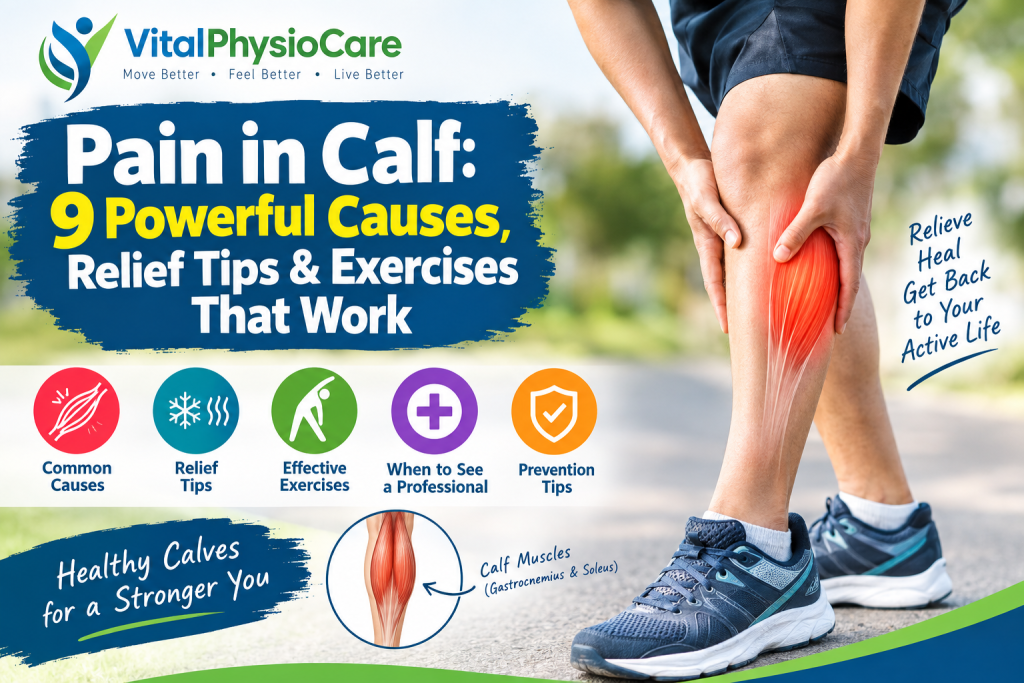
The calf is the area at the back of your lower leg between the knee and ankle. It is mainly made up of the gastrocnemius and soleus muscles, which help you walk, run, jump, and push your foot against the ground.
Pain in calf can feel different depending on its cause. You might experience:
- A dull ache
- Tightness or stiffness
- Muscle cramping
- Sharp or sudden pain
- Tenderness when touching the area
- Pain while walking
- Discomfort when stretching the calf
- Pain after physical activity
- Swelling or bruising
The symptoms can provide clues about whether the problem is related to muscles, tendons, nerves, circulation, or another condition.
9 Common Causes of Pain in Calf
1. Muscle Cramps
One of the most common reasons for calf discomfort is a muscle cramp. A cramp happens when a muscle contracts suddenly and does not relax normally.
Calf cramps may occur during exercise, after prolonged standing, during the night, or after intense physical activity. Dehydration, muscle fatigue, prolonged activity, and certain medications may contribute to cramps.
A typical cramp produces sudden, intense tightening that can last from several seconds to several minutes.
Gentle stretching and slowly moving the ankle can help the muscle relax. Staying adequately hydrated and avoiding sudden increases in exercise intensity may also reduce recurrence.
2. Calf Muscle Strain
A calf strain occurs when muscle fibers are overstretched or torn. It commonly happens during running, jumping, sprinting, or sports that involve sudden acceleration.
A mild strain may cause soreness and tightness, while a more significant injury can cause sharp pain, swelling, bruising, and difficulty walking.
If pain in calf started immediately after a sprint, jump, or sudden movement, a muscle strain may be responsible.
During the early stage of an injury, avoid activities that increase pain. Gradually returning to movement and strengthening should follow once symptoms improve.
3. Delayed-Onset Muscle Soreness
If you recently started a new workout or increased the intensity of your exercise, your calf muscles may become sore afterward.
Delayed-onset muscle soreness, commonly called DOMS, often develops several hours after unfamiliar or strenuous activity. It can make the calves feel stiff, tender, or uncomfortable when moving.
DOMS usually improves gradually over several days. Gentle walking, light mobility exercises, and adequate recovery can help you stay active without placing excessive stress on the muscles.
4. Achilles Tendon Problems
The Achilles tendon connects the calf muscles to the heel bone. Repetitive stress can irritate this tendon and cause discomfort around the lower calf or back of the ankle.
People who suddenly increase running, walking, jumping, or other high-impact activities may be more likely to develop Achilles tendon problems.
Symptoms can include:
- Pain near the heel
- Morning stiffness
- Tenderness along the tendon
- Discomfort during running
- Pain when pushing off the foot
Because the calf and Achilles tendon work together, weakness or excessive tightness in the calf muscles can affect the tendon.
5. Overuse and Repetitive Activity
Sometimes there is no single injury that explains pain in calf. Instead, repeated activity gradually places more stress on the muscles than they can recover from.
This may happen after:
- Increasing walking distance quickly
- Starting running
- Standing for many hours
- Increasing gym workouts
- Playing sports more frequently
- Wearing inappropriate footwear
A sudden change in activity level can overload muscles and tendons.
Reducing the aggravating activity temporarily and returning to exercise gradually can help the tissues recover.
6. Nerve-Related Pain
Not all calf discomfort comes directly from the calf muscles. Irritated nerves in the lower back or leg can sometimes cause symptoms that travel down the leg.
Nerve-related discomfort may feel burning, tingling, numb, shooting, or electric. You may also experience weakness in the leg or foot.
If calf symptoms occur together with lower-back pain, numbness, tingling, or pain traveling down the leg, a healthcare professional can help determine whether nerve irritation is involved.
7. Circulation Problems
Poor circulation can sometimes contribute to lower-leg discomfort, especially during walking or physical activity.
For example, peripheral artery disease can cause leg discomfort that appears with activity and improves after resting. Other circulation-related problems can produce swelling, heaviness, or changes in skin appearance.
Persistent or unexplained calf symptoms should be evaluated rather than assumed to be a simple muscle problem.
8. Deep Vein Thrombosis
A blood clot in a deep vein, known as deep vein thrombosis (DVT), is an important cause of calf symptoms that requires prompt medical attention.
DVT can cause:
- Swelling in one leg
- Calf pain or tenderness
- Warmth
- Red or discolored skin
- A feeling of heaviness
Sometimes DVT occurs without obvious symptoms.
A blood clot can become life-threatening if it travels to the lungs and causes a pulmonary embolism. Seek emergency medical help if calf symptoms occur with sudden shortness of breath, chest pain, coughing up blood, fainting, or severe difficulty breathing.
Do not massage a swollen or painful calf when a blood clot is suspected. Seek medical assessment instead.
9. Muscle Imbalance or Weakness
Weak calf muscles, poor ankle mobility, or weakness elsewhere in the lower body can change how you walk and exercise.
When certain muscles work harder than others, the calf may become overloaded. This can contribute to recurring discomfort during walking, running, or sports.
A physiotherapist can assess strength, flexibility, walking mechanics, and movement patterns to identify contributing factors and create an appropriate exercise program.
How to Relieve Mild Calf Pain
If your symptoms are mild and appear related to exercise or muscle tightness, several strategies may help.
Rest From Aggravating Activities
You do not necessarily need complete bed rest. Instead, temporarily reduce activities that significantly increase your symptoms.
For example, if running causes discomfort, switch temporarily to gentle walking if it is comfortable.
Use Gentle Movement
Gentle ankle movements can help prevent stiffness. Slowly point and flex your foot within a comfortable range.
Avoid forcing painful movements.
Apply Cold After a Recent Injury
If discomfort followed an acute muscle injury, a cold pack wrapped in a cloth may help reduce pain and swelling.
Never place ice directly against the skin.
Consider Heat for Muscle Tightness
For some people, gentle heat can feel helpful when the problem is mainly muscle stiffness rather than a recent injury.
Avoid excessive heat, especially if swelling or significant inflammation is present.
Stay Hydrated
Adequate fluid intake supports normal muscle function. If you sweat heavily during exercise, replacing fluids appropriately is particularly important.
5 Gentle Exercises for Calf Recovery
Exercise can be useful, but the right exercise depends on the cause and severity of the problem.
1. Ankle Pumps
Lie or sit comfortably with your leg supported.
Slowly point your toes away from your body and then bring them back toward you.
Perform 10–20 gentle repetitions.
This simple movement helps maintain ankle mobility without placing significant load on the calf.
2. Standing Calf Stretch
Stand facing a wall and place both hands against it.
Move one leg behind you while keeping the back heel on the floor. Gently bend the front knee and lean forward until you feel a mild stretch in the calf.
Hold for around 20–30 seconds and repeat 2–3 times if comfortable.
Do not bounce during the stretch.
3. Seated Calf Stretch
Sit with one leg extended.
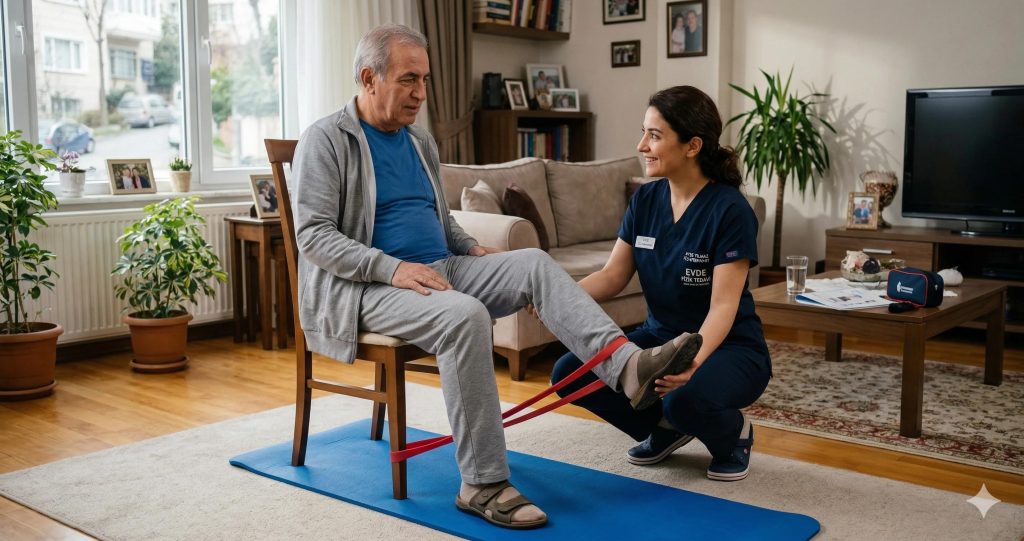
Place a towel or resistance band around the front of your foot and gently pull the toes toward you.
Hold the stretch for 20–30 seconds.
This can be a useful alternative if standing exercises are uncomfortable.
4. Double-Leg Calf Raises
Once walking is comfortable and the acute symptoms have settled, stand near a wall or sturdy surface for balance.
Slowly raise both heels from the floor and then lower them with control.
Start with 8–10 repetitions.
As strength improves, the number of repetitions can gradually increase.
5. Gradual Single-Leg Calf Raises
A single-leg calf raise requires more strength than a double-leg version.
Stand near a stable support and slowly lift one heel off the floor. Lower yourself with control.
Begin only when you can perform double-leg calf raises comfortably.
If this exercise causes sharp pain, stop and seek professional guidance.
When Should You See a Physiotherapist?
Consider seeing a physiotherapist if calf symptoms:
- Keep returning
- Do not improve with reasonable activity modification
- Affect normal walking
- Make exercise difficult
- Are associated with weakness
- Follow a sports injury
- Are accompanied by ongoing stiffness
- Affect your daily activities
A physiotherapist can assess the calf, ankle, knee, hip, and movement patterns to determine what may be contributing to the problem.
Treatment may include mobility exercises, progressive strengthening, education, activity modification, and a gradual return-to-sport program when appropriate.
When Is Calf Pain an Emergency?
Some symptoms require urgent medical evaluation.
Seek urgent medical attention if you develop sudden or unexplained calf swelling, particularly when one leg is affected, or if the area becomes warm, red, or unusually tender.
Emergency care is especially important if calf symptoms occur with:
- Sudden shortness of breath
- Chest pain
- Difficulty breathing
- Fainting
- Coughing up blood
These symptoms can indicate a potentially serious blood clot complication.
You should also seek prompt medical care after a significant injury if you cannot bear weight, have substantial swelling or bruising, or heard a popping sensation at the time of injury.
How to Prevent Future Calf Problems
Prevention starts with gradually increasing physical activity.
Warm Up Before Exercise
Spend several minutes walking or performing gentle movements before intense activity.
A proper warm-up prepares your muscles and joints for greater demands.
Increase Training Gradually
Avoid suddenly doubling your running distance or workout intensity.
Increase your workload progressively and give your body enough recovery time.
Strengthen the Lower Leg
Regular calf strengthening can improve muscle capacity and help prepare your legs for walking, running, and sports.
Improve Ankle Mobility
Limited ankle mobility can affect movement mechanics. Gentle ankle mobility exercises may help maintain comfortable movement.
Wear Appropriate Footwear
Shoes should be appropriate for the activity you perform. Worn-out or unsuitable footwear can contribute to changes in lower-leg loading.
Allow Recovery
Rest is part of training. Adequate recovery helps muscles adapt to exercise and may reduce overuse problems.
Frequently Asked Questions
Why am I having pain in calf without an injury?
Calf discomfort can occur without a clear injury because of muscle cramps, overuse, increased activity, prolonged standing, muscle weakness, nerve irritation, or circulation problems.
If the symptom is persistent, severe, or unexplained, consider getting evaluated by a healthcare professional.
Can dehydration cause calf pain?
Dehydration may contribute to muscle cramps, particularly during or after strenuous activity. Maintaining adequate hydration is important for normal muscle function.
Should I stretch a painful calf?
Gentle stretching may help some muscle-related problems, but aggressive stretching is not appropriate for every condition. If you recently injured the calf or stretching increases sharp pain, stop and seek professional advice.
Can walking make calf pain worse?
Walking may aggravate a strained or overloaded calf. However, complete inactivity is not always necessary. The appropriate amount of activity depends on the underlying cause and severity of symptoms.
How long does calf pain take to improve?
Minor muscle soreness may improve within several days, while a muscle strain or tendon problem can take considerably longer. Recovery depends on the cause, severity, and how well the injury is managed.
Final Thoughts
Pain in calf can have many causes, from simple muscle cramps and exercise soreness to strains, tendon problems, nerve irritation, and circulation-related conditions. Paying attention to when the symptoms started, what makes them worse, and whether swelling or other symptoms are present can help determine the next step.
For mild exercise-related discomfort, reducing aggravating activities, maintaining gentle movement, staying hydrated, and gradually rebuilding strength may help. However, sudden swelling, warmth, redness, unexplained one-sided calf pain, or symptoms associated with breathing difficulties should be taken seriously.
If your symptoms continue, repeatedly return, or interfere with everyday activities, a qualified healthcare professional or physiotherapist can assess the problem and develop an appropriate recovery plan.