Tattoo Pain Chart: 10 Most & Least Painful Tattoo Spots Ranked
Getting a tattoo is an exciting way to express your personality, memories, beliefs, or creativity. But before booking an appointment, one of the biggest questions people have is: How much will a tattoo hurt? The answer depends largely on where you get tattooed.
A tattoo pain chart can help you understand which body areas are generally easier to tolerate and which locations tend to be more painful. While everyone’s pain tolerance is different, tattoo pain is often influenced by factors such as skin thickness, nerve density, proximity to bone, and the amount of cushioning between the skin and underlying structures.
In this guide, we’ll explore the 10 most and least painful tattoo spots, explain why certain areas hurt more, and share practical tips that may make your tattoo session more comfortable.
What Is a Tattoo Pain Chart?
A tattoo pain chart is a general guide that ranks different parts of the body according to how painful they may feel during tattooing.
Tattoo artists use needles that repeatedly puncture the skin while depositing ink. Because different parts of the body contain different amounts of nerves, fat, muscle, and bone, the sensation can vary considerably.
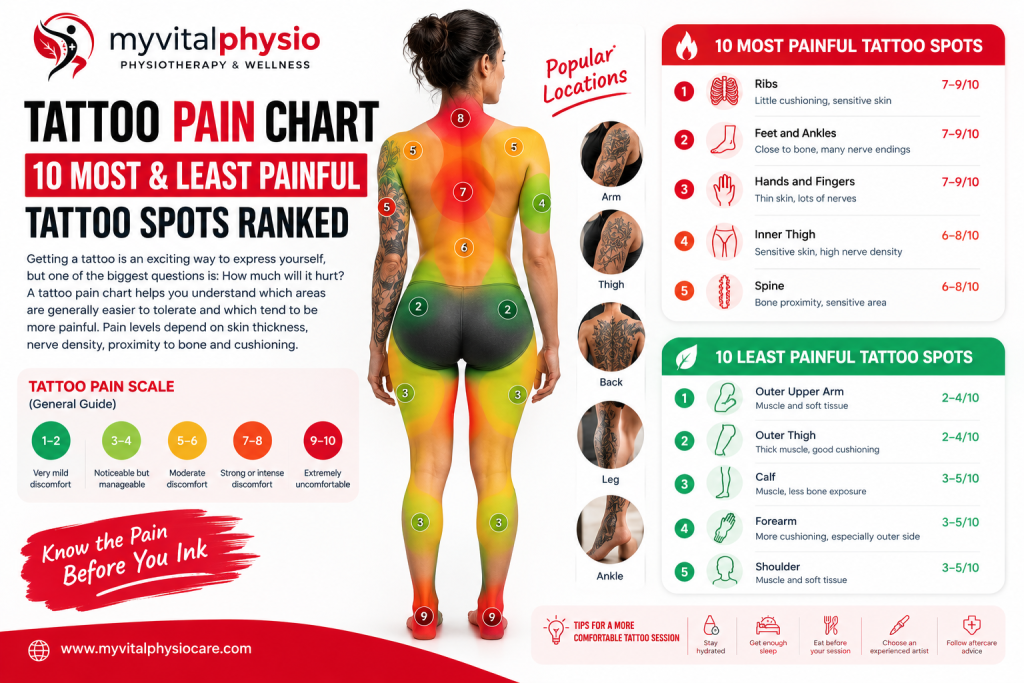
A typical tattoo pain chart places areas such as the upper arm and outer thigh toward the lower end of the pain scale, while areas such as the ribs, feet, ankles, and certain parts of the hands are often considered more sensitive.
However, these rankings aren’t medical measurements. Pain is subjective, so two people can experience the same tattoo location very differently.
Tattoo Pain Scale: What Should You Expect?
For a simple guide, tattoo discomfort can be considered on a scale from 1 to 10:
- 1–2/10: Very mild discomfort
- 3–4/10: Noticeable but generally manageable
- 5–6/10: Moderate discomfort
- 7–8/10: Strong or intense discomfort
- 9–10/10: Extremely uncomfortable for many people
These numbers are only general estimates. Your individual experience may depend on your pain tolerance, tattoo size, artist’s technique, session length, and physical condition.
Tattoo Pain Chart: 10 Body Areas Ranked
Here’s a general tattoo pain chart from areas that are commonly considered easier to tattoo to areas that tend to be more sensitive.
1. Outer Upper Arm — 2–4/10
The outer upper arm is one of the most popular locations for first tattoos. It usually has a reasonable amount of muscle and soft tissue, which can provide some cushioning.
The area is also relatively easy for a tattoo artist to access and work on. For many beginners, the outer upper arm is a comfortable place to start.
Pain level: Low
It may become more uncomfortable when the tattoo approaches the inner arm, armpit, or elbow.
2. Outer Thigh — 2–4/10
The outer thigh is another location that is frequently considered relatively manageable.
The area generally has substantial muscle and soft tissue compared with bony areas. Large tattoos can also be placed here, although longer sessions can naturally become more uncomfortable as the skin becomes irritated.
Pain level: Low
The inner thigh tends to be considerably more sensitive than the outer thigh.
3. Calf — 3–5/10
The calf can be a good option for people who want a leg tattoo without choosing one of the more sensitive locations.
The amount of muscle in the calf can make tattooing tolerable for many people. However, discomfort can vary depending on the exact location and how close the tattoo is to the shin bone or ankle.
Pain level: Low to moderate
4. Forearm — 3–5/10
The forearm is another popular tattoo location and is often considered relatively manageable.
The outer forearm generally tends to be easier than areas close to the wrist or inner forearm. People often choose this location for names, quotes, symbols, and smaller designs.
Pain level: Low to moderate
As the needle moves toward the wrist, the sensation may become sharper because there is less cushioning.
5. Shoulder — 3–5/10
The outer shoulder can be a relatively comfortable place for tattooing because of the muscle and soft tissue around the area.
Pain may increase as the tattoo moves toward the collarbone, shoulder blade, or armpit.
Pain level: Low to moderate
The shoulder is often considered a reasonable option for someone getting their first tattoo.
6. Inner Arm — 5–7/10
The inner arm generally contains more sensitive skin than the outer upper arm.
Tattooing here can feel sharper or more intense, particularly closer to the armpit. The skin may also be more delicate.
Pain level: Moderate to high
If you’re nervous about tattoo pain, you may want to start with a less sensitive location.
7. Spine and Back — 5–8/10
Back tattoos can range significantly in discomfort depending on the exact location.
Areas with more muscle may be easier, while tattooing directly over or close to the spine and shoulder blades can feel more intense because of the underlying bone and sensitivity of the area.
Large back tattoos can also involve lengthy sessions, which may increase overall discomfort.
Pain level: Moderate to high
Taking breaks during a long session can help make the experience more manageable.
8. Ribs — 7–9/10
The ribs are frequently listed among the more painful tattoo locations.
There is relatively little cushioning over parts of the rib cage, and the area can be sensitive to repeated needle movement. Breathing also causes the skin around the ribs to move, which can make tattooing feel more challenging.
Pain level: High
If you’re considering your first tattoo, the ribs may not be the easiest place to begin.
9. Feet and Ankles — 7–9/10
Feet and ankles are commonly regarded as sensitive tattoo locations.
There is limited soft tissue in many areas, and the skin is close to bones and numerous nerve endings. The constant vibration of the tattoo machine can also make the sensation feel particularly intense.
Pain level: High
Healing can also require extra attention because feet are exposed to friction from socks, shoes, and everyday movement.
10. Hands and Fingers — 7–9/10
Hands and fingers can be particularly uncomfortable because there is less cushioning in many areas.
Finger tattoos are also exposed to frequent movement and washing, which can affect healing and ink retention. Tattoos on the palms and sides of fingers may be especially challenging.
Pain level: High
It’s important to discuss realistic expectations with your tattoo artist before choosing these areas.
Why Do Some Tattoos Hurt More Than Others?
The pain experienced during tattooing depends on several factors.
Nerve Density
Areas with more nerve endings can feel more sensitive. When the tattoo needle repeatedly contacts the skin, these nerves send signals that the brain interprets as pain or discomfort.
Proximity to Bone
Tattooing directly over areas with little soft tissue can feel more intense. Ribs, ankles, knees, and parts of the hands and feet are common examples.
Skin Thickness
Thicker skin may provide more cushioning, while thin or delicate skin can feel more sensitive during tattooing.
Amount of Body Fat
Areas with more soft tissue may be more comfortable for some people. However, body composition varies significantly between individuals.
Tattoo Size
A tiny tattoo may only take a few minutes, while a large design may require several hours or multiple sessions.
Even if the location itself isn’t extremely painful, prolonged tattooing can cause increasing soreness and irritation.
Does Tattoo Size Affect Pain?
Yes. Tattoo size can make a major difference in the overall experience.
A small tattoo may be completed quickly, limiting the amount of irritation your skin experiences. A large tattoo can require repeated passes over the same general area and may involve a much longer appointment.
As the session continues, the skin may become increasingly tender. This means a location that feels manageable during the first hour may feel considerably more uncomfortable later.
Does Tattoo Style Affect Pain?
The tattoo design and technique can also influence discomfort.
For example, tattoos involving extensive shading or repeated color packing may require more work on the skin than a simple outline.
Fine-line tattoos can sometimes feel different from traditional bold-line tattoos because the artist’s technique, needle configuration, pressure, and number of passes can vary.
Your tattoo artist can explain what to expect based on your specific design.
How to Make a Tattoo Hurt Less
You cannot completely eliminate tattoo pain, but several practical steps may make the experience easier.
Get Enough Sleep
Try to sleep well before your appointment. Being tired can make it harder to tolerate discomfort and may leave you feeling more stressed.
Eat Before Your Appointment
Having a normal meal before your session can help you avoid feeling weak or lightheaded. Don’t arrive extremely hungry.
Stay Hydrated
Drink enough water before your appointment. Staying hydrated supports your general well-being during a long tattoo session.
Avoid Arriving Intoxicated
Alcohol and recreational drugs are not appropriate ways to manage tattoo pain. They can affect judgment and may create additional risks during the appointment.
Wear Comfortable Clothing
Choose clothing that gives your tattoo artist easy access to the area while keeping you comfortable during the session.
Take Breaks
For longer tattoos, short breaks can help you relax physically and mentally. Discuss breaks with your tattoo artist before starting.
Use Relaxation Techniques
Slow breathing, listening to music, watching a video, or focusing on conversation can help distract you from the sensation.
Tattoo Pain Chart for First-Time Tattoo Clients
If this is your first tattoo, choosing a relatively comfortable location may help you understand how your body responds.
Common beginner-friendly areas include:
- Outer upper arm
- Outer thigh
- Shoulder
- Forearm
- Calf
You may want to avoid starting with particularly sensitive areas such as the ribs, feet, ankles, hands, or certain parts of the inner arm.
Remember that the best location also depends on your design and personal preferences.
How Long Does Tattoo Pain Last?
The strongest discomfort usually occurs during the tattooing process itself. Afterward, the tattooed skin may feel sore, tender, warm, or irritated for several days.
Your tattoo artist should provide aftercare instructions appropriate for your tattoo.
Avoid picking or scratching the area while it heals, and follow the artist’s instructions about cleaning and moisturizing.
If you notice concerning symptoms such as rapidly increasing redness, severe swelling, significant drainage, fever, or worsening pain, seek appropriate medical advice rather than assuming it is normal tattoo soreness.
Tattoo Pain for Men vs. Women: Does It Differ?
People sometimes ask whether tattoo pain differs between men and women.
There isn’t a simple rule that one sex experiences tattoo pain more or less than the other. Pain perception is influenced by many individual factors, including personal pain tolerance, stress, previous experience, tattoo location, and the specific technique used.
Therefore, a tattoo pain chart should be treated as a general guide rather than a prediction of exactly how much your tattoo will hurt.
Does Tattoo Pain Get Easier With Experience?
Many experienced tattoo clients become more comfortable with the process because they know what to expect.
The first tattoo can feel intimidating because the sensation is unfamiliar. After experiencing the needle, machine vibration, session length, and healing process, some people find subsequent tattoos easier to handle.
However, experience does not mean every location will feel the same. A person who comfortably tolerates an upper-arm tattoo may still find a rib or foot tattoo significantly more uncomfortable.
Frequently Asked Questions
What is the most painful tattoo spot?
The ribs, feet, ankles, hands, fingers, and some areas near joints or bones are commonly considered among the more painful tattoo locations.
What is the least painful place to get a tattoo?
The outer upper arm, outer thigh, shoulder, forearm, and calf are often considered relatively comfortable locations.
Is a tattoo pain chart accurate?
A tattoo pain chart is useful as a general reference, but it cannot predict your personal pain level. Individual experiences vary considerably.
Are tattoos extremely painful?
Tattoo pain varies from person to person. Many people describe it as scratching, burning, stinging, or vibration rather than unbearable pain.
What should I eat before getting a tattoo?
A normal, balanced meal before your appointment can help you avoid arriving hungry or feeling weak. Staying hydrated is also sensible.
Can I take pain medication before a tattoo?
Don’t take medication specifically for tattoo pain without considering its risks and following appropriate medical guidance. Some medicines can affect bleeding or interact with other conditions or medications. If you’re unsure, ask a healthcare professional.
Final Thoughts
A tattoo pain chart can be a useful starting point when deciding where to place your next tattoo. Areas with more muscle and soft tissue, such as the outer upper arm and outer thigh, are commonly considered easier, while locations with thin skin, numerous nerve endings, or little cushioning—such as the ribs, feet, ankles, and hands—can be more uncomfortable.
Still, there is no universal pain ranking. Your personal experience depends on your pain tolerance, tattoo design, artist’s technique, session duration, and the exact location being tattooed.
If you’re getting your first tattoo, choosing a relatively comfortable location and preparing properly can make the experience much easier. Most importantly, choose a reputable tattoo artist, follow proper hygiene and aftercare practices, and listen to your body throughout the session.
The best tattoo is one you’re comfortable getting—not simply one you can tolerate the pain for.