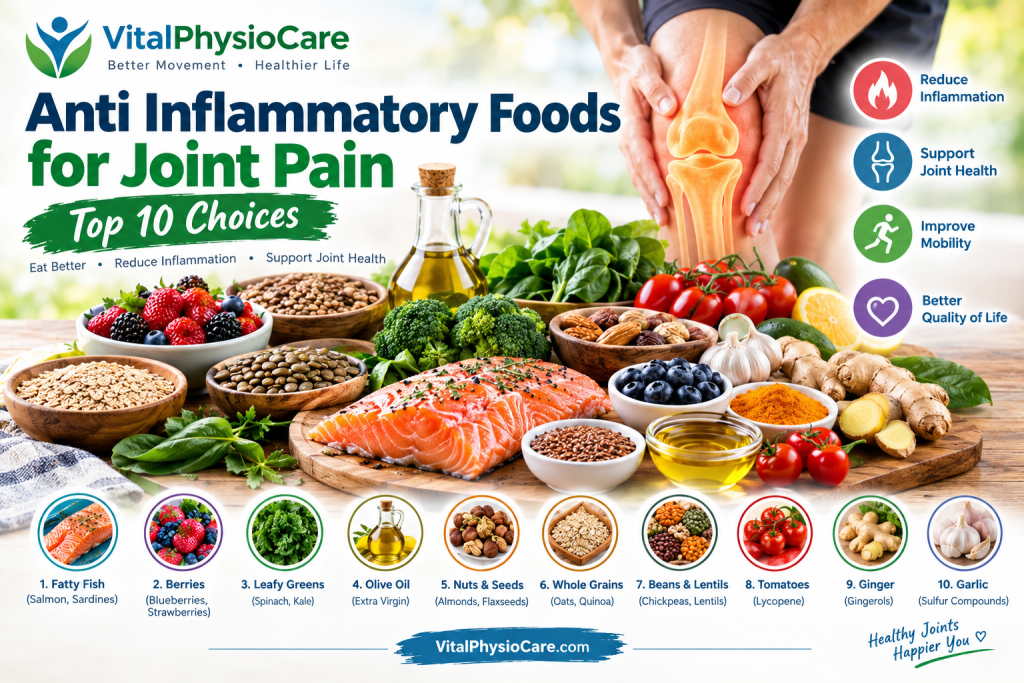
Anti Inflammatory Foods for Joint Pain: Top 10
Joint pain can affect your daily activities, exercise routine, sleep, and overall quality of life. Whether you experience occasional stiffness after physical activity or ongoing discomfort associated with arthritis, your diet may play a useful role in supporting your general health. Certain foods contain nutrients and plant compounds that may help support a healthy inflammatory response when included in a balanced eating pattern.
Learning about Anti Inflammatory Foods for Joint Pain can help you make better choices for breakfast, lunch, dinner, and snacks. Although food cannot cure arthritis or guarantee that joint pain will disappear, a nutritious diet may support a healthy weight, normal body functions, and overall well-being.
In this guide, we will explore 10 nutritious foods, explain how they fit into a joint-friendly diet, and discuss practical ways to include them in your daily meals.
What Causes Joint Pain?
Joint pain can have many causes. Common examples include osteoarthritis, rheumatoid arthritis, injuries, overuse, bursitis, gout, and other medical conditions. The symptoms may include stiffness, tenderness, swelling, reduced movement, or discomfort during physical activity.
Inflammation is part of the body’s natural response to injury or infection. However, some health conditions involve ongoing inflammation that can affect joints and surrounding tissues. Rheumatoid arthritis, for example, is an autoimmune condition in which the immune system attacks the lining of the joints.
Osteoarthritis is commonly associated with changes in cartilage and other structures within a joint. Although inflammation may contribute to symptoms, osteoarthritis is not the same as rheumatoid arthritis.
Because joint pain has different causes, treatment depends on the underlying condition. Food can support general health, but it should not replace appropriate medical care, physiotherapy, prescribed medication, or an exercise program.
How Can Food Support Joint Health?
A balanced diet provides nutrients that help your body function normally. Protein supports tissue maintenance, omega-3 fatty acids contribute to normal body functions, and vitamins and minerals help maintain bones, muscles, and connective tissues.
Some foods contain polyphenols and other plant compounds that have been studied for their potential effects on inflammatory processes. Research into dietary patterns, particularly Mediterranean-style eating patterns, suggests that a diet rich in vegetables, fruits, legumes, whole grains, fish, and healthy fats may be beneficial for overall health.
It is important to understand that the effect of a single food is usually limited. Eating one particular fruit or spice is unlikely to resolve joint pain on its own. The overall quality of your diet, physical activity, sleep, and medical treatment are more important.
The following Anti Inflammatory Foods for Joint Pain are useful additions to a varied and nutritious eating pattern.
1. Fatty Fish
Fatty fish, including salmon, sardines, mackerel, trout, and herring, are excellent sources of protein and long-chain omega-3 fatty acids. These fats are important components of a healthy diet and have been studied for their potential role in supporting a healthy inflammatory response.
Some research involving people with rheumatoid arthritis suggests that increasing omega-3 intake may provide modest benefits for certain symptoms in some individuals. However, results vary, and fish should be considered part of a broader treatment and nutrition plan.
Fish also provides nutrients such as vitamin B12, selenium, and, depending on the type, vitamin D. Protein supports the maintenance of muscles that help stabilize and move your joints.
How to include fatty fish in your diet
- Bake salmon with lemon, garlic, and herbs.
- Add sardines to whole-grain toast or a salad.
- Prepare grilled trout with brown rice and vegetables.
- Include fish in your meals two times a week, if suitable for your dietary preferences.
Fatty fish is one of the most useful choices among Anti Inflammatory Foods for Joint Pain because it provides protein and beneficial fats in one food.
2. Berries
Berries such as strawberries, blueberries, raspberries, and blackberries contain fiber, vitamins, and plant compounds called polyphenols. Many berries are rich in anthocyanins, which give certain fruits their red, purple, or blue colors.
Laboratory and observational research has investigated the relationship between berry compounds and inflammatory processes. However, evidence that eating berries directly reduces joint pain in humans remains limited. They are still valuable foods because they contribute to a balanced diet.
Berries are easy to add to meals and snacks. They can provide natural sweetness without requiring large amounts of added sugar.
Simple ways to eat berries
- Add blueberries to oatmeal.
- Mix strawberries into plain yogurt.
- Use frozen berries in a smoothie.
- Combine raspberries with nuts and seeds.
- Add fresh berries to a whole-grain breakfast.
Including a variety of colorful fruits is a practical way to obtain different nutrients. Berries can be part of a healthy eating pattern for people managing joint discomfort.
3. Leafy Green Vegetables
Leafy green vegetables include spinach, kale, Swiss chard, collard greens, and other dark green vegetables. They provide fiber, folate, vitamin K, and various plant compounds.
Vitamin K is important for normal blood clotting and bone health. Leafy greens also contribute to a diet rich in vitamins and minerals that support general well-being.
Some leafy greens contain calcium, although the amount absorbed by the body varies according to the vegetable. Maintaining healthy bones and muscles is important for people who want to protect joint function and remain physically active.
Ways to add leafy greens
- Add spinach to omelets.
- Prepare kale in a salad with olive oil and lemon.
- Mix chopped greens into lentil soup.
- Add spinach to a smoothie.
- Serve cooked vegetables with fish, beans, or chicken.
Leafy greens are among the best Anti Inflammatory Foods for Joint Pain because they provide valuable nutrients while helping increase vegetable intake.
4. Extra Virgin Olive Oil
Extra virgin olive oil is a major source of monounsaturated fat and contains naturally occurring plant compounds, including polyphenols. It is commonly used in Mediterranean-style eating patterns.
Some components of extra virgin olive oil have been studied for their potential effects on inflammatory pathways. However, the amount of olive oil needed to produce a specific effect on joint symptoms is not established.
Replacing butter or other sources of saturated fat with olive oil may be a useful dietary change for some people. Olive oil is calorie-dense, so portion sizes still matter, especially if weight management is a goal.
How to use olive oil
- Use it as a salad dressing.
- Drizzle a small amount over cooked vegetables.
- Add it to homemade hummus.
- Use it when preparing fish or legumes.
- Combine it with lemon juice, garlic, and herbs.
Olive oil can complement other Anti Inflammatory Foods for Joint Pain and make nutritious meals more enjoyable.
5. Nuts and Seeds
Nuts and seeds provide healthy fats, protein, fiber, and minerals. Almonds, walnuts, pistachios, chia seeds, flaxseeds, and pumpkin seeds are all useful options.
Walnuts and flaxseeds contain plant-based omega-3 fatty acid called alpha-linolenic acid, or ALA. Chia seeds also provide ALA and fiber. These nutrients contribute to a balanced diet, although plant-based ALA is not identical to the long-chain omega-3 fats found in fish.
Nuts and seeds can be useful snacks because they are easy to store and require little preparation. They are also helpful additions to meals that lack protein or healthy fats.
Ways to include nuts and seeds
- Add walnuts to oatmeal.
- Sprinkle chia seeds over yogurt.
- Mix ground flaxseed into a smoothie.
- Use almonds as a snack.
- Add pumpkin seeds to a salad.
- Include nuts in a homemade trail mix.
Because nuts and seeds contain many calories in small portions, a moderate serving is generally appropriate for most people.
6. Whole Grains
Whole grains include oats, brown rice, quinoa, barley, whole-wheat bread, and whole-grain pasta. They contain fiber and a range of nutrients that may be reduced when grains are heavily refined.
Fiber supports digestive health and can contribute to a healthy eating pattern. Some whole grains also provide magnesium, selenium, and B vitamins, depending on the food.
A diet containing whole grains may help support healthy weight management when combined with appropriate portions and an overall balanced diet. Maintaining a healthy weight can be particularly important for people with weight-bearing joint problems.
Healthy whole-grain meal ideas
- Oatmeal with berries and walnuts.
- Brown rice with salmon and vegetables.
- Quinoa with chickpeas and leafy greens.
- Whole-grain toast with eggs.
- Barley soup with beans and vegetables.
Whole grains are valuable additions to a diet that includes Anti Inflammatory Foods for Joint Pain, especially when they replace some highly refined carbohydrate foods.
7. Beans and Lentils
Beans, lentils, chickpeas, and other legumes provide plant-based protein, fiber, folate, iron, and other nutrients. They are affordable, versatile, and widely available.
Protein is important for maintaining muscles, which support movement and help protect the body during physical activity. Fiber also supports digestive health and may help people feel satisfied after meals.
Legumes can be especially useful for people who eat less meat or follow a vegetarian diet. They can be combined with whole grains to create a filling meal.
Easy ways to eat legumes
- Prepare lentil soup with carrots and spinach.
- Add chickpeas to a vegetable salad.
- Make homemade hummus.
- Cook kidney beans with brown rice.
- Add black beans to a whole-grain wrap.
- Prepare a bean and vegetable stew.
Beans and lentils are among the most practical Anti Inflammatory Foods for Joint Pain because they provide important nutrients without requiring expensive ingredients.
8. Tomatoes
Tomatoes contain vitamin C, potassium, and lycopene. Lycopene is a carotenoid that gives tomatoes their red color and has antioxidant properties.
Antioxidants help protect cells from oxidative damage. Tomatoes can contribute to a balanced diet, although eating them should not be viewed as a proven treatment for joint inflammation.
Cooking tomatoes with a small amount of olive oil may increase the absorption of lycopene. Fresh tomatoes, canned tomatoes, and homemade tomato sauces can all be useful options.
Ways to include tomatoes
- Add fresh tomatoes to a salad.
- Prepare a homemade tomato soup.
- Mix chopped tomatoes into eggs.
- Use tomatoes in a bean stew.
- Add tomato sauce to whole-grain pasta.
- Serve tomatoes with grilled fish or chicken.
Tomatoes can add flavor, color, and nutrients to meals containing other Anti Inflammatory Foods for Joint Pain.
9. Ginger
Ginger is a flavorful root commonly used in cooking and traditional food practices. It contains compounds called gingerols and related substances that have been studied for their biological effects.
Some studies have investigated ginger preparations for osteoarthritis symptoms, but the evidence is not strong enough to conclude that ginger reliably treats joint pain. Research has also involved different forms and doses of ginger, so results from supplements cannot automatically be applied to ordinary food portions.
Fresh ginger can be used as a culinary ingredient without requiring a supplement.
How to use ginger
- Add fresh ginger to vegetable soup.
- Prepare ginger tea.
- Use grated ginger in a stir-fry.
- Add a small amount to a smoothie.
- Mix ginger with garlic and lemon in a marinade.
- Use ginger in a homemade curry.
Ginger can be included among Anti Inflammatory Foods for Joint Pain as part of a varied diet, but it should not replace medical treatment.
10. Garlic
Garlic is a member of the allium family of vegetables and contains sulfur-containing compounds. It is used in many cuisines to add flavor without requiring large amounts of salt or sugar.
Garlic has been studied for its potential effects on several aspects of health, but evidence that ordinary dietary garlic reduces joint pain is limited. It remains a useful ingredient because it can make nutritious meals more appealing.
Ways to add garlic to meals
- Mix minced garlic into olive oil and lemon juice.
- Add garlic to roasted vegetables.
- Use it in lentil soup.
- Prepare garlic with sautéed spinach.
- Add it to a fish marinade.
- Use garlic in homemade bean or chickpea dishes.
Garlic works well with many other Anti Inflammatory Foods for Joint Pain, including vegetables, legumes, fish, and whole grains.
How Does a Mediterranean-Style Diet Help?
A Mediterranean-style diet is an eating pattern that emphasizes vegetables, fruits, whole grains, beans, lentils, nuts, seeds, olive oil, and fish. It generally includes moderate amounts of poultry, eggs, and dairy products, while limiting excessive consumption of highly processed foods and large amounts of red or processed meat.
Research has linked Mediterranean-style eating patterns with several health benefits, including improved cardiovascular health and better overall diet quality. Some studies in people with rheumatoid arthritis have reported improvements in certain symptoms or quality-of-life measures, although the evidence is not conclusive for every person.
This type of eating pattern may be useful because it combines many nutritious foods rather than depending on a single ingredient.
Example of a Mediterranean-style day
Breakfast: Oatmeal with berries, walnuts, and plain yogurt.
Lunch: Chickpea salad with tomatoes, spinach, cucumber, and olive oil dressing.
Snack: An apple with a small serving of almonds.
Dinner: Baked salmon with brown rice and steamed vegetables.
Drink: Water or unsweetened tea.
The goal is not to follow a perfect diet every day. Instead, focus on making nutritious choices consistently.
Foods That May Be Helpful to Limit
A joint-friendly diet does not require eliminating every favorite food. However, regularly consuming large amounts of highly processed foods may make it more difficult to maintain a balanced diet.
Consider limiting:
Highly Processed Foods
Some packaged snacks, fast foods, and ready-made meals contain substantial amounts of sodium, added sugar, or saturated fat. Choose minimally processed foods more often when possible.
Sugary Drinks
Soft drinks and other sugary beverages can add calories without providing many essential nutrients. Water, unsweetened tea, and other suitable drinks may be better everyday choices.
Processed Meat
Bacon, sausages, and other processed meats may contain high amounts of sodium and saturated fat. Consider replacing some servings with fish, beans, lentils, poultry, or other protein sources.
Excessive Alcohol
Alcohol can interact with certain medications and may affect sleep and overall health. If you take medication for arthritis or another condition, ask your healthcare professional whether alcohol is appropriate.
Excessive Salt
People with certain health conditions may need to monitor sodium intake. Reading food labels and preparing meals at home can help you manage how much salt you consume.
These suggestions are about improving overall dietary quality, not claiming that any one food directly causes or cures joint pain.
Can Weight Management Help Joint Pain?
Body weight can affect joints that carry weight, including the knees, hips, ankles, and feet. If a person is overweight, gradual weight loss may reduce the mechanical load placed on these joints.
For people with knee osteoarthritis who are overweight, research suggests that weight loss can improve pain and physical function. Even modest weight loss may be helpful, although the results differ from person to person.
A healthy weight-management plan should include balanced meals, appropriate physical activity, adequate sleep, and realistic goals. Avoid crash diets or extreme calorie restrictions, especially if you have a medical condition.
Foods such as vegetables, fruits, whole grains, legumes, lean proteins, and healthy fats can help create satisfying meals that support a healthy eating pattern.
Sample One-Day Meal Plan for Joint Health
Here is an example of how you can combine nutritious foods throughout the day.
Breakfast
- Oatmeal cooked with milk or a suitable alternative.
- Blueberries or strawberries.
- A small serving of walnuts.
- Water or unsweetened tea.
Mid-Morning Snack
- Plain Greek yogurt.
- A piece of fruit.
Lunch
- Lentil soup with spinach and tomatoes.
- Whole-grain bread.
- A side salad with olive oil and lemon dressing.
Afternoon Snack
- An apple.
- A small handful of almonds.
Dinner
- Baked salmon or chickpeas.
- Brown rice or quinoa.
- Steamed broccoli and carrots.
- A serving of leafy greens.
Evening
- Water or a suitable unsweetened drink.
This meal plan is only an example. Portion sizes should be adjusted according to your age, activity level, nutritional needs, preferences, and health goals.
Can Supplements Replace Healthy Foods?
Supplements are sometimes promoted as solutions for joint pain. Products containing fish oil, glucosamine, chondroitin, turmeric, or other ingredients may be marketed for joint health.
However, evidence varies considerably between supplements. Some may have limited benefits for particular conditions, while others have not shown consistent results. Supplements can also interact with medications or cause side effects.
A balanced diet should generally be the first priority. If you are considering a supplement, speak with a qualified healthcare professional, particularly if you take blood thinners, have a chronic condition, are pregnant, or are preparing for surgery.
Do not stop prescribed medication or replace physiotherapy with a supplement without professional advice.
Other Lifestyle Habits That Support Joint Health
Food is only one part of maintaining healthy joints. The following habits may also help.
Gentle Physical Activity
Appropriate exercise can help maintain muscle strength, joint movement, and physical function. Walking, swimming, cycling, and carefully selected strengthening exercises may be useful for some people.
If you have persistent pain, consult a physiotherapist or healthcare professional before beginning a new exercise program.
Maintain Muscle Strength
Strong muscles can help support joints and improve movement. A gradual strength-training program may be beneficial when it is appropriate for your condition.
Get Adequate Sleep
Poor sleep can affect energy, mood, and how you experience pain. Establishing a regular sleep routine may support overall well-being.
Manage Stress
Stress-management techniques such as breathing exercises, relaxation, gentle stretching, and enjoyable hobbies may help improve quality of life.
Avoid Prolonged Inactivity
Remaining in one position for long periods may increase stiffness for some people. Gentle movement throughout the day may help, provided it is appropriate for your condition. Anti Inflammatory Foods for Joint Pain
When Should You See a Doctor?
Not every episode of joint pain requires emergency care, but certain symptoms need prompt medical attention.
Seek urgent medical advice if you experience:
- Sudden, severe joint pain.
- A joint that is hot, very swollen, or red, especially with fever.
- Inability to bear weight after an injury.
- A visibly deformed joint.
- Severe pain following a significant accident.
- Joint pain accompanied by unusual weakness or other concerning symptoms.
Persistent pain, recurring swelling, morning stiffness, or difficulty moving a joint should also be evaluated by a qualified healthcare professional. Early assessment can help identify the cause and guide appropriate treatment. Anti Inflammatory Foods for Joint Pain
Frequently Asked Questions
What are the best foods for joint pain?
A balanced diet containing fatty fish, berries, leafy greens, olive oil, nuts, whole grains, legumes, and other vegetables may support overall health. No single food has been proven to eliminate joint pain.
Can anti-inflammatory foods cure arthritis?
No. Foods cannot cure arthritis. A nutritious diet may support general health and, for some people, may complement medical treatment and lifestyle changes. Anti Inflammatory Foods for Joint Pain
Is turmeric good for joint pain?
Turmeric contains curcumin, which has been studied for its potential effects on inflammation and pain. Some research suggests possible benefits in certain conditions, but evidence is not conclusive. Turmeric supplements can interact with medications, so seek professional advice before using them.
Is milk bad for joint pain?
Milk is not automatically harmful to people with joint pain. It can provide protein and calcium. Whether dairy is suitable depends on your tolerance, allergies, dietary preferences, and individual health needs. Anti Inflammatory Foods for Joint Pain
Can drinking water help joint health?
Water supports normal body functions and hydration. It is important for overall health, but drinking extra water has not been proven to cure arthritis or eliminate joint pain.
Should I avoid all inflammatory foods?
You do not need to eliminate entire food groups without a medical reason. Focus on a varied diet rich in vegetables, fruits, legumes, whole grains, healthy fats, and suitable protein sources.
Can diet help with knee osteoarthritis?
A balanced diet may support overall health and healthy weight management. For people with knee osteoarthritis who are overweight, weight loss may improve pain and physical function. Diet should be combined with appropriate exercise and professional care.
Final Thoughts
Eating nutritious foods can be an important part of a healthy lifestyle for people who experience joint discomfort. Fatty fish, berries, leafy greens, olive oil, nuts, seeds, whole grains, legumes, tomatoes, ginger, and garlic can all contribute to a varied diet Anti Inflammatory Foods for Joint Pain.
The most useful approach to Anti Inflammatory Foods for Joint Pain is to focus on overall dietary quality rather than expecting one ingredient to provide a cure. Choose a variety of foods, maintain appropriate activity, get enough sleep, and seek professional advice when pain persists.
A healthy diet may support your body, but joint pain should always be evaluated in the context of its underlying cause. With the right combination of nutrition, movement, and appropriate medical care, you can work toward better health and improved daily function.
For more educational information about physiotherapy, exercise, joint health, and physical wellness, visit VitalPhysioCare.com.