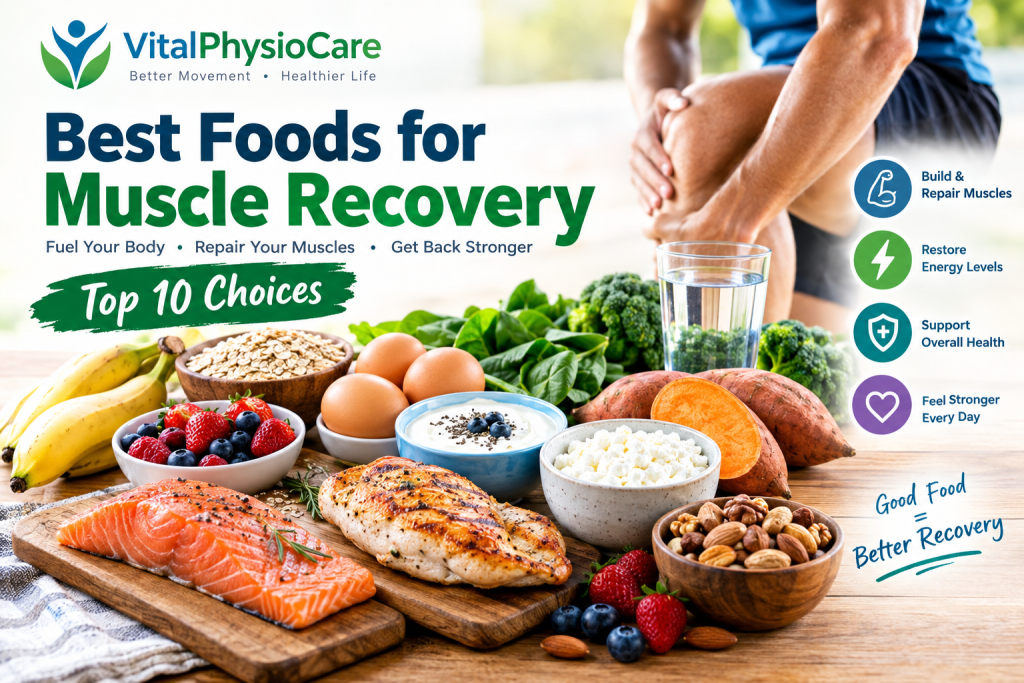
Best Foods for Muscle Recovery: Top 10 Choices
Muscle recovery is an essential part of staying active, improving physical performance, and maintaining healthy muscles. Whether you are a professional athlete, a gym beginner, or someone who enjoys walking and exercise, your body needs proper nutrition to recover after physical activity. The right foods provide energy, protein, vitamins, minerals, and fluids that support normal muscle function and repair.
Choosing the Best Foods for Muscle Recovery can help you build a balanced eating routine after exercise. Nutrition works together with adequate sleep, rest, and appropriate training to support your recovery goals. This guide explains the best foods to include in your diet and how they may help your body after workouts.
Why Is Muscle Recovery Important?
When you exercise, your muscles work harder than they do during normal daily activities. Resistance training, running, cycling, sports, and other physical activities place stress on muscle tissue. Your body responds by repairing and adapting to this stress.
Muscle recovery allows you to return to your activities with adequate energy and helps you maintain a consistent exercise routine. Without enough rest and nutrition, you may experience tiredness, reduced performance, or difficulty completing your next workout.
Protein provides amino acids that your body uses to maintain and repair muscle tissue. Carbohydrates help replenish energy stores, while healthy fats support overall health. Vitamins, minerals, and water also contribute to normal body functions.
A balanced diet is therefore more useful than relying on one particular food. The Best Foods for Muscle Recovery should provide a combination of nutrients rather than focusing only on protein.
1. Eggs
Eggs are a convenient source of high-quality protein and contain important nutrients such as vitamin B12, choline, and selenium. Protein supplies amino acids that help your body maintain and repair muscle tissue.
One large egg provides approximately 6 grams of protein, although the exact amount varies by size. Eggs can be boiled, scrambled, poached, or added to a nutritious breakfast.
Try combining eggs with whole-grain toast, vegetables, or fruit. This combination provides protein, carbohydrates, and other nutrients that can support your recovery after exercise.
Eggs are among the Best Foods for Muscle Recovery because they are affordable, versatile, and easy to include in everyday meals. If you prefer not to eat eggs, other protein-rich foods can provide similar nutritional benefits.
2. Greek Yogurt
Greek yogurt is a useful post-workout food because it provides protein and calcium. Many varieties also contain carbohydrates, especially when fruit is added.
Protein supports the maintenance and repair of muscle tissue, while calcium contributes to normal muscle function and bone health. Greek yogurt is also convenient for people who need a quick snack after exercising.
Choose plain Greek yogurt when possible and add berries, bananas, oats, or nuts for extra nutrients. If you need more energy after a demanding workout, combine yogurt with a carbohydrate-rich food.
Greek yogurt is one of the Best Foods for Muscle Recovery for people who want a simple snack that does not require cooking. Check the nutrition label to compare protein content and added sugar between different products.
3. Salmon and Other Fatty Fish
Salmon is rich in protein and provides omega-3 fatty acids. It also contains nutrients such as vitamin D and vitamin B12, depending on the portion and preparation.
Protein supports muscle maintenance, while omega-3 fats play important roles in normal body functions. Including fish in a balanced diet may contribute to overall health and help you meet your nutritional needs.
You can bake, grill, or steam salmon and serve it with brown rice, potatoes, and vegetables. This creates a balanced meal containing protein, carbohydrates, fiber, and micronutrients.
Salmon is included among the Best Foods for Muscle Recovery because it combines protein with beneficial fats. If salmon is unavailable or expensive, sardines, tuna, trout, and other fish may also be useful choices.
4. Chicken Breast
Chicken breast is a popular lean protein source. It provides essential amino acids and can be prepared in many different ways.
A cooked serving of chicken breast can provide a substantial amount of protein, although the exact quantity depends on the serving size and preparation method. Protein is particularly important for people who participate in resistance training or other activities that place demands on muscles.
For a balanced recovery meal, combine chicken with brown rice, quinoa, potatoes, or whole-grain bread. Add vegetables such as carrots, spinach, broccoli, or peppers to increase the nutritional value of the meal.
Chicken is one of the Best Foods for Muscle Recovery for people who want a practical protein source. Avoid relying exclusively on chicken, however. A varied diet that includes beans, fish, eggs, dairy, and plant-based proteins can provide nutritional variety.
5. Bananas
Bananas are an easy-to-eat fruit that provides carbohydrates and potassium. Carbohydrates help replenish energy used during physical activity, while potassium contributes to normal muscle function.
A banana can be useful before or after a workout, particularly when combined with another food that provides protein. For example, you can eat a banana with Greek yogurt, peanut butter, or a glass of milk.
Bananas are affordable, portable, and do not require preparation. They are especially convenient for people who exercise at a gym, walk outdoors, or participate in sports.
Although bananas are often described as one of the Best Foods for Muscle Recovery, they should be part of a broader eating pattern. Other fruits, including oranges, apples, berries, and melons, can also provide valuable nutrients and carbohydrates.
6. Oats and Whole Grains
Oats, brown rice, quinoa, whole-grain bread, and other whole grains provide carbohydrates that help supply energy. They also contain fiber and various vitamins and minerals.
After exercise, carbohydrates can help replenish muscle glycogen, the stored form of carbohydrate used during physical activity. The amount of carbohydrate you need depends on the intensity and duration of your workout and your overall energy requirements.
Oats are easy to prepare as breakfast or a snack. You can combine them with milk, yogurt, fruit, seeds, or nuts. Brown rice and quinoa work well with chicken, fish, beans, or vegetables.
Whole grains are among the Best Foods for Muscle Recovery because they can provide lasting energy and complement protein-rich foods. Choose portions that suit your activity level and personal nutritional needs.
7. Berries and Other Colorful Fruits
Berries, such as strawberries, blueberries, raspberries, and blackberries, provide carbohydrates, fiber, vitamins, and plant compounds called polyphenols. They can add flavor and variety to a recovery meal.
Fruits also contribute to your daily fluid intake because they contain water. A varied fruit intake can help you obtain different nutrients throughout the day.
You can add berries to oatmeal, Greek yogurt, smoothies, or whole-grain cereal. If fresh berries are unavailable, frozen berries can be a convenient alternative.
Berries are often considered among the Best Foods for Muscle Recovery because they provide useful nutrients in a small, convenient serving. However, no single fruit has been proven to guarantee faster muscle repair. A varied diet is the most practical approach.
8. Cottage Cheese and Other Dairy Foods
Cottage cheese provides protein and calcium. It can be eaten as a snack or included in a meal with vegetables, fruit, or whole-grain foods.
Dairy products such as milk, yogurt, and cottage cheese can help people meet their protein requirements. Some dairy foods also provide vitamin D, depending on whether they are fortified.
Cottage cheese is easy to combine with fruit, whole-grain crackers, or vegetables. People who enjoy savory foods can add herbs, pepper, tomatoes, or cucumber.
For people who tolerate dairy, cottage cheese is one of the Best Foods for Muscle Recovery because it offers protein in a convenient form. If you have a dairy allergy or lactose intolerance, choose a suitable alternative with comparable protein content.
9. Sweet Potatoes and Other Carbohydrate-Rich Foods
Sweet potatoes provide carbohydrates, fiber, potassium, and other nutrients. They can be baked, boiled, roasted, or added to a balanced meal.
Carbohydrates are important for restoring energy after exercise. Sweet potatoes can be especially useful when combined with a protein source such as chicken, eggs, beans, or fish.
Other useful carbohydrate choices include regular potatoes, rice, whole-grain pasta, oats, and fruit. The best choice depends on your preferences, activity level, and overall dietary needs.
Sweet potatoes are among the Best Foods for Muscle Recovery because they provide energy and can be included in many different meals. They do not need to replace other carbohydrate foods; variety is beneficial.
10. Water and Hydrating Foods
Hydration is an important part of recovery. During exercise, your body loses water through sweat, and the amount lost depends on temperature, activity intensity, duration, and individual factors.
Water helps maintain normal body functions and supports the body’s ability to regulate temperature. Drinking water regularly throughout the day is a simple way to support hydration.
You can also obtain fluids from foods such as watermelon, oranges, cucumbers, soups, and yogurt. For prolonged or intense exercise involving substantial sweating, a drink containing electrolytes may be useful for some people.
Water is not technically a food, but it belongs in a discussion of the Best Foods for Muscle Recovery because nutrition and hydration work together. Drink according to your thirst and activity needs, and replace fluids after significant sweating.
How Much Protein Do You Need After Exercise?
Protein needs vary according to body weight, age, activity level, training goals, and overall health. People who exercise regularly may need more protein than people who are mostly sedentary.
For many healthy adults who participate in regular training, a daily protein intake in the range of approximately 1.2 to 2.0 grams per kilogram of body weight may be appropriate. Individual needs can differ, and this range is not suitable for everyone.
For example, a person weighing 70 kilograms may need approximately 84 to 140 grams of protein per day when following a training-focused diet. This is an illustrative calculation, not a personalized prescription.
Rather than consuming all your protein in one meal, try distributing it across breakfast, lunch, dinner, and snacks. Foods such as eggs, chicken, fish, yogurt, beans, tofu, and milk can help you reach your daily needs.
If you have kidney disease or another medical condition that affects protein intake, consult a qualified healthcare professional before making major dietary changes.
When Should You Eat After a Workout?
You do not necessarily need to eat immediately after exercise. The best timing depends on when you last ate, the type of workout, and your daily schedule.
Eating a balanced meal or snack within a few hours after exercise can be a practical way to provide protein and carbohydrates. If you exercised while fasting or have another workout scheduled soon, eating sooner may be helpful.
Examples of convenient post-workout combinations include:
- Greek yogurt with bananas and oats.
- Eggs with whole-grain toast and fruit.
- Chicken with rice and vegetables.
- Cottage cheese with berries.
- A milk-based smoothie containing fruit and oats.
- Beans with potatoes or whole-grain bread.
The Best Foods for Muscle Recovery are not necessarily expensive or complicated. Consistency, adequate food intake, and a balanced diet are more important than purchasing special recovery products.
Plant-Based Foods for Muscle Recovery
People who follow a vegetarian or vegan diet can also obtain nutrients that support exercise recovery. Plant-based protein sources include lentils, chickpeas, beans, tofu, tempeh, soy milk, peas, nuts, and seeds.
Some plant foods contain less protein per serving than animal-based foods, so portion sizes and variety may matter. Combining different foods throughout the day can help provide a broad range of amino acids and nutrients.
A plant-based recovery meal might include tofu with rice and vegetables, lentil soup with whole-grain bread, or chickpeas with quinoa and salad.
Soy foods, legumes, whole grains, and nuts can all contribute to a balanced eating pattern. People following a strict vegan diet should pay attention to nutrients such as vitamin B12 and may benefit from guidance from a registered dietitian.
Foods and Habits to Limit
There is no need to completely eliminate your favorite foods to support recovery. However, certain habits may make it harder to meet your nutritional needs.
Try to avoid regularly skipping meals, consuming too little food, or replacing balanced meals with sugary drinks and highly processed snacks. Excessive alcohol consumption can also interfere with sleep, hydration, and healthy lifestyle habits.
You should also be cautious about relying on supplements marketed as instant muscle-recovery solutions. Protein powders and other supplements may be useful in certain situations, but they cannot replace a balanced diet.
Focus on eating enough protein, carbohydrates, fruits, vegetables, and healthy fats. Adequate sleep and appropriate rest are also important parts of a recovery routine.
Other Tips to Support Muscle Recovery
Food is only one part of the recovery process. Consider the following habits:
Get Enough Sleep
Sleep supports normal physical recovery and overall health. Adults generally need around seven to nine hours of sleep each night, although individual needs vary.
Take Rest Days
Rest days allow your body to recover between demanding workouts. Your schedule should reflect your fitness level and training intensity.
Stay Consistent
A balanced diet followed consistently is more useful than making extreme changes for a few days. Plan meals ahead of time so that nutritious foods are readily available.
Increase Activity Gradually
Avoid increasing workout intensity or volume too quickly. Gradual progress can help you manage training demands and reduce the risk of overuse problems.
Listen to Your Body
Persistent muscle pain, unusual weakness, swelling, or pain that affects normal movement should not automatically be treated as ordinary post-workout soreness. Seek medical advice when symptoms are severe, persistent, or concerning.
Frequently Asked Questions
What are the best foods to eat immediately after a workout?
A combination of protein and carbohydrates can be a practical choice. Examples include yogurt with fruit, eggs with toast, chicken with rice, or a smoothie containing milk and fruit.
Are bananas good for muscle recovery?
Bananas provide carbohydrates and potassium. They can be part of a balanced recovery snack, especially when paired with a protein-rich food.
Is protein more important than carbohydrates after exercise?
Both nutrients have important roles. Protein supports muscle maintenance and repair, while carbohydrates help replenish energy stores. The balance depends on your workout and overall diet.
Can I recover muscles without supplements?
Yes. Many people can meet their nutritional needs through ordinary foods. Supplements may be helpful in particular circumstances, but they are not essential for everyone.
How long does muscle recovery take?
Recovery time varies depending on exercise intensity, training experience, sleep, nutrition, and individual factors. Some mild soreness may improve within a few days, while more serious injuries require professional assessment.
Final Thoughts
Eating a variety of nutritious foods can help support muscle maintenance, energy, and recovery after exercise. Eggs, Greek yogurt, fish, chicken, bananas, oats, berries, cottage cheese, sweet potatoes, and water can all fit into a balanced diet.
The Best Foods for Muscle Recovery are those that help you meet your individual protein, carbohydrate, fluid, and overall nutrition needs. Combine healthy meals with sufficient sleep, rest, and sensible training to support long-term progress.
If you have a medical condition, special dietary requirements, or ongoing muscle pain, speak with a qualified healthcare professional for personalized advice.
For more educational information about exercise, physical wellness, and recovery, visit VitalPhysioCare.com.