Can Tight Hamstrings Cause Back Pain? 7 Causes, Signs & Relief Tips
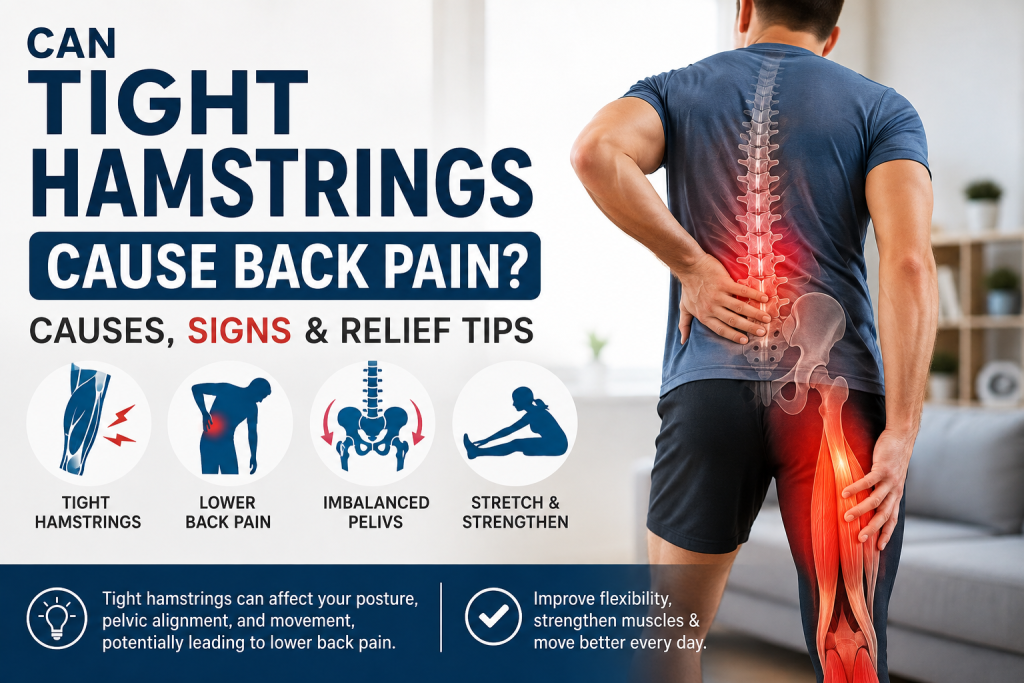
If you have lower back discomfort along with tightness in the backs of your thighs, you may wonder: can tight hamstrings cause back pain? The answer is sometimes—but tight hamstrings are not necessarily the only reason your back hurts. Your hamstrings work closely with your pelvis, hips, and lower back, so reduced flexibility can affect how your body moves during sitting, bending, walking, and exercise.
Research has found an association between restricted hamstring range of motion and low back pain, although the evidence is not strong enough to say that tight hamstrings directly cause every case of back pain. A systematic review of prospective studies found that restricted hamstring flexibility was associated with a higher risk of developing low back pain. (PubMed)
More recent research also suggests that hamstring stretching may help reduce pain and improve function in some people who already have low back pain. A 2024 systematic review and meta-analysis of 14 randomized controlled trials involving 735 participants found improvements in pain and function with hamstring stretching, although the studies varied considerably. (PubMed)
What Are the Hamstrings?
The hamstrings are a group of muscles located along the back of your thighs. They include the biceps femoris, semitendinosus, and semimembranosus. These muscles help bend your knees and move your hips.
Because some of the hamstring muscles attach around the pelvis, their flexibility can influence pelvic movement. When the hamstrings feel unusually tight, certain movements—especially bending forward with the knees straight—may become more difficult.
This does not mean that tight hamstrings automatically damage your lower back. Instead, limited flexibility may be one factor that changes movement patterns and contributes to discomfort in some people.
Can Tight Hamstrings Cause Back Pain?

So, can tight hamstrings cause back pain? They can potentially contribute to it, particularly when reduced flexibility changes how the pelvis and lumbar spine move.
When you bend forward, your hips and spine normally share the movement. If your hamstrings restrict hip movement, you may compensate by moving more through your lower back. Over time, repeatedly using a less comfortable movement pattern may contribute to muscular fatigue or irritation.
However, back pain is complicated. It can result from many different factors, including prolonged sitting, sudden increases in activity, muscle strain, joint irritation, poor recovery, stress, and other musculoskeletal problems.
A 2021 systematic review found that people with low back pain sometimes showed reduced hamstring flexibility or increased stiffness, but the researchers concluded that the quality of evidence was too low to establish a clear cause-and-effect relationship. (PubMed)
Therefore, it is better to think of tight hamstrings as a possible contributing factor, rather than assuming they are always the cause.
How Tight Hamstrings May Affect Your Lower Back
1. They Can Influence Pelvic Movement

Your pelvis sits between your legs and spine and plays an important role in movement. The hamstrings attach to the pelvis, so changes in their flexibility can influence pelvic positioning during certain activities.
When the hamstrings are tight, they may limit how freely the pelvis moves during hip flexion. Your lower back may then compensate to complete the movement.
This relationship is particularly noticeable when bending forward, reaching toward your feet, or performing certain exercises.
2. They May Change Your Bending Pattern
A healthy movement pattern generally involves coordinated movement between the hips and spine.
If your hamstrings are restricting hip motion, you may compensate by increasing movement elsewhere. This does not automatically mean injury will occur, but repeatedly moving in a way that feels uncomfortable can contribute to symptoms.
For some people, improving hip and hamstring mobility may make everyday movements more comfortable.
3. They Can Make Sitting Feel Uncomfortable
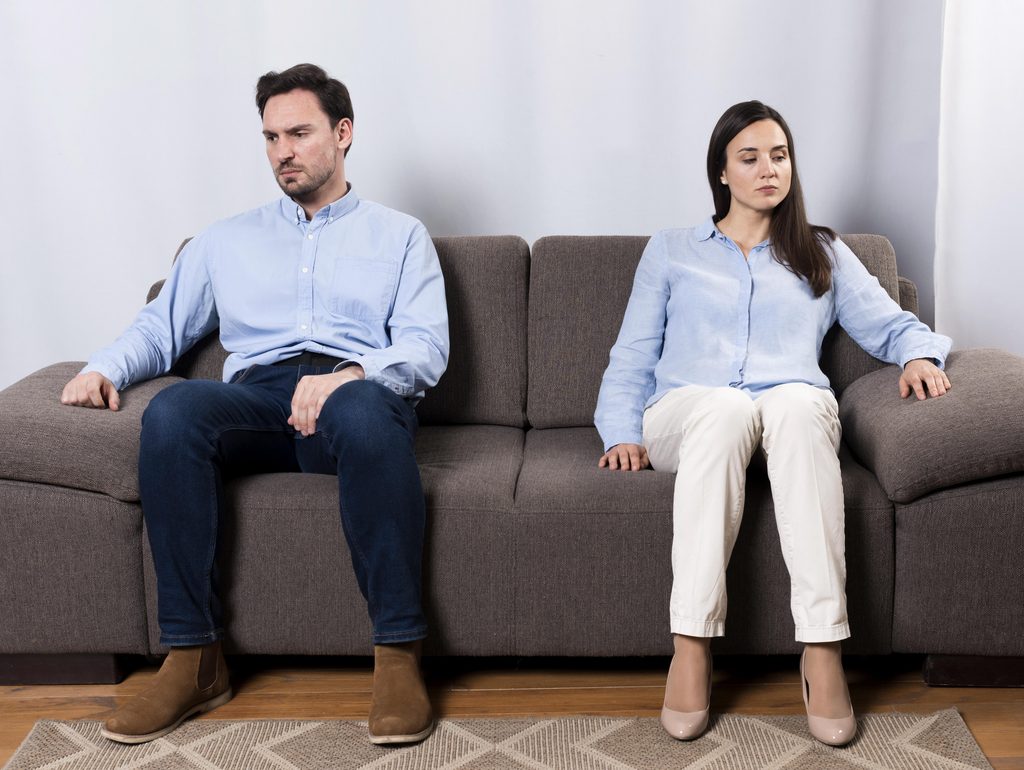
Long periods of sitting can make the hips and hamstrings feel stiff. When you stand after sitting for a long time, you may notice tightness through the backs of your thighs and lower back.
The problem may not be the hamstrings alone. Staying in one position for a prolonged period can also contribute to stiffness and discomfort.
Changing positions regularly, walking briefly, and maintaining general activity can be helpful strategies for many people with uncomplicated low back pain.
4. They May Affect Exercise Technique
Tight hamstrings can influence how you perform exercises such as deadlifts, squats, lunges, and forward bends.
For example, if your hips cannot move comfortably during a movement, you may compensate with your lower back. Improving mobility and learning appropriate exercise technique can help you move more efficiently.
If an exercise consistently causes sharp or worsening pain, stop and seek professional guidance rather than forcing the movement.
7 Signs Your Hamstrings May Be Contributing to Back Pain
There is no single home test that can prove your hamstrings are responsible for back pain. However, certain patterns may suggest that hamstring flexibility deserves attention.
1. Tightness Behind Your Thighs
You may feel pulling or stiffness along the backs of your thighs, particularly after sitting or exercising.
2. Difficulty Bending Forward
You may struggle to reach toward your feet without significant pulling behind the thighs.
3. Stiffness After Sitting
Your hamstrings and lower back may feel stiff when you stand after sitting for an extended period.
4. Limited Hip Movement
You may notice that movements requiring hip flexion feel restricted.
5. Discomfort During Straight-Leg Movements
Activities that lengthen the hamstrings may produce a noticeable stretching sensation. However, sharp pain, numbness, or electric-like symptoms should not simply be treated as normal muscle tightness.
6. Tightness During Exercise
You may feel that your hamstrings limit squats, lunges, running, or other movements.
7. Symptoms Improve With Gentle Mobility
If gentle movement or appropriate stretching makes your stiffness feel better, mobility work may be useful as part of a broader exercise program.
Best Ways to Relieve Tight Hamstrings and Back Discomfort
If tightness appears to be contributing to your symptoms, the goal should not simply be to stretch as hard as possible. A balanced approach usually works better.
1. Try Gentle Hamstring Stretching
A gentle hamstring stretch can be performed while lying on your back. Raise one leg and support it with your hands or a strap, keeping the movement comfortable.
You should feel a mild stretch rather than sharp pain.
Avoid aggressively bouncing into a stretch. Gradual, controlled stretching is generally more appropriate.
2. Add Regular Movement
If you spend much of your day sitting, take short movement breaks. Walking around the room, standing up, or changing position can reduce the feeling of stiffness.
Guidelines for low back pain generally encourage people to continue normal activities as much as reasonably possible rather than remaining inactive. (Nice)
3. Strengthen Your Glutes
The gluteal muscles help control hip movement and are important for many functional activities.
Exercises such as bridges can strengthen the hips and buttocks while encouraging coordinated movement between the pelvis and lower body.
Start with a comfortable number of repetitions and increase gradually.
4. Improve Hip Mobility
Hamstring flexibility is only one part of lower-body mobility. Your hip joints also need adequate movement for everyday activities.
A physiotherapist can assess whether your symptoms are related primarily to hamstring flexibility, hip mobility, strength, movement coordination, or another factor.
5. Strengthen Your Core
Core exercises may help improve trunk control and support normal movement during everyday activities.
Examples can include modified planks, dead bugs, bird dogs, and other exercises selected according to your abilities.
The best exercise depends on your symptoms and physical condition, so avoid copying an advanced exercise program if it causes pain.
6. Warm Up Before Exercise
If your hamstrings feel stiff before physical activity, spend several minutes gradually warming up.
Walking, gentle leg movements, and controlled dynamic exercises can prepare your body for activity better than immediately performing intense stretches.
7. Increase Activity Gradually
A sudden increase in running, gym training, sports, or heavy lifting can contribute to muscle soreness and back discomfort.
Increase exercise volume gradually and allow your body adequate recovery time.
Hamstring Stretches You Can Try
If stretching is appropriate for you, several gentle options may be useful.
Seated Hamstring Stretch
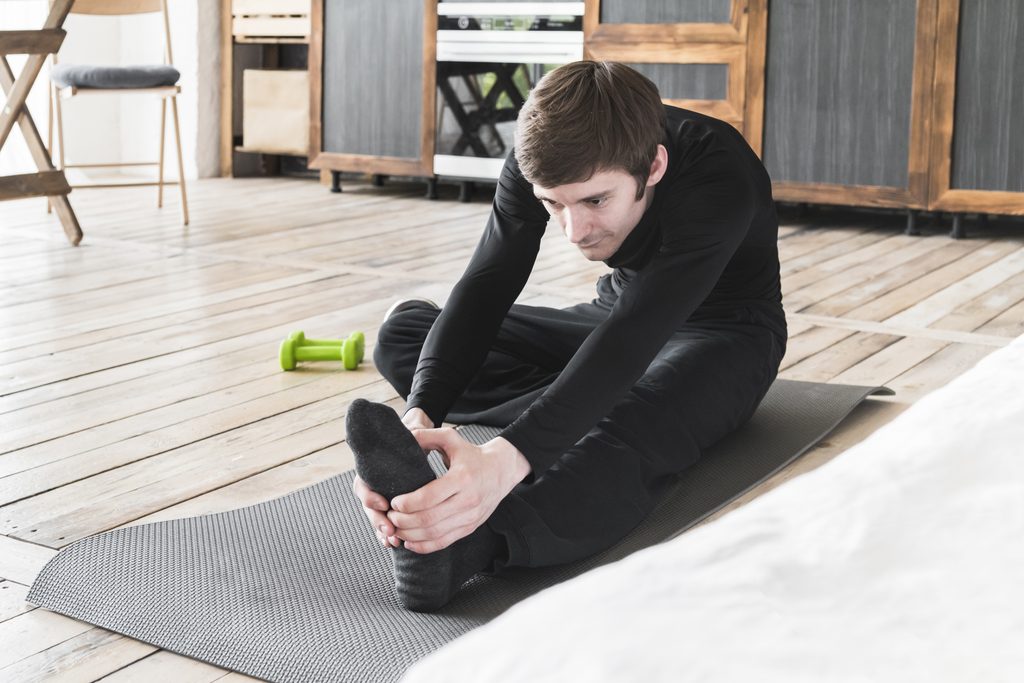
Sit on the edge of a chair with one leg extended and the other foot on the floor. Keep your back comfortable and slowly lean forward from your hips until you feel a gentle stretch behind the extended thigh.
Do not force yourself to touch your toes.
Lying Hamstring Stretch
Lie on your back and raise one leg. Hold behind the thigh or use a strap around the foot. Slowly straighten the knee until you feel a mild stretch.
Keep your movements controlled.
Standing Hamstring Stretch
Place one heel on a low, stable surface. Keep the knee slightly soft and gently hinge forward from your hips.
Avoid rounding aggressively through the lower back.
Dynamic Leg Movements
Before exercise, controlled leg swings can help prepare your hips and legs for movement. Keep the range comfortable and avoid swinging forcefully.
Should You Stretch Tight Hamstrings Every Day?
Daily gentle mobility may be appropriate for some people, but more stretching is not always better.
If stretching consistently makes your symptoms worse, reduce the intensity or stop and seek professional advice. The sensation should generally remain comfortable rather than becoming sharp or increasingly painful.
A 2024 meta-analysis found that hamstring stretching can improve pain and function in people with low back pain, but the authors also noted substantial variation among the included studies. This means stretching may be useful, but it should not automatically be considered a complete treatment for every person. (PubMed) can tight hamstrings cause back pain?
When Tight Hamstrings Are Not the Main Problem
It is important not to blame every episode of back pain on hamstring tightness.
Back pain can have many possible contributors. For example, discomfort may be associated with changes in activity, prolonged static postures, muscle strain, joint irritation, or nerve-related symptoms.
If you have back pain together with numbness, tingling, weakness, or pain traveling down the leg, the problem may involve more than simple muscle tightness.
Similarly, severe or persistent symptoms deserve proper assessment rather than repeated stretching.
When Should You See a Physiotherapist?
Consider speaking with a physiotherapist if your back pain is persistent, keeps returning, limits your daily activities, or does not improve with reasonable self-care.
A physiotherapist can assess:
- Hamstring flexibility
- Hip mobility
- Pelvic movement
- Lower-back movement
- Muscle strength
- Walking and movement patterns
- Exercise technique
- Symptoms that may indicate nerve involvement
Instead of treating the hamstrings in isolation, a professional can develop an individualized exercise program based on your movement and symptoms.
Current clinical guidance supports exercise and self-management approaches for many people with low back pain, with exercise selection tailored to individual needs and capabilities. (Nice)can tight hamstrings cause back pain?
When Back Pain Needs Urgent Medical Attention
Most back pain is not caused by a serious condition, but certain symptoms require prompt medical evaluation.
Seek urgent medical attention if back pain occurs with significant weakness, loss of bladder or bowel control, numbness around the groin or saddle region, major trauma, or other severe or rapidly worsening symptoms.
You should also seek medical advice if pain is accompanied by unexplained systemic symptoms or if you are concerned about a serious underlying condition.
Do not assume that severe symptoms are simply caused by tight hamstrings.can tight hamstrings cause back pain?
Frequently Asked Questions
Can tight hamstrings cause lower back pain?
Tight hamstrings may contribute to lower back discomfort by influencing hip and pelvic movement, but they are not necessarily the direct cause of every case of back pain. Research has found an association between restricted hamstring flexibility and low back pain, while other research has highlighted uncertainty about the strength of this relationship. (PubMed) can tight hamstrings cause back pain?
How do I know if my hamstrings are too tight?
Difficulty bending at the hips, noticeable pulling behind the thighs, reduced flexibility during certain movements, and stiffness after sitting may suggest limited hamstring flexibility. A physiotherapist can assess your flexibility more accurately can tight hamstrings cause back pain?.
Can stretching hamstrings help back pain?
It may help some people. A 2024 systematic review found that hamstring stretching was associated with reductions in pain and improvements in function among people with low back pain. (PubMed)
How long does it take to loosen tight hamstrings?
The timeframe varies. Flexibility can improve gradually with consistent, appropriate mobility work, but the underlying reason for tightness matters. If stiffness persists despite regular mobility exercises, professional assessment may be useful can tight hamstrings cause back pain?.
Should I stretch if I have back pain?
Gentle stretching can be appropriate for some people, but it should not cause sharp or worsening pain. If stretching aggravates your symptoms, stop and seek professional advice.
Final Thoughts
So, can tight hamstrings cause back pain? They can be one contributing factor, but it is too simplistic to say that tight hamstrings are always responsible for lower back pain. Your hamstrings, hips, pelvis, and lower back work together during movement, and restricted flexibility can sometimes influence this relationship.
Research suggests that limited hamstring flexibility is associated with low back pain, while newer evidence indicates that hamstring stretching may help reduce symptoms and improve function for some people. However, evidence does not support treating every case of back pain as a hamstring problem. (PubMed)
A better approach is to combine appropriate mobility exercises with regular movement, strengthening, good exercise technique, and professional assessment when needed can tight hamstrings cause back pain?. If your pain is persistent, severe, radiates into your leg, or is accompanied by neurological symptoms, seek medical or physiotherapy advice instead of relying solely on stretching.