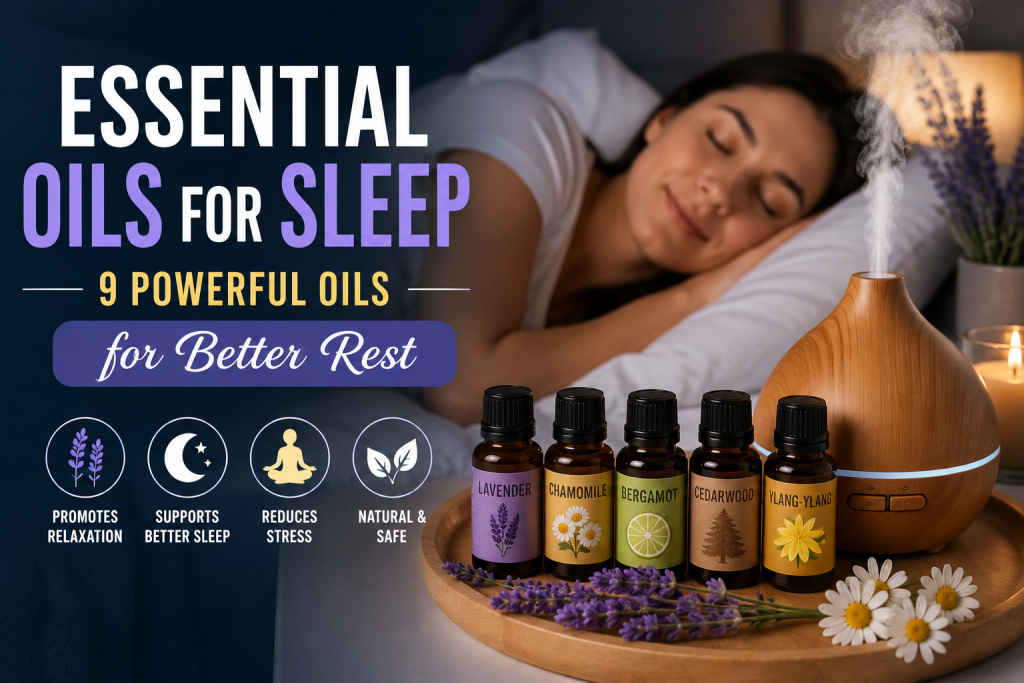
Essential Oils for Sleep: 9 Powerful Oils for Better Rest
Getting enough quality sleep is essential for physical health, mental well-being, concentration, and everyday energy. Yet many people struggle to relax at night or fall asleep when they want to. This has increased interest in natural approaches, including essential oils for sleep.
Essential oils are concentrated plant extracts that are commonly used through aromatherapy. Certain scents may promote relaxation and create a calming bedtime environment. Lavender, chamomile, bergamot, and cedarwood are among the oils frequently discussed for relaxation and sleep.
However, essential oils should not be considered a guaranteed treatment for insomnia or other sleep disorders. Research on aromatherapy and sleep is promising in some areas but remains mixed, and more high-quality research is needed.
If you want to try essential oils for sleep, using them safely alongside healthy sleep habits may be a reasonable approach for some adults.
What Are Essential Oils?
Essential oils are concentrated aromatic compounds extracted from plants. They can come from flowers, leaves, roots, bark, fruits, or other parts of a plant.
The oils contain naturally occurring compounds that produce their characteristic scents. In aromatherapy, these scents are inhaled or used in appropriately diluted topical preparations.
Commonly used essential oils include lavender, peppermint, eucalyptus, tea tree, lemon, chamomile, and cedarwood.
For bedtime, people generally prefer scents they find relaxing rather than stimulating. The goal is usually to create a calm environment that supports a consistent nighttime routine.
Can Essential Oils Help You Sleep?
The potential benefit of essential oils for sleep is often linked to relaxation. A pleasant aroma may help some people feel calmer before bedtime, which can make it easier to transition into sleep.
Lavender has received particular attention in research on relaxation and sleep. Some studies suggest that lavender aromatherapy may improve perceived sleep quality in certain groups, although results vary and aromatherapy should not replace evidence-based treatment for persistent sleep problems.
Individual responses also differ. One person may find a particular scent calming, while another may dislike it or find it distracting.
For that reason, essential oils are best viewed as a complementary part of a bedtime routine rather than a guaranteed solution.
9 Essential Oils for Sleep
1. Lavender Essential Oil
Lavender is probably the most commonly recommended option among essential oils for sleep.
Its floral aroma is often associated with relaxation and calmness. Some research has explored lavender aromatherapy for sleep quality and anxiety-related symptoms.
You can use a properly designed diffuser according to the manufacturer’s instructions or place a small amount of diluted oil in an appropriate aromatherapy product.
Avoid applying concentrated lavender oil directly to your skin without appropriate dilution.
2. Chamomile Essential Oil
Chamomile has a gentle, soothing aroma and is traditionally associated with relaxation.
Chamomile essential oil is sometimes used in aromatherapy before bedtime because its scent may help create a peaceful atmosphere.
If you enjoy the smell of chamomile, incorporating it into a quiet nighttime routine may help you associate the scent with relaxation.
People with plant allergies should exercise additional caution because chamomile belongs to a plant family that can trigger allergic reactions in some individuals.
3. Bergamot Essential Oil
Bergamot has a fresh citrus aroma and is commonly used in aromatherapy products designed for relaxation.
Some research has investigated bergamot’s potential effects on stress and mood. Because relaxation may support a healthier bedtime routine, bergamot is sometimes included among essential oils for sleep.
However, bergamot oil requires special care when used on the skin because some bergamot products can increase sensitivity to sunlight. Follow product-specific safety instructions and avoid unsafe sun exposure after topical use.
4. Cedarwood Essential Oil
Cedarwood has a warm, woody scent that many people associate with a calming environment.
It is commonly used in blends intended for relaxation and nighttime aromatherapy.
Evidence specifically supporting cedarwood as a sleep treatment is limited, so it is better to think of it as an aromatic addition to a relaxing routine rather than a medically proven sleep remedy.
5. Ylang-Ylang Essential Oil
Ylang-ylang has a strong floral fragrance and is used in various aromatherapy preparations.
Some people find its aroma relaxing, while others may find it too intense. If you are sensitive to strong scents, start with a very mild exposure and stop if you experience discomfort.
As with other essential oils for sleep, the main potential benefit may come from creating a relaxing sensory environment rather than directly causing sleep.
6. Sandalwood Essential Oil
Sandalwood has a rich, earthy aroma and is traditionally used in fragrance and aromatherapy.
Its scent may be appealing as part of meditation, breathing exercises, or a quiet bedtime routine.
Although sandalwood is often marketed for relaxation, strong evidence that it directly treats insomnia is limited. Use it as a complementary relaxation tool rather than a replacement for professional care.
7. Marjoram Essential Oil
Marjoram has an herbal aroma and is sometimes included in blends intended for relaxation.
Some aromatherapy users choose marjoram at night because they find its scent soothing.
Scientific evidence regarding marjoram specifically for sleep is limited, so more research is needed before making strong claims about its effectiveness.
8. Vetiver Essential Oil
Vetiver has a deep, earthy scent that is sometimes used in calming aromatherapy blends.
Because scent preferences are highly individual, vetiver may work better for some people than others as part of a bedtime ritual.
If you are experimenting with essential oils for sleep, consider trying one scent at a time instead of combining many oils immediately. This makes it easier to determine which aromas you actually enjoy.
9. Frankincense Essential Oil
Frankincense has a distinctive woody and resinous aroma and is commonly used in relaxation and meditation settings.
Some people incorporate it into nighttime breathing exercises or quiet routines.
Evidence specifically showing that frankincense improves sleep is limited. Nevertheless, if you find its scent relaxing, it can be part of a broader sleep-supportive routine.
How to Use Essential Oils for Sleep
Using essential oils for sleep safely is more important than using a large amount. Essential oils are highly concentrated, so more is not necessarily better.
Use an Aromatherapy Diffuser
A diffuser can disperse a small amount of essential oil into the surrounding air.
Follow the manufacturer’s instructions and use the recommended amount. Keep the room appropriately ventilated and avoid continuous exposure if the scent becomes overwhelming.
Never assume that running a diffuser all night is necessary. A shorter period before bedtime may be sufficient for creating a relaxing environment.
Try an Aromatherapy Inhaler
Personal inhalers designed for aromatherapy can provide a more controlled way to experience a scent without filling an entire room.
This may be useful if other people in the household are sensitive to fragrances.
Use Properly Diluted Topical Products
Some essential oils can be used on the skin when appropriately diluted in a suitable carrier oil.
Never apply concentrated essential oil to sensitive areas, broken skin, or near the eyes.
Always follow the dilution and safety instructions provided by the manufacturer or a qualified professional.
Add Aromatherapy to a Bedtime Routine
The most useful approach may be combining aromatherapy with other calming activities.
For example, you could use a preferred scent while dimming the lights, putting away electronic devices, reading a book, and practicing slow breathing.
Over time, repeating the same routine may help signal that bedtime is approaching.
Safety Tips for Essential Oils
Although essential oils are natural products, natural does not automatically mean risk-free.
Keep the following safety considerations in mind when using essential oils for sleep.
Do Not Swallow Essential Oils
Essential oils are highly concentrated and should not generally be swallowed unless a qualified healthcare professional specifically recommends a medically appropriate product and method.
Ingesting essential oils can cause poisoning or other serious reactions.
Dilute Oils Before Skin Application
Undiluted essential oils may cause skin irritation, burning, or allergic reactions.
If you plan to use an oil topically, use a suitable carrier oil and follow reliable dilution guidance.
Be Careful Around Children and Pets
Some essential oils may be unsafe for children or animals.
Keep essential oils securely stored and away from children and pets. If you have animals in the home, check with a veterinarian before using aromatherapy around them.
Stop If You Develop Symptoms
Discontinue use if you experience headache, coughing, breathing difficulty, skin irritation, nausea, dizziness, or another unusual reaction.
People with asthma or fragrance sensitivities may be particularly sensitive to airborne scents.
Consider Pregnancy and Medical Conditions
People who are pregnant, breastfeeding, taking medications, or managing a chronic health condition should consult a healthcare professional before using certain essential oils.
Not every essential oil is appropriate for every person or situation.
Essential Oils vs. Good Sleep Habits
While essential oils for sleep may be a relaxing addition to your evening, healthy sleep habits are usually much more important.
Consider maintaining a consistent bedtime and wake-up time, keeping your bedroom comfortable and dark, limiting caffeine later in the day, reducing stimulating activities before bed, and avoiding excessive screen exposure close to bedtime.
Regular physical activity during the day may also support healthy sleep.
A calming scent can become one small part of this routine, but it should not replace good sleep practices.
A Simple Bedtime Routine With Essential Oils
If you want to experiment with aromatherapy, keep your routine simple.
About 30 to 60 minutes before bedtime, reduce bright lights and finish stimulating activities. Prepare your bedroom for sleep and choose one scent that you personally find pleasant.
Use your diffuser or another appropriate aromatherapy method according to its instructions. While the scent is present, spend a few minutes practicing slow breathing or reading something relaxing.
Then turn off the diffuser if appropriate and go to bed.
The purpose is not to force yourself to sleep. Instead, the routine helps create an environment associated with relaxation.
Why Sleep Problems Should Not Be Ignored
Occasional difficulty sleeping is common. However, persistent sleep problems can have many causes.
Stress, anxiety, medications, irregular schedules, caffeine, alcohol, pain, sleep apnea, restless legs syndrome, and other health conditions can interfere with sleep.
If you regularly have trouble falling asleep, frequently wake during the night, wake too early, or feel excessively tired during the day, consider speaking with a healthcare professional.
Using essential oils for sleep may be complementary, but persistent insomnia deserves proper evaluation.
Frequently Asked Questions
What is the best essential oil for sleep?
Lavender is one of the most commonly studied and used essential oils for relaxation and sleep. However, there is no single oil that works best for everyone.
How do essential oils help with sleep?
They may help some people relax through pleasant scents and a calming bedtime routine. Evidence for direct effects on sleep varies, so they should not be considered a guaranteed treatment.
Can I put essential oil directly on my pillow?
It is better to follow the instructions for the specific product rather than applying concentrated oil directly to bedding. Undiluted oils may irritate skin or airways.
Can I use essential oils every night?
Some adults may use aromatherapy regularly, but safety depends on the specific oil, method, concentration, and individual health factors. Follow product directions and stop if you experience adverse effects.
Can essential oils cure insomnia?
No. Essential oils should not be considered a cure for chronic insomnia. Persistent sleep problems may require evaluation and evidence-based treatment.
Is lavender safe for everyone?
Lavender aromatherapy is generally used by many adults, but individual reactions can occur. People with allergies, sensitivities, pregnancy, certain medical conditions, or medication concerns should seek appropriate professional advice.
Final Thoughts
Essential oils for sleep can be a simple way to make your nighttime environment feel calmer and more relaxing. Lavender, chamomile, bergamot, cedarwood, ylang-ylang, sandalwood, marjoram, vetiver, and frankincense are among the oils commonly used in aromatherapy.
However, essential oils are not a guaranteed solution for sleep problems. Their potential benefits are generally best considered alongside healthy sleep habits rather than as a replacement for medical care.
Start with a scent you enjoy, use a small amount according to product instructions, and pay attention to how your body responds. Most importantly, if sleep difficulties are persistent or significantly affecting your daily life, talk with a qualified healthcare professional to identify the underlying cause and find an appropriate solution.