Introduction
Left shoulder blade pain in women can feel like a dull ache, sharp stab, burning sensation, tightness, or pressure around the upper back. Sometimes the discomfort comes from muscles, posture, the neck, or the shoulder itself. In other situations, pain in this area can be referred from another part of the body.
Because the left shoulder blade is close to the chest and upper back, many women naturally wonder whether the pain could be related to the heart. Most shoulder and upper-back pain is not caused by a heart problem, but certain symptoms should never be ignored. The American Heart Association notes that women can experience heart-attack symptoms involving the back, shoulder, arm, neck, jaw, stomach, or chest, sometimes together with shortness of breath, nausea, sweating, unusual tiredness, or lightheadedness.
Understanding the possible causes can help you decide whether home care, physiotherapy, or prompt medical evaluation is appropriate.
What Is Left Shoulder Blade Pain?
The shoulder blade, also called the scapula, is a flat bone located on the upper back. It connects with the upper arm bone and collarbone and works with several muscles to help move and stabilize the shoulder.
Left shoulder blade pain in women refers to discomfort felt around or underneath the left scapula. The pain may stay in one location or spread toward the neck, shoulder, upper arm, chest, or middle back.
The exact location and character of the pain can provide clues about its source. For example, muscular pain may feel sore or tight after activity, while nerve-related pain can feel burning, shooting, tingling, or electric. Cleveland Clinic notes that problems involving the neck can sometimes produce pain around the shoulder blade because nerves from the cervical spine supply areas of the shoulder and upper back.
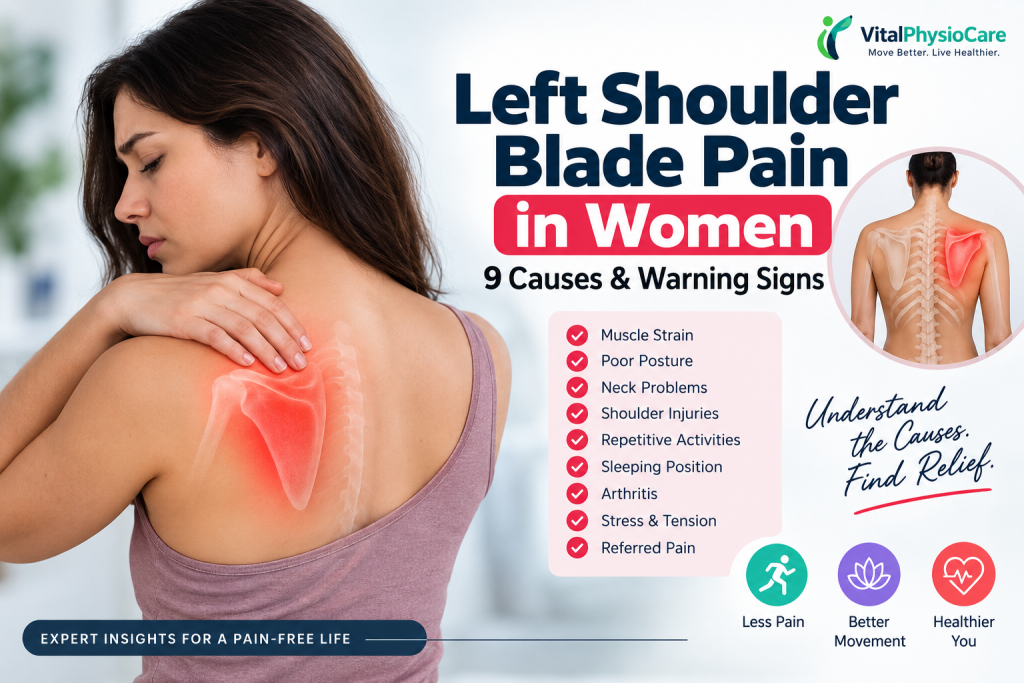
9 Common Causes of Left Shoulder Blade Pain in Women
1. Muscle Strain
Muscle strain is one of the most common explanations for upper-back and shoulder-blade discomfort.
The muscles surrounding the shoulder blade can become irritated after:
- Lifting heavy objects
- Repetitive arm movements
- Exercising after a long break
- Carrying a heavy bag
- Working at a computer for long periods
- Sleeping in an awkward position
- Reaching overhead repeatedly
A strained muscle may feel tender when touched and can become more uncomfortable when you move your arm or upper body.
If the discomfort started after a particular activity and improves with rest, a muscular cause becomes more likely.
2. Poor Posture
Poor posture can place additional stress on the muscles around the neck, shoulders, and shoulder blades.
Sitting for hours while looking down at a phone or leaning toward a computer can cause the shoulders to round forward. Over time, this position may make the muscles around the shoulder blade work harder than they should.
This can contribute to left shoulder blade pain in women, especially when discomfort develops gradually rather than after a specific injury.
Improving your workstation, taking movement breaks, and changing positions regularly can help reduce unnecessary strain.
3. Neck Problems or a Pinched Nerve
Pain felt near the shoulder blade does not always originate in the shoulder.
A problem in the cervical spine can irritate a nerve and cause symptoms that travel into the shoulder blade, shoulder, arm, or hand. Cervical radiculopathy can cause pain, numbness, tingling, or weakness, and the discomfort may become worse with certain neck movements.
Nerve-related pain may feel different from ordinary muscle soreness. You might describe it as:
- Burning
- Sharp
- Electric
- Shooting
- Tingling
- Pins and needles
If shoulder-blade pain occurs together with arm weakness, persistent numbness, or pain traveling down the arm, speak with a healthcare professional.
4. Rotator Cuff or Shoulder Problems
The shoulder contains several muscles and tendons that help stabilize and move the arm. Problems involving these structures can sometimes produce pain around the shoulder blade as well as the shoulder itself.
Rotator cuff irritation or injury may become more noticeable when you:
- Lift your arm overhead
- Reach behind your back
- Carry objects
- Sleep on the affected side
- Perform repetitive movements
Shoulder conditions can include tendon problems, bursitis, impingement, arthritis, or injury.
If your shoulder movement is becoming increasingly limited or pain is interfering with sleep and daily activities, an assessment can help identify the underlying problem.
5. Repetitive Activities
Repetitive movement can gradually overload the muscles and tendons around the shoulder blade.
This can happen with jobs or activities involving:
- Cleaning
- Lifting
- Painting
- Swimming
- Tennis
- Weight training
- Childcare
- Repeated overhead reaching
The discomfort may initially be mild but become more noticeable after repeated activity.
Reducing the aggravating activity temporarily and gradually returning to normal movement can be helpful. However, persistent symptoms should be assessed rather than repeatedly pushing through pain.
6. Sleeping Position
Your sleeping position can contribute to upper-back and shoulder discomfort.
Sleeping for several hours with the shoulder compressed, the neck twisted, or the upper body poorly supported may leave the muscles around the shoulder blade stiff or sore the next morning.
If your pain is consistently worse after sleeping, consider whether your pillow, mattress, or sleeping position could be contributing.
Avoid staying in one position for the entire night if it repeatedly aggravates your symptoms. Gentle movement after waking may help reduce stiffness.
7. Arthritis and Age-Related Changes
Arthritis can affect the joints and structures involved in shoulder and neck movement.
Osteoarthritis may cause pain and stiffness that develop gradually. Inflammatory arthritis can also affect multiple joints and may be associated with prolonged morning stiffness.
NHS guidance notes that persistent shoulder pain and stiffness can have causes such as frozen shoulder or arthritis, while pain that becomes worse with shoulder use may occur with conditions such as tendonitis, bursitis, or impingement.
If symptoms persist for weeks or progressively worsen, a medical or physiotherapy assessment is appropriate.
8. Stress and Muscle Tension
Stress does not mean that pain is imaginary. Emotional stress can contribute to increased muscle tension, particularly around the neck and shoulders.
When someone spends long periods feeling tense, they may unconsciously elevate or tighten the shoulders. Combined with poor posture and limited movement, this can contribute to upper-back discomfort.
Relaxation techniques, regular physical activity, adequate sleep, breathing exercises, and gentle mobility work may help reduce muscle tension.
However, stress should not automatically be blamed for new or unexplained pain. Important physical causes should be considered when symptoms are persistent or accompanied by other concerning signs.
9. Referred Pain From Internal Organs
Sometimes pain felt near the shoulder blade originates somewhere else.
The nervous system can cause pain to be perceived away from the structure actually responsible for the problem. This is called referred pain.
For this reason, left shoulder blade pain in women accompanied by chest discomfort, shortness of breath, nausea, sweating, dizziness, or unusual fatigue deserves particular attention.
The American Heart Association explains that women may experience heart-attack symptoms beyond typical chest pain, including discomfort in the shoulder, back, arm, neck, or jaw.
Could Left Shoulder Blade Pain Be a Heart Attack?
This is one of the most important questions to address.
Shoulder-blade pain by itself does not automatically mean that you are having a heart attack. Musculoskeletal causes are common. However, women can experience heart attacks with symptoms that are less obvious than the classic picture of severe chest pain.
Seek emergency medical help immediately if sudden or unexplained shoulder-blade or upper-back pain occurs with symptoms such as:
- Chest pressure, squeezing, or discomfort
- Shortness of breath
- Pain spreading to the arm, neck, jaw, or back
- Cold sweating
- Nausea or vomiting
- Lightheadedness or fainting
- Unusual weakness or extreme tiredness
- A feeling that something is seriously wrong
The American Heart Association recommends calling emergency services immediately when heart-attack warning signs occur rather than waiting to see whether they disappear.
If you are experiencing these symptoms now, do not try to diagnose the cause with exercises or home treatment. Seek emergency medical care.
How Is Left Shoulder Blade Pain Diagnosed?
When left shoulder blade pain in women does not improve, a healthcare professional will usually start by asking about your symptoms and performing a physical examination.
They may ask:
- When did the pain begin?
- Did it follow an injury?
- What activities make it worse?
- Does neck movement change the pain?
- Does the pain travel into the arm?
- Are there numbness or tingling sensations?
- Is the shoulder movement restricted?
- Does the pain occur during exercise?
- Are there chest or breathing symptoms?
Depending on your symptoms, further testing may be considered. This could include imaging or other medical tests when clinically appropriate.
A proper diagnosis matters because treatment for a muscle strain is different from treatment for a nerve problem, shoulder injury, or medical emergency.
Treatment Options
Treatment depends on the cause and severity of your symptoms.
For uncomplicated muscle or posture-related discomfort, conservative approaches may include:
Gentle Movement
Complete inactivity is usually not necessary for ordinary muscle-related pain. Gentle movement can help maintain mobility and prevent excessive stiffness.
Avoid movements that sharply increase your symptoms.
Heat or Cold
A cold pack may be useful shortly after an acute injury, while heat may feel more comfortable for muscle tightness or stiffness. Protect your skin and avoid applying extreme temperatures directly to the skin.
Posture Changes
If you spend long periods sitting, adjust your workstation so that your screen is at a comfortable height and your shoulders can remain relaxed.
Take short movement breaks instead of staying in the same position for hours.
Physiotherapy
Physiotherapy can be useful when pain is related to movement, muscle weakness, posture, joint stiffness, or certain shoulder conditions.
A physical therapist may assess:
- Neck mobility
- Shoulder movement
- Scapular control
- Muscle strength
- Posture
- Joint mobility
- Movement patterns
The treatment plan may include mobility exercises, strengthening, posture education, and gradual return to activities.
NHS guidance also lists physiotherapy and home exercises among possible approaches for shoulder pain, depending on the underlying cause.
Gentle Exercises That May Help
If your symptoms appear mild and are not associated with emergency warning signs, gentle exercises may help improve mobility.
Shoulder Blade Squeeze
Sit or stand comfortably. Gently draw your shoulder blades slightly backward and downward without shrugging your shoulders.
Hold for about 5 seconds, then relax.
Repeat 8–10 times.
Neck Rotation
Slowly turn your head toward one shoulder, stopping before you feel sharp pain. Return to the center and repeat on the other side.
Perform the movement slowly and comfortably.
Doorway Chest Stretch
Place your forearms against a doorway and gently move your body forward until you feel a mild stretch across the chest.
Do not force the stretch.
Wall Slides
Stand with your back against a wall if comfortable. Slowly move your arms upward while keeping the movement controlled.
Stop if this causes significant shoulder pain.
Exercises should feel manageable rather than painful. If symptoms become sharper, start traveling down your arm, or are accompanied by numbness or weakness, stop and seek professional advice.
When Should You See a Doctor?
You should consider medical evaluation if left shoulder blade pain in women:
- Is severe or rapidly worsening
- Lasts despite reasonable rest
- Keeps returning
- Follows a significant injury
- Limits normal shoulder movement
- Is associated with arm weakness
- Causes persistent numbness or tingling
- Occurs with fever or feeling very unwell
- Is accompanied by unexplained weight loss
- Occurs with chest discomfort or breathing difficulty
NHS guidance recommends seeking medical advice when shoulder pain does not improve or when symptoms suggest a potentially more serious problem.
Emergency symptoms should not be managed with home exercises.
How to Prevent Shoulder Blade Pain
Some causes of left shoulder blade pain in women may be reduced through simple daily habits.
Try to:
- Maintain comfortable posture while sitting.
- Take regular breaks from screens.
- Avoid suddenly increasing exercise intensity.
- Strengthen the upper back and shoulder muscles gradually.
- Use proper lifting techniques.
- Change positions regularly during long periods of sitting.
- Avoid carrying excessively heavy bags on one shoulder.
- Maintain regular physical activity.
- Address recurring neck or shoulder stiffness early.
- Get persistent or unexplained pain assessed.
Prevention is particularly important if your work or hobbies involve repetitive upper-body movements.
Final Thoughts
Left shoulder blade pain in women has many possible causes, ranging from muscle strain and posture problems to neck-related nerve irritation and shoulder conditions. In many cases, the problem is musculoskeletal and can improve with appropriate movement, activity modification, and physiotherapy.
However, the location of the pain means it is important not to ignore symptoms that occur with chest pressure, shortness of breath, nausea, sweating, dizziness, unusual fatigue, or pain spreading into the arm, jaw, neck, or back. Women can experience heart attacks with a wider range of symptoms, so emergency warning signs require immediate medical attention.
If your pain is persistent, recurrent, worsening, or interfering with normal activities, a healthcare professional or qualified physical therapist can help determine the cause and create an appropriate treatment plan.