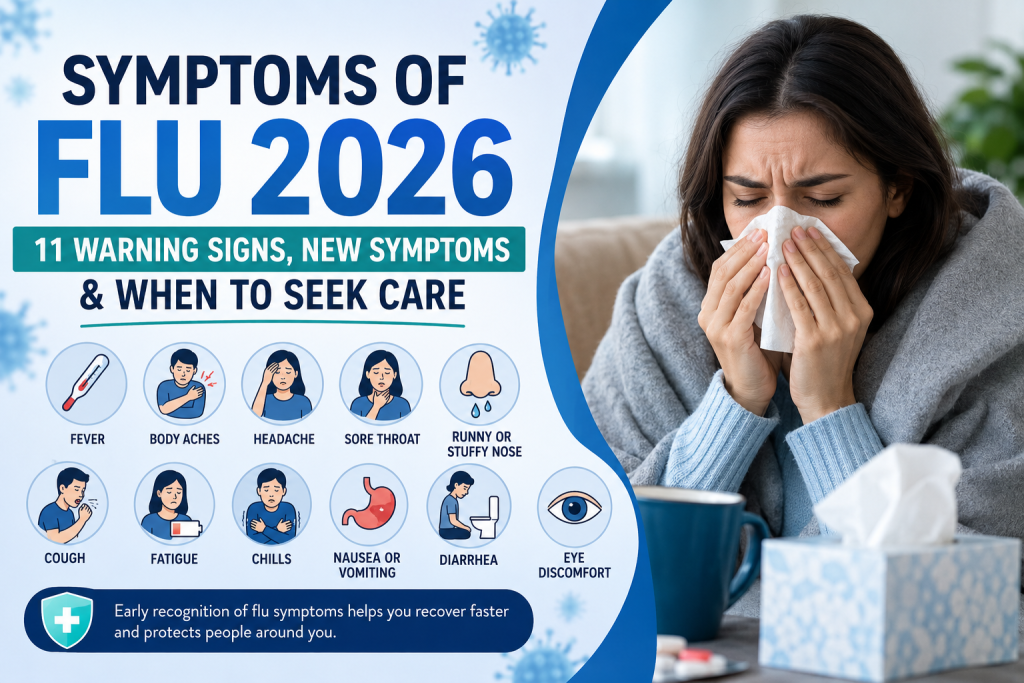
Symptoms of Flu 2026: 11 Warning Signs, New Symptoms & When to Seek Care
Influenza continues to be one of the most common respiratory infections affecting people during flu season. Although many flu symptoms are familiar, people often wonder whether the symptoms of flu 2026 are different from previous years and how they can tell influenza apart from a common cold, COVID-19, or another respiratory illness.
Knowing the early warning signs can help you respond appropriately, protect people around you, and recognize when medical attention may be necessary. Flu can range from a mild illness that improves with rest to a more serious infection that causes complications, particularly in people at higher risk.
This guide explains the symptoms of flu 2026, how flu commonly develops, which symptoms deserve attention, how flu differs from similar illnesses, and what you can do while recovering.
What Is Influenza?

Influenza, commonly called the flu, is a contagious respiratory infection caused by influenza viruses. It primarily affects the nose, throat, and lungs and can spread from person to person through respiratory droplets and small particles released when an infected person coughs, sneezes, talks, or breathes.
Flu often appears suddenly rather than gradually. Someone may feel relatively normal in the morning and develop significant fatigue, body aches, chills, or fever later in the day.
The severity of infection varies. Some people experience only mild respiratory symptoms, while others develop intense weakness, high fever, breathing problems, or complications such as pneumonia.
Understanding the symptoms of flu 2026 can make it easier to recognize a possible infection early.
11 Common Symptoms of Flu 2026
Flu does not look exactly the same in everyone. However, several symptoms occur frequently and can appear within a relatively short period after infection.
1. Fever or Feeling Feverish

A fever is one of the symptoms commonly associated with influenza. You may also experience chills or alternating sensations of being hot and cold.
However, not everyone with influenza develops a measurable fever. Some adults may have flu without a high temperature, so the absence of fever does not automatically rule out influenza.
2. Sudden Chills
Chills can occur alongside fever and may make you feel unusually cold even when the surrounding temperature is comfortable.
You might experience shivering, goosebumps, or a strong desire to wrap yourself in blankets. Chills may occur early in the illness and can accompany generalized body discomfort.
3. Persistent Cough
A dry or persistent cough is another important sign. The cough may become more noticeable as the infection progresses.
Some people develop an irritating cough that continues even after other symptoms begin to improve. Drinking adequate fluids and avoiding smoke or other respiratory irritants may help reduce discomfort.
4. Sore Throat
A sore or irritated throat can occur with influenza. It may feel scratchy, painful, or uncomfortable when swallowing.
Because sore throat can also occur with colds, COVID-19, and other infections, it should be considered together with your other symptoms rather than used alone to identify influenza.
5. Runny or Stuffy Nose
Nasal congestion and a runny nose may develop during flu. Your nose can feel blocked, making breathing through the nose more difficult.
These symptoms may overlap significantly with a common cold, which is why the overall pattern and suddenness of the illness are useful clues.
6. Muscle and Body Aches

One of the characteristics that can make influenza feel particularly unpleasant is widespread muscle or body pain.
You may experience aching in your back, legs, shoulders, or other parts of your body. The discomfort can sometimes be strong enough to make ordinary movement feel exhausting.
7. Headache
Headaches can occur during influenza and may accompany fever, dehydration, congestion, or general illness.
Some people describe the headache as moderate or intense, particularly during the first few days of infection.
8. Significant Fatigue
Flu can cause more than ordinary tiredness. You may feel physically drained, have difficulty concentrating, or find normal daily activities unusually demanding.
Fatigue may remain for several days after the fever and respiratory symptoms start improving.
9. Weakness
General weakness is another possible feature of influenza. Even simple tasks such as walking around the house, preparing food, or completing work may feel difficult.
Rest is particularly important when your body is dealing with an acute infection.
10. Eye Discomfort
Some people with influenza experience aching or discomfort around the eyes. Bright light may also feel unpleasant when a headache is present.
This symptom is not unique to flu, but when it occurs with sudden fatigue, aches, cough, chills, or fever, it can contribute to the overall flu-like picture.
11. Occasional Digestive Symptoms
Nausea, vomiting, or diarrhea can sometimes occur with influenza, particularly in children.
These symptoms are not present in every case and are not enough by themselves to confirm flu. If vomiting or diarrhea occurs, maintaining hydration becomes especially important.
How Do Flu Symptoms Usually Start?
One reason people search for the symptoms of flu 2026 is that influenza can develop much faster than many people expect.
A typical illness may begin with sudden tiredness, chills, body aches, headache, or fever. Respiratory symptoms such as coughing, sore throat, and congestion may become more noticeable around the same period.
The exact order is not identical for everyone. Some people first notice fatigue, while others notice a cough or sore throat.
The important point is that influenza frequently produces a noticeable change in how you feel rather than slowly developing over a long period.
Flu vs. Common Cold
Flu and the common cold share several symptoms, but they often differ in intensity and speed of onset.
A cold commonly develops gradually and may cause:
- Runny nose
- Sneezing
- Mild cough
- Sore throat
- Mild tiredness
Influenza is more likely to produce a sudden illness accompanied by:
- Strong fatigue
- Body aches
- Chills
- Headache
- Fever or feeling feverish
- Significant cough
These patterns are not absolute. Symptoms can overlap, and laboratory testing may be needed when knowing the specific infection is important.
Flu vs. COVID-19
Another common question about the symptoms of flu 2026 is how influenza can be distinguished from COVID-19.
Both illnesses can cause cough, fever, fatigue, headache, sore throat, congestion, and body aches. Because of this overlap, symptoms alone cannot always determine which virus is responsible.
COVID-19 can also produce changes in taste or smell, although these symptoms are not present in every case.
If you have respiratory symptoms and need to know whether you have influenza or COVID-19, testing may provide more useful information than trying to diagnose yourself based only on symptoms.
When Do Flu Symptoms Become Concerning?
Most people recover from influenza without serious complications. Nevertheless, some symptoms require prompt medical evaluation.
Seek urgent medical attention if you develop:
- Difficulty breathing
- Shortness of breath
- Persistent chest pain or pressure
- Severe dizziness or confusion
- Fainting
- Severe weakness or inability to stay awake
- Signs of serious dehydration
- Symptoms that improve and then suddenly become much worse
Children can show different warning signs. A child who has difficulty breathing, unusual sleepiness, severe dehydration, bluish or grayish skin, or other concerning changes should receive urgent medical attention.
People with underlying health conditions, older adults, young children, pregnant individuals, and people with weakened immune systems can have a greater risk of serious influenza complications.
How Long Do Flu Symptoms Last?
The duration of influenza varies from person to person.
Many people begin feeling better within several days, but tiredness and coughing can last longer. Recovery may take additional time when the infection is more severe.
Do not assume that feeling slightly better means your body has completely recovered. Returning immediately to intense physical activity while you are still significantly weak may make recovery more difficult.
Instead, gradually resume normal activities as your energy returns.
What Can You Do at Home?
If your illness is mild, supportive care can help you stay comfortable while your body recovers.
Get Enough Rest
Sleep and rest give your body an opportunity to recover. Avoid pushing yourself through intense workouts or physically demanding activities while you are acutely ill.
Drink Plenty of Fluids
Water, soups, and other appropriate fluids can help maintain hydration. This is particularly important if you have fever, sweating, vomiting, or diarrhea.
Eat When You Can
You may have less appetite during influenza. Choose simple, nourishing foods that are easy to tolerate rather than forcing large meals.
Manage Fever and Discomfort Carefully
Some over-the-counter medicines can help reduce fever or body aches when used according to their labels and when they are appropriate for you.
If you have other medical conditions or take prescription medicines, ask a healthcare professional or pharmacist about appropriate options.
Avoid Smoking
Smoke can irritate your respiratory system and make coughing or breathing discomfort worse. Avoid cigarettes and other sources of respiratory smoke while recovering.
Can Flu Be Prevented?
Prevention remains an important part of reducing influenza transmission.
Annual flu vaccination is one of the main tools used to reduce the risk of influenza and severe illness. Recommendations can vary by age, health status, pregnancy, and country, so discuss vaccination with an appropriate healthcare professional.
Other practical measures include washing your hands regularly, covering coughs and sneezes, improving indoor ventilation, avoiding close contact with people who are sick, and staying home when you are unwell.
These simple measures can reduce opportunities for respiratory viruses to spread.
What About Antiviral Treatment?
Antiviral medicines may be recommended for certain people with influenza, particularly when treatment is started early or when someone has a higher risk of complications.
They are different from antibiotics because influenza is caused by a virus rather than bacteria.
If you develop significant flu-like symptoms, contact a healthcare professional promptly if you are at increased risk of complications or if your symptoms are severe. A clinician can determine whether antiviral treatment or testing is appropriate.
Do not take prescription antiviral medication without appropriate medical guidance.
Can You Exercise While You Have the Flu?
Exercise is generally not a priority during an acute flu infection.
If you have fever, significant fatigue, dizziness, widespread body aches, or breathing difficulties, rest instead of exercising.
After you recover, return to physical activity gradually. Start with light movement and increase your activity only as your energy and symptoms allow.
If exercise causes unusual shortness of breath, chest discomfort, dizziness, or worsening symptoms, stop and seek medical advice.
Why Knowing the Symptoms of Flu 2026 Matters
Recognizing the symptoms of flu 2026 is useful because early symptoms can resemble several other respiratory infections.
Knowing the common warning signs can help you make better decisions about rest, hydration, testing, avoiding close contact with others, and contacting a healthcare professional when necessary.
Rather than focusing on one symptom, consider the complete pattern. A sudden combination of fatigue, body aches, headache, chills, fever or feeling feverish, and cough is more suggestive of influenza than one isolated symptom.
Frequently Asked Questions
What are the first symptoms of flu?
Early symptoms can include sudden fatigue, chills, fever or feeling feverish, headache, body aches, and cough. Some people initially notice respiratory symptoms such as sore throat or congestion.
Can you have flu without a fever?
Yes. A person can have influenza without developing a measurable fever. Fever is common but is not required for flu.
Is a cough common with flu?
Yes. Cough is one of the common respiratory symptoms associated with influenza and can sometimes continue after other symptoms improve.
How can I tell if I have flu or a cold?
Flu often begins more suddenly and can cause stronger fatigue, body aches, chills, headache, and fever. Colds often develop more gradually and may be dominated by nasal symptoms. However, symptoms overlap, so testing may be necessary for confirmation.
When should I see a doctor for flu symptoms?
Contact a healthcare professional if symptoms are severe, you are at higher risk of complications, you become dehydrated, symptoms worsen after improving, or you develop breathing difficulties, chest pain, confusion, or severe weakness.
Final Thoughts
Understanding the symptoms of flu 2026 can help you recognize influenza and respond appropriately when respiratory illness develops. Common signs include cough, sore throat, congestion, fever or chills, headache, body aches, fatigue, and weakness.
Flu symptoms can overlap with COVID-19 and other respiratory infections, so symptoms alone cannot always provide a definite diagnosis. When testing or medical advice is needed, a healthcare professional can help determine the appropriate next step.
For mild illness, prioritize rest, fluids, and recovery. Avoid close contact with others while you are sick, and seek medical attention promptly if serious warning signs appear.
Your symptoms, age, health history, and risk factors all matter. When you are uncertain or your condition is getting worse, professional medical advice is safer than relying on an online symptom list alone.