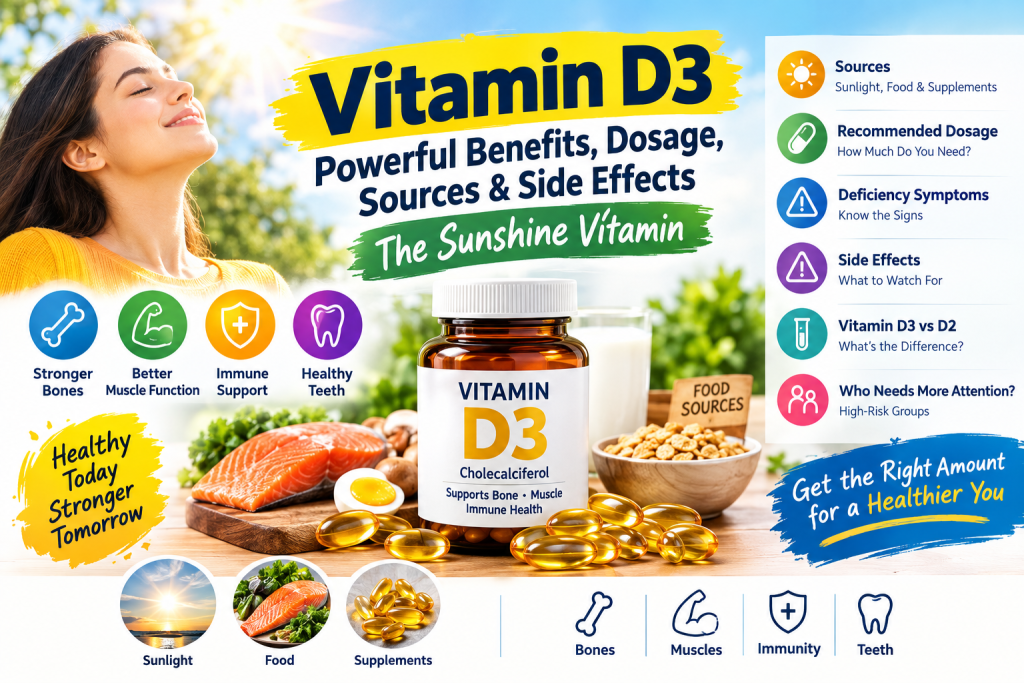
Vitamin D3: Powerful Benefits, Dosage, Sources & Side Effects
Vitamin D3 is one of the most important forms of vitamin D and plays a major role in maintaining healthy bones, muscles, and overall body function. Many people know vitamin D as the “sunshine vitamin,” but getting enough vitamin D depends on several factors, including sunlight exposure, diet, age, skin pigmentation, and certain health conditions.
Understanding vitamin D3 can help you make better decisions about food, supplements, and healthy lifestyle habits. Although supplements can be useful for people who do not get enough vitamin D, taking more than recommended is not necessarily better and can sometimes cause health problems.
This guide explains what vitamin D3 is, its potential benefits, food sources, recommended intake, deficiency symptoms, supplements, and possible side effects.
What Is Vitamin D3?
Vitamin D3, also called cholecalciferol, is a form of vitamin D. It is produced naturally in the skin when it is exposed to ultraviolet B (UVB) radiation from sunlight.
Vitamin D3 is also found in some foods and is commonly used in dietary supplements.
After vitamin D enters the body, it goes through several steps before becoming biologically active. The active form helps the body regulate calcium and phosphorus, which are essential minerals for healthy bones and teeth.
Vitamin D also has important roles in muscle function and normal immune system activity.
Why Is Vitamin D3 Important?
The body needs vitamin D to absorb calcium efficiently from the digestive system. Calcium is essential for maintaining strong bones and teeth.
Without sufficient vitamin D, the body may have difficulty maintaining normal calcium levels. Over time, severe deficiency can contribute to weak or poorly mineralized bones.
Vitamin D is also involved in muscle function. Maintaining adequate vitamin D levels is therefore important for overall physical health.
Researchers continue to study vitamin D’s potential role in other areas of health, but its established importance for bone and mineral health remains particularly significant.
Vitamin D3 Benefits
1. Supports Strong Bones
One of the best-established benefits of vitamin D3 is its role in bone health.
Vitamin D helps the body absorb calcium, which is required for building and maintaining bones. Adequate vitamin D throughout life supports normal bone development and maintenance.
Children need sufficient vitamin D during growth, while adults need it to help maintain bone strength.
2. Helps Support Muscle Function
Vitamin D is involved in normal muscle function.
Low vitamin D levels have been associated with muscle weakness in some people. Maintaining adequate levels may therefore support normal physical performance and mobility.
For older adults, maintaining healthy vitamin D status is particularly important as part of an overall approach to maintaining strength and reducing health risks associated with weakness.
3. Supports Calcium Balance
Calcium plays an important role in bones, muscles, nerves, and other body functions.
Vitamin D helps regulate calcium absorption and contributes to maintaining appropriate calcium levels in the blood.
This relationship between vitamin D and calcium is one reason vitamin D is so important for skeletal health.
4. Supports Normal Immune Function
Vitamin D is involved in normal immune system function.
The immune system requires many nutrients to work properly, and vitamin D is one of them. However, vitamin D supplements should not be considered a guaranteed treatment for infections or a replacement for medical care.
Maintaining adequate nutrition is part of supporting a healthy immune system.
5. Supports Healthy Teeth
Because vitamin D helps regulate calcium and phosphorus metabolism, it contributes to maintaining healthy teeth.
Adequate vitamin D, along with sufficient calcium, good oral hygiene, and regular dental care, can support overall dental health.
6. Helps Maintain Normal Bone Development in Children
Growing children need adequate amounts of vitamin D for normal bone development.
Severe vitamin D deficiency in childhood can cause rickets, a condition in which growing bones become weak and poorly mineralized.
Parents should talk with a pediatric healthcare professional before giving children high-dose vitamin D supplements.
7. Important During Aging
As people get older, several factors can affect vitamin D status, including reduced skin production, changes in diet, and spending less time outdoors.
Older adults should discuss their vitamin D needs with a healthcare professional, particularly if they have risk factors for deficiency.
Sources of Vitamin D3
Vitamin D can come from sunlight, food, and supplements.
Sunlight
The human body can produce vitamin D3 when skin is exposed to UVB radiation.
However, the amount produced varies significantly between individuals.
Factors that affect vitamin D production include:
- Skin pigmentation
- Age
- Geographic location
- Season
- Time of day
- Clothing
- Sunscreen use
- Amount of skin exposed
- Time spent outdoors
Because excessive UV exposure increases the risk of skin cancer, people should not intentionally expose themselves to harmful amounts of sunlight simply to obtain vitamin D.
Foods
Naturally occurring vitamin D is found in relatively few foods.
Food sources can include fatty fish such as salmon, tuna, and mackerel. Egg yolks and some animal products may also provide smaller amounts.
Some foods are fortified with vitamin D. These can include certain milk products, plant-based milk alternatives, breakfast cereals, and other fortified foods.
Checking the nutrition label can help determine whether a product contains added vitamin D.
Vitamin D3 vs Vitamin D2
There are two common forms of vitamin D: vitamin D2 and vitamin D3.
Vitamin D2 is known as ergocalciferol, while vitamin D3 is known as cholecalciferol.
Both forms can increase vitamin D levels in the body. Vitamin D3 is commonly used in supplements and is naturally produced in human skin following exposure to UVB radiation.
If you are considering supplementation, the appropriate form and dose can depend on your individual circumstances.
How Much Vitamin D Do You Need?
Vitamin D requirements vary according to age and life stage.
According to the U.S. National Institutes of Health Office of Dietary Supplements, the recommended dietary allowance for most adults is 600 IU (15 micrograms) per day, while adults aged 71 and older generally need 800 IU (20 micrograms) per day.
Recommended amounts are different for infants and children.
These recommendations represent total daily intake from food, beverages, and supplements rather than a recommendation to take that amount as a supplement.
People with a diagnosed deficiency may be advised by a healthcare professional to take a different amount for a specific period.
Can You Take Vitamin D3 Every Day?
For many people, vitamin D can be obtained through food, fortified foods, sunlight, or a daily supplement.
However, whether you need a supplement depends on your diet, lifestyle, health status, and vitamin D level.
Taking large doses without medical guidance is not recommended.
Vitamin D is fat-soluble, meaning the body can store it. Excessive intake over time can therefore lead to dangerously high vitamin D levels.
Vitamin D Deficiency
Vitamin D deficiency can occur when the body does not receive or produce enough vitamin D.
Some people have a higher risk of deficiency than others.
Risk factors may include limited sun exposure, darker skin pigmentation, older age, certain digestive disorders, conditions that affect fat absorption, and some medications.
People who spend very little time outdoors may also be at increased risk.
Symptoms of Vitamin D Deficiency
Mild vitamin D deficiency may not cause obvious symptoms.
When deficiency becomes significant, possible symptoms can include:
- Bone pain
- Muscle weakness
- Muscle aches
- Fatigue
- Increased risk of bone problems
These symptoms are not specific to vitamin D deficiency and can have many other causes.
A healthcare professional can determine whether testing is appropriate.
Who May Need More Attention to Vitamin D?
Some people may need to pay closer attention to their vitamin D intake.
This can include people who rarely get sun exposure, older adults, people with darker skin, and individuals with certain medical conditions that affect vitamin D absorption or metabolism.
Infants who are exclusively breastfed also have specific vitamin D needs because human milk generally does not provide enough vitamin D by itself.
People taking certain medications may also have altered vitamin D metabolism.
If you fall into a higher-risk group, speak with a healthcare professional about whether testing or supplementation is appropriate.
Vitamin D3 Supplements
Vitamin D3 supplements are widely available in tablets, capsules, gummies, and liquid preparations.
Some multivitamins also contain vitamin D.
When choosing a supplement, check the amount per serving carefully. Products can contain very different doses.
A higher dose is not automatically more effective.
If you have been diagnosed with vitamin D deficiency, your healthcare professional may recommend a specific treatment dose and duration based on your blood test results and individual health needs.
Can Vitamin D3 Cause Side Effects?
Vitamin D is generally safe when consumed in recommended amounts.
However, taking excessive amounts of vitamin D supplements can cause vitamin D toxicity.
Too much vitamin D can increase calcium levels in the blood, a condition known as hypercalcemia.
Possible symptoms of excessive vitamin D intake can include:
- Nausea
- Vomiting
- Poor appetite
- Constipation
- Excessive thirst
- Frequent urination
- Weakness
- Confusion
Severe toxicity can cause serious complications, including kidney problems.
Vitamin D toxicity is generally caused by excessive supplement use rather than normal exposure to sunlight.
What Is the Upper Limit for Vitamin D?
For adults and children aged 9 years and older, the U.S. National Institutes of Health lists 4,000 IU (100 micrograms) per day as the tolerable upper intake level from all sources.
This is not the same as a recommended daily intake. It represents the highest average daily intake that is unlikely to pose a risk for most healthy people.
Healthcare professionals may sometimes recommend higher doses temporarily to treat a documented deficiency. Such treatment should be medically supervised.
Children have lower upper limits depending on their age, so parents should never give children high-dose vitamin D supplements without professional advice.
Should You Get a Vitamin D Blood Test?
A blood test can measure vitamin D status when testing is medically appropriate.
The most commonly used blood test measures 25-hydroxyvitamin D, also called 25(OH)D.
Routine testing is not necessarily needed for every healthy person.
A healthcare professional may consider testing when someone has symptoms, risk factors for deficiency, certain medical conditions, or other reasons to suspect inadequate vitamin D levels.
Does Vitamin D3 Help With Weight Loss?
Vitamin D3 is sometimes marketed as a weight-loss supplement, but vitamin D should not be considered a proven weight-loss treatment.
Having adequate vitamin D is important for overall health, but taking extra vitamin D does not automatically cause fat loss.
For healthy weight management, focus on a balanced diet, regular physical activity, sufficient sleep, and sustainable lifestyle habits.
Vitamin D3 and Exercise
Vitamin D and exercise both contribute to overall physical health.
Adequate vitamin D supports normal muscle function, while regular physical activity helps maintain muscle strength, bone health, cardiovascular fitness, and mobility.
People who exercise regularly should still avoid taking unnecessarily high doses of vitamin D unless recommended by a healthcare professional.
Frequently Asked Questions
What is vitamin D3 used for?
Vitamin D3 helps the body absorb calcium and supports healthy bones, teeth, muscles, and normal immune function.
Is vitamin D3 the same as vitamin D?
Vitamin D is a general term that includes different forms, including vitamin D2 and vitamin D3. Vitamin D3 is also called cholecalciferol.
Can I get vitamin D3 from food?
Yes. Fatty fish and certain fortified foods can provide vitamin D. However, naturally occurring vitamin D is found in relatively few foods.
Is vitamin D3 safe?
Vitamin D3 is generally safe when consumed at recommended levels. Excessive supplementation can cause toxicity, so very high doses should only be used under appropriate medical guidance.
How do I know if I have vitamin D deficiency?
Some people have no symptoms. When deficiency is suspected, a healthcare professional can determine whether a blood test is appropriate.
Can sunlight provide vitamin D3?
Yes. UVB exposure can trigger vitamin D3 production in the skin. However, excessive UV exposure increases skin cancer risk, so sun exposure should be approached safely.
Final Thoughts
Vitamin D3 is an important nutrient that supports calcium absorption, bone health, muscle function, and normal immune function. Most people can obtain vitamin D through a combination of diet, fortified foods, sunlight exposure, and supplements when needed.
However, more is not always better. Excessive vitamin D supplementation can increase calcium levels and cause serious health problems.
If you are concerned about vitamin D deficiency or are considering a high-dose supplement, speak with a healthcare professional. They can assess your individual needs and determine whether testing or supplementation is appropriate.
Maintaining adequate vitamin D is only one part of a healthy lifestyle. A balanced diet, regular physical activity, healthy sleep, and appropriate medical care all contribute to better long-term health.