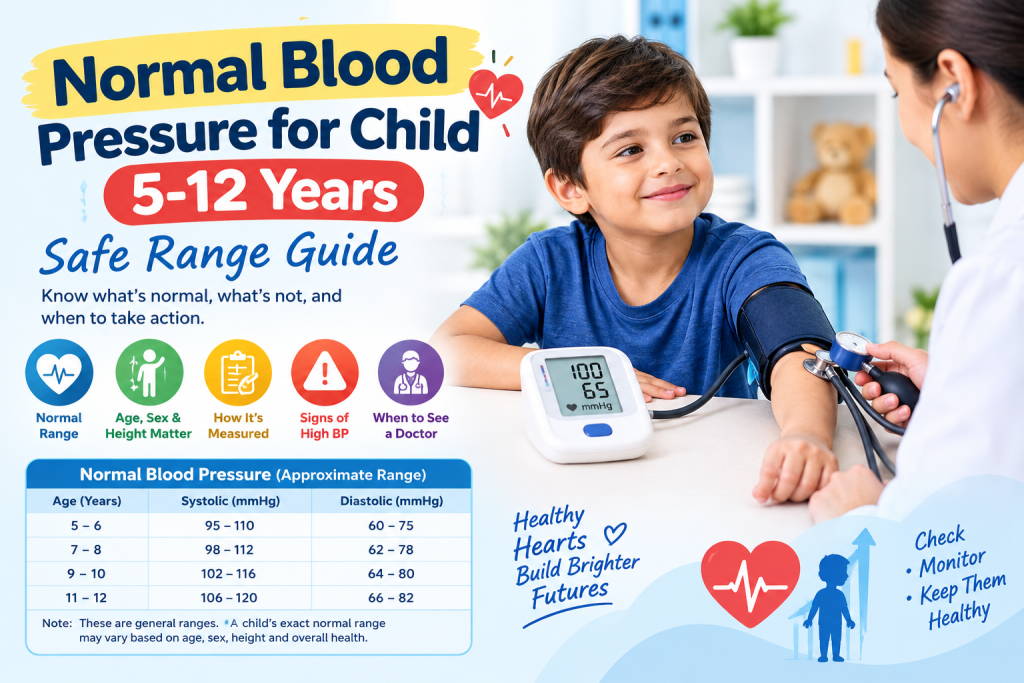
Normal Blood Pressure for Child 5-12 Years: Safe Range Guide
Parents often wonder what a healthy blood pressure reading should look like in children. Understanding the normal blood pressure for child 5-12 years can help parents recognize when a reading is likely normal and when it may need further evaluation.
Blood pressure in children is different from blood pressure in adults. A child’s blood pressure changes as they grow, and doctors consider several factors when interpreting a reading. These include the child’s age, sex, and height. A single blood pressure reading that appears high does not always mean that a child has hypertension.
This guide explains how children’s blood pressure is evaluated, what can affect readings, possible signs of abnormal blood pressure, and when parents should contact a healthcare professional.
What Is Blood Pressure?
Blood pressure is the force of blood pushing against the walls of the arteries as the heart pumps blood throughout the body. A blood pressure reading contains two numbers.
The first number is called systolic blood pressure. It represents the pressure in the arteries when the heart contracts and pumps blood.
The second number is called diastolic blood pressure. It represents the pressure when the heart relaxes between beats.
For example, a reading might be written as 100/65 mmHg. The first number is systolic pressure, while the second is diastolic pressure.
Blood pressure naturally changes throughout the day. Exercise, stress, anxiety, illness, caffeine, pain, and even talking during a measurement can temporarily affect a reading.
What Is the Normal Blood Pressure for Child 5-12 Years?
There is not one single blood pressure number that is considered normal for every child between 5 and 12 years old.
When evaluating the normal blood pressure for child 5-12 years, healthcare professionals consider the child’s age, sex, and height. Pediatric blood pressure is commonly interpreted using age- and sex-specific blood pressure percentiles.
According to pediatric guidelines, normal blood pressure in children is generally below the 90th percentile for their age, sex, and height.
This is one reason parents should be cautious about comparing their child’s reading with an adult blood pressure chart. A reading that might be normal for one child may require additional evaluation in another child.
Why Does Children’s Blood Pressure Change With Age?
Children’s bodies are constantly growing and developing. Their heart, blood vessels, height, weight, and overall body size change as they get older.
Because of this growth, blood pressure generally increases gradually throughout childhood.
A 5-year-old and a 12-year-old should not necessarily have the same blood pressure. Height is also important because children of the same age can have significantly different body sizes.
For this reason, pediatric healthcare providers use specialized charts and measurements rather than relying on one universal number.
How Doctors Determine a Child’s Blood Pressure Category
When a child has their blood pressure checked, healthcare professionals look at more than the number displayed on the monitor.
They may consider:
- The child’s age
- Sex
- Height
- Systolic blood pressure
- Diastolic blood pressure
- Whether the measurement was repeated
- The child’s overall health
- Medications
- Recent illness or physical activity
If a reading is higher than expected, the healthcare professional may repeat the measurement after the child has rested.
A diagnosis of high blood pressure should generally not be made from one isolated reading.
How Blood Pressure Should Be Measured in Children
Correct measurement is particularly important when checking children’s blood pressure.
Before the measurement, the child should ideally sit quietly for several minutes. The child’s back should be supported, and the feet should be supported rather than dangling.
The arm should be positioned appropriately, usually around heart level. The blood pressure cuff should also be the correct size for the child’s arm.
An incorrectly sized cuff can affect the result. A cuff that is too small may produce a reading that appears higher than the child’s actual blood pressure.
Children should also avoid talking, moving around, or becoming unnecessarily anxious during the measurement.
What Can Temporarily Raise a Child’s Blood Pressure?
A higher-than-usual reading does not always mean that a child has chronic high blood pressure.
Several temporary factors can increase blood pressure, including:
Anxiety
Some children become nervous when visiting a doctor’s office. This can temporarily increase their blood pressure.
Physical Activity
Running, playing sports, climbing stairs, or other exercise can temporarily increase blood pressure.
Pain
Pain can affect heart rate and blood pressure. A child who is experiencing significant discomfort may therefore have a temporarily elevated reading.
Fever or Illness
Being sick can affect a child’s heart rate, hydration status, and blood pressure.
Stress
Emotional stress can cause temporary changes in blood pressure.
Incorrect Measurement
An inappropriate cuff size, poor positioning, movement, or talking during the measurement can affect the result.
Because of these factors, doctors may repeat a measurement before deciding whether further evaluation is necessary.
What Are the Signs of High Blood Pressure in Children?
One challenge with childhood high blood pressure is that it may not cause obvious symptoms.
Some children can have elevated blood pressure without feeling unwell. When symptoms do occur, they can vary depending on the severity and underlying cause.
Possible symptoms may include:
- Headaches
- Dizziness
- Vision changes
- Nosebleeds
- Shortness of breath
- Chest discomfort
- Fatigue
- Difficulty concentrating
These symptoms can also occur for many other reasons, so they do not automatically mean that a child has high blood pressure.
If a child repeatedly has elevated blood pressure or develops concerning symptoms, parents should discuss the situation with a pediatric healthcare professional.
What Causes High Blood Pressure in Children?
High blood pressure in children can have different causes.
In younger children, healthcare professionals may look carefully for underlying medical conditions. In older children, factors such as excess body weight, physical inactivity, diet, sleep problems, family history, and certain medications may contribute.
Some medical conditions associated with high blood pressure include kidney disorders, hormonal problems, and certain cardiovascular conditions.
Some medications can also affect blood pressure.
Because the causes vary, persistent high blood pressure deserves appropriate medical evaluation rather than being treated with home remedies alone.
Can Children Have Low Blood Pressure?
Yes. Children can also have blood pressure that is lower than expected.
Low blood pressure may occur because of dehydration, illness, blood loss, certain medications, or other medical conditions.
Some healthy children naturally have relatively low blood pressure without having any health problem.
However, low blood pressure becomes more concerning when it is associated with symptoms such as:
- Fainting
- Severe dizziness
- Weakness
- Confusion
- Extreme tiredness
- Rapid breathing
- Pale or clammy skin
If a child suddenly becomes very unwell or loses consciousness, urgent medical assessment may be necessary.
Normal Blood Pressure for Child 5-12 Years: Why Percentiles Matter
One of the most important things for parents to understand about pediatric blood pressure is the use of percentiles.
A percentile compares a child’s measurement with measurements from children of the same age, sex, and height.
For example, a child’s blood pressure may be compared with a reference population to determine whether it falls within the expected range.
This approach is different from adult blood pressure assessment.
Therefore, searching for one fixed number for the normal blood pressure for child 5-12 years can be misleading.
A pediatrician can use the child’s exact measurements to determine whether the reading is appropriate.
Does Height Affect a Child’s Blood Pressure?
Yes. Height is one of the factors used in pediatric blood pressure interpretation.
Two children who are both 8 years old can have different heights. Their expected blood pressure ranges may therefore differ.
This is why pediatric blood pressure charts include height-specific information.
Parents should provide accurate height information when discussing a child’s blood pressure with a healthcare professional.
How Can Parents Support Healthy Blood Pressure?
Parents can encourage habits that support cardiovascular health throughout childhood.
Encourage Regular Physical Activity
Children benefit from regular age-appropriate physical activity. Active play, walking, cycling, swimming, sports, and other enjoyable activities can help support overall cardiovascular health.
Offer a Balanced Diet
A balanced diet can include fruits, vegetables, whole grains, lean protein sources, and appropriate amounts of dairy or alternatives.
Parents can also limit excessive intake of highly processed foods that are often high in sodium and added sugars.
Encourage Healthy Sleep
Adequate sleep is important for children’s physical and mental development. Maintaining a consistent bedtime routine can support healthy sleep habits.
Maintain a Healthy Weight
If a child has overweight or obesity, parents should discuss healthy growth with a pediatric healthcare professional. Weight management in children should focus on healthy habits and normal development rather than restrictive dieting.
Avoid Tobacco Smoke Exposure
Children should be protected from exposure to tobacco smoke. A smoke-free environment supports better overall cardiovascular and respiratory health.
Should Parents Check Their Child’s Blood Pressure at Home?
Home blood pressure monitoring can sometimes be useful, particularly when recommended by a healthcare professional.
However, parents should make sure that the monitor is appropriate for children and that the cuff fits correctly.
Not every home blood pressure monitor is validated for pediatric use. Parents should ask a healthcare professional which device and cuff size are appropriate.
If a home reading is unexpectedly high, it is usually better to have the measurement repeated correctly and discuss persistent abnormal readings with a healthcare professional rather than immediately assuming that the child has hypertension.
When Should a Child See a Doctor?
Parents should discuss repeated abnormal blood pressure readings with a pediatrician or other qualified healthcare professional.
Medical evaluation may be particularly important when a child repeatedly has readings that are higher than expected for their age, sex, and height.
A healthcare professional may repeat the measurement and review the child’s medical history, medications, family history, growth pattern, and other health factors.
Depending on the situation, additional testing may be recommended.
When Is High Blood Pressure an Emergency?
Extremely abnormal blood pressure accompanied by serious symptoms can require urgent medical attention.
Parents should seek emergency care if a child develops severe symptoms such as:
- Severe headache
- Difficulty breathing
- Chest pain
- Seizure
- Confusion
- Loss of consciousness
- Sudden weakness
- Significant vision problems
A blood pressure reading should always be interpreted together with the child’s symptoms and overall condition.
Common Mistakes Parents Make When Checking Blood Pressure
Several simple mistakes can make a child’s reading less reliable.
One common mistake is using an adult-sized cuff on a child. Another is measuring immediately after physical activity.
Parents may also become concerned after seeing one elevated reading. However, stress and anxiety can temporarily affect blood pressure.
Other mistakes include measuring while the child is talking, moving the arm, crossing the legs, or sitting without proper back support.
Taking measurements under consistent, calm conditions can make readings more useful.
Frequently Asked Questions
What is the normal blood pressure for child 5-12 years?
There is no single normal number for every child in this age group. Pediatric blood pressure is interpreted according to age, sex, and height percentiles. A healthcare professional can determine whether a particular reading is appropriate.
Is 120/80 normal for a child?
A reading of 120/80 mmHg should not automatically be considered normal for a child simply because it is commonly used as a reference in adults. Pediatric readings require age-, sex-, and height-specific interpretation.
Can anxiety raise a child’s blood pressure?
Yes. Anxiety, fear, and stress can temporarily raise blood pressure. This is one reason healthcare professionals may repeat an elevated reading after the child has had time to relax.
Should parents worry about one high reading?
One high reading does not necessarily mean that a child has hypertension. The measurement should be checked carefully and may need to be repeated. Persistent abnormal readings should be evaluated by a healthcare professional.
Can exercise affect children’s blood pressure?
Yes. Physical activity temporarily increases blood pressure because the heart pumps more blood to the muscles. Blood pressure generally changes as the body returns to a resting state.
Can dehydration cause low blood pressure?
Significant dehydration can affect blood volume and may contribute to low blood pressure. A child with severe dehydration or concerning symptoms should receive prompt medical attention.
Final Thoughts
Understanding the normal blood pressure for child 5-12 years is important, but parents should remember that children’s blood pressure cannot be evaluated accurately using a single universal number.
Age, sex, height, measurement technique, and the child’s overall health all matter. A properly fitted cuff and a calm measurement can also make a significant difference.
If a child’s blood pressure repeatedly appears higher or lower than expected, parents should discuss the readings with a pediatric healthcare professional. Regular health visits provide an opportunity to monitor blood pressure, growth, and cardiovascular health as the child develops.
Most importantly, parents should avoid diagnosing or treating a child based on one blood pressure reading alone. Persistent or severe abnormalities should always be evaluated by a qualified healthcare professional.