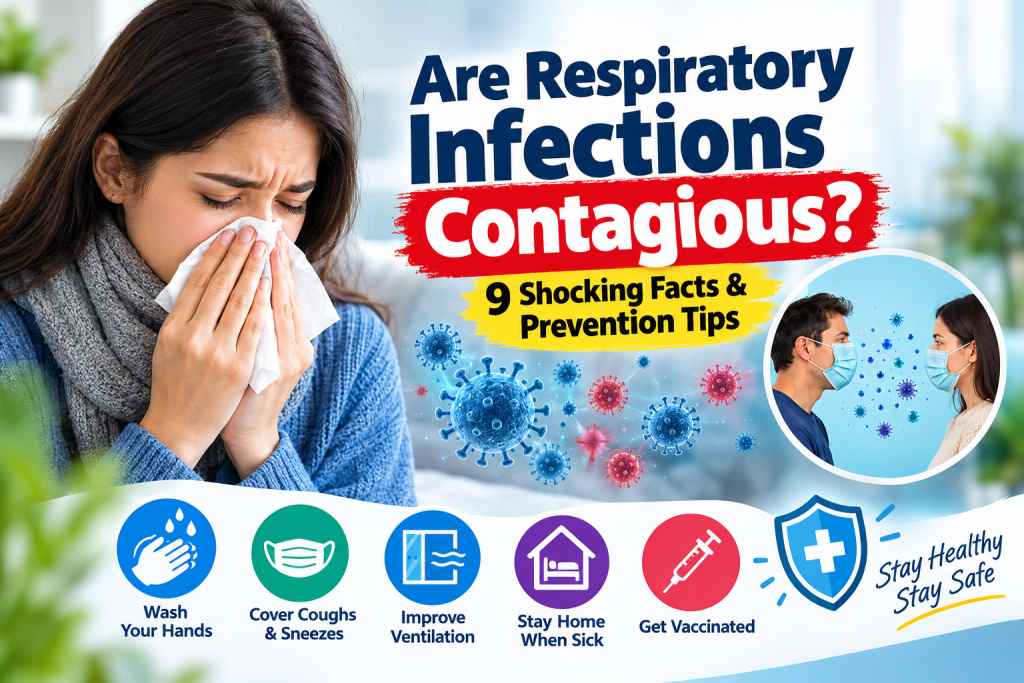
Are Respiratory Infections Contagious? 9 Shocking Facts & Prevention Tips
Respiratory infections are among the most common illnesses people experience throughout the year. They can affect the nose, throat, sinuses, airways, and lungs, causing symptoms such as coughing, sneezing, congestion, sore throat, fever, and fatigue. Because many respiratory infections spread from one person to another, it is important to understand how they are transmitted and how you can reduce your risk.
So, are respiratory infections contagious? The answer is often yes, but it depends on the specific infection. Some respiratory illnesses are highly contagious and can spread quickly through respiratory droplets, aerosols, contaminated hands, or frequently touched surfaces. Others may result from causes that are not contagious, such as allergies, asthma, or environmental irritation.
Knowing the difference can help you protect yourself, your family, coworkers, and other people around you.
Are Respiratory Infections Contagious?

Yes, many respiratory infections are contagious. Viral infections such as the common cold, influenza, respiratory syncytial virus (RSV), and COVID-19 can spread between people. Certain bacterial respiratory infections can also be transmitted from person to person.
However, not every condition affecting the respiratory system is infectious. Allergies, asthma, chronic obstructive pulmonary disease (COPD), and irritation caused by smoke or pollution are examples of respiratory problems that are not contagious.
The contagiousness of an infection depends on the microorganism responsible, how it spreads, and how long an infected person can transmit it to others.
1. How Do Respiratory Infections Spread?
Respiratory infections can spread through several different routes. Understanding these routes is one of the best ways to lower your risk.
Respiratory droplets

When an infected person coughs, sneezes, talks, or sometimes even breathes, tiny respiratory particles can be released into the air. Depending on the infection and circumstances, another person may become infected after inhaling these particles.
Droplets may also land on nearby surfaces or objects. Touching those surfaces and then touching your eyes, nose, or mouth can potentially contribute to transmission for some infections.
Airborne particles
Some respiratory viruses can remain suspended in the air as smaller particles, particularly in crowded or poorly ventilated indoor environments. This is one reason respiratory infections may spread more easily in offices, schools, public transportation, and other enclosed spaces.
Improving ventilation and avoiding close contact with people who are actively sick can reduce exposure.
Direct contact
Close physical contact can also contribute to transmission. For example, shaking hands with someone who has contaminated their hands after coughing may increase the chance of spreading certain infections.
Regular handwashing is therefore an important part of respiratory infection prevention.
2. Which Respiratory Infections Are Contagious?

Several common respiratory illnesses are contagious.
Common cold
The common cold can be caused by many different viruses. Symptoms may include a runny nose, sneezing, sore throat, coughing, congestion, and mild fatigue.
Colds commonly spread through close contact and respiratory secretions. People may transmit the infection before they realize they are sick.
Influenza
Influenza, commonly called the flu, is a contagious viral infection that can cause fever, chills, cough, sore throat, muscle aches, headache, and significant tiredness.
Flu can spread quickly in communities, particularly during seasonal outbreaks.
COVID-19
COVID-19 is caused by the SARS-CoV-2 virus and can spread between people through respiratory particles. Symptoms can range from mild respiratory symptoms to more serious illness.
Some people can transmit the virus even when their symptoms are mild or before they recognize that they are infected.
Respiratory syncytial virus
RSV is another contagious respiratory virus. It can cause cold-like symptoms in many people but may lead to more serious respiratory illness in infants, older adults, and certain high-risk individuals.
Whooping cough
Whooping cough, also known as pertussis, is a bacterial respiratory infection caused by Bordetella pertussis. It can cause severe and persistent coughing and is highly contagious, particularly during the early stages of illness.
Vaccination is an important way to help prevent pertussis.
3. How Long Are Respiratory Infections Contagious?
There is no single contagious period that applies to every respiratory infection.
Some infections can spread before noticeable symptoms appear. Others become more contagious around the time symptoms begin and remain transmissible for several days.
The contagious period can depend on:
- The type of infection
- The person’s immune response
- The severity of symptoms
- Age and overall health
- Whether treatment is available
- The specific microorganism causing the illness
Because contagious periods vary, people with respiratory symptoms should take reasonable precautions rather than assuming they are no longer infectious simply because they feel somewhat better.
If you have a confirmed infection, follow the guidance provided by your healthcare professional or local public health authority.
4. What Symptoms Suggest a Contagious Respiratory Infection?
Symptoms alone cannot always tell you whether an infection is contagious. However, several common symptoms can occur with infectious respiratory illnesses.
These may include:
- Cough
- Sneezing
- Runny or blocked nose
- Sore throat
- Fever
- Chills
- Headache
- Muscle aches
- Fatigue
- Hoarseness
- Shortness of breath
A sudden combination of fever, cough, fatigue, body aches, or sore throat may suggest an infectious illness, although other conditions can produce similar symptoms.
For example, allergies can cause sneezing, congestion, and a runny nose without being contagious.
5. Are Respiratory Infections Contagious Without a Fever?
Yes. A person does not necessarily need to have a fever to spread a respiratory infection.
Some people experience mild symptoms or no fever at all while still carrying and transmitting a virus or bacteria. This is particularly important because someone may feel well enough to attend work, school, social events, or other activities while potentially exposing others.
For this reason, coughing, sneezing, sore throat, congestion, or other new respiratory symptoms should not automatically be dismissed simply because there is no fever.
If you develop respiratory symptoms, consider limiting close contact with others while you recover, especially around people who may be more vulnerable to severe illness.
6. Who Is More Vulnerable to Respiratory Infections?
Anyone can develop a respiratory infection, but some people have a higher risk of serious complications.
These groups may include:
- Young children
- Older adults
- People with weakened immune systems
- People with certain chronic health conditions
- People with existing lung disease
- People with certain heart conditions
The risk varies depending on the infection and the individual’s circumstances.
Protecting vulnerable people is one reason infection-control measures can be especially important during periods when respiratory illnesses are spreading widely.
7. How Can You Prevent Contagious Respiratory Infections?
You cannot eliminate the risk of respiratory infections completely, but several practical steps can reduce transmission.
Wash your hands regularly
Wash your hands with soap and water, particularly after coughing, sneezing, using public facilities, or being in crowded places.
If soap and water are not available, an appropriate alcohol-based hand sanitizer can be useful.
Cover coughs and sneezes
Use a tissue when coughing or sneezing and dispose of it immediately. If a tissue is unavailable, cough or sneeze into your elbow rather than your hands.
This simple habit can reduce the spread of respiratory secretions.
Improve indoor ventilation
Fresh air can help reduce the concentration of respiratory particles indoors. Opening windows when appropriate or using suitable ventilation systems can improve airflow.
Avoid close contact when sick
If you have symptoms of a contagious respiratory illness, staying home when possible and avoiding unnecessary close contact can help protect others.
This is particularly important around infants, older adults, and people who may be at increased risk of complications.
Clean frequently touched surfaces
Some respiratory infections can spread through contaminated surfaces. Regularly cleaning commonly touched objects such as doorknobs, phones, keyboards, and frequently used household surfaces can support good hygiene.
Stay up to date with recommended vaccines
Vaccines are available for certain respiratory infections, including influenza and some other diseases. Recommended vaccination can vary according to age, health status, location, and individual risk.
Discuss vaccination with a qualified healthcare professional to determine what is appropriate for you.
8. When Should You See a Doctor?
Most mild respiratory infections improve with time and supportive care. However, certain symptoms should not be ignored.
Seek prompt medical attention if you experience:
- Difficulty breathing
- Persistent or severe chest pain
- Blue, gray, or pale lips or face
- Severe weakness or confusion
- Dehydration
- A rapidly worsening condition
- Symptoms that improve and then suddenly become much worse
- High or persistent fever, particularly when accompanied by other concerning symptoms
Parents and caregivers should pay particular attention to breathing difficulties, poor feeding, unusual sleepiness, or dehydration in young children.
People who are at higher risk of complications may also need medical advice earlier in the course of an infection.
9. Can You Get a Respiratory Infection More Than Once?
Yes. Having one respiratory infection does not necessarily protect you from every other respiratory infection.
There are many different viruses and bacteria that can cause respiratory illnesses. Even within the same category of illness, multiple strains or types may circulate.
For example, recovering from one common cold virus does not mean you cannot catch another virus later.
Repeated respiratory infections can therefore occur throughout the year, especially in people who frequently encounter crowds, young children, schools, healthcare environments, or other settings where respiratory illnesses circulate.
Contagious vs. Non-Contagious Respiratory Conditions
It is important not to assume that every cough or runny nose is caused by an infection.
Some respiratory symptoms can result from non-infectious conditions such as:
Allergies
Seasonal allergies can cause sneezing, watery eyes, congestion, and a runny nose. Allergies are not caused by an infectious microorganism and therefore cannot spread from person to person.
Asthma
Asthma can cause coughing, wheezing, chest tightness, and difficulty breathing. Asthma itself is not contagious.
Environmental irritation
Smoke, air pollution, strong odors, dust, and certain chemicals can irritate the respiratory system and cause coughing or breathing discomfort.
These conditions may look similar to an infection in some cases, which is why persistent or unexplained symptoms may require professional evaluation.
How to Protect Your Family From Contagious Respiratory Illnesses
If someone in your household becomes sick, several practical measures can help reduce transmission.
Encourage the sick person to rest and avoid unnecessary close contact with other household members. Improve ventilation when possible and avoid sharing personal items such as drinking glasses, towels, or utensils.
Wash hands frequently and clean commonly touched surfaces. If the person needs to cough or sneeze, encourage them to use a tissue or their elbow rather than their hands.
Extra precautions may be useful if someone in the household is an infant, older adult, or otherwise at increased risk of complications.
Common Myths About Respiratory Infections
Myth 1: Every respiratory infection is contagious
Not necessarily. Some respiratory symptoms come from allergies, asthma, pollution, or other non-infectious causes.
Myth 2: You can only spread an infection when you have a fever
False. Some infections can be transmitted by people who have mild symptoms or no fever.
Myth 3: Antibiotics treat all respiratory infections
Antibiotics work against certain bacterial infections, but they do not treat viral infections such as most common colds and influenza.
Using antibiotics when they are not needed can contribute to antibiotic resistance and may cause unnecessary side effects.
Myth 4: A cough always means someone has a contagious illness
A cough can have many causes, including infection, allergies, asthma, acid reflux, smoke exposure, and other conditions.
The cause matters when determining whether the condition can spread to others.
Final Thoughts
So, are respiratory infections contagious? Many of them are, especially those caused by viruses and certain bacteria. Common illnesses such as colds, influenza, COVID-19, RSV, and whooping cough can spread from person to person through respiratory particles, close contact, or other transmission routes.
However, not every respiratory problem is contagious. Conditions such as allergies, asthma, and irritation from environmental pollutants can cause similar symptoms without spreading between people.
Good hand hygiene, covering coughs and sneezes, improving indoor ventilation, avoiding close contact when sick, and following recommended vaccination guidance can all help reduce the spread of contagious respiratory illnesses.
If symptoms become severe, breathing becomes difficult, chest pain develops, or an illness continues to worsen, seek medical advice promptly. Understanding how respiratory infections spread is an important step toward protecting both your health and the people around you.