Exercise and Mental Health: 9 Powerful Benefits That Help
Mental health is an important part of overall well-being, and daily habits can play a meaningful role in supporting it. While exercise is often associated with stronger muscles, better cardiovascular fitness, and weight management, its benefits also extend to emotional and psychological well-being.
The connection between exercise and mental health is supported by health organizations and research. Regular physical activity can help reduce symptoms of anxiety and depression, improve mood, support sleep, and enhance overall well-being. The World Health Organization notes that regular physical activity can reduce symptoms of depression and anxiety and improve brain health and well-being.
The good news is that exercise does not always mean spending hours at the gym. Walking, cycling, swimming, dancing, strength training, and other forms of movement can all contribute to a more active lifestyle.
What Is the Connection Between Exercise and Mental Health?
The relationship between exercise and mental health involves several physical, emotional, and behavioral factors. When you exercise, your body becomes more active, your circulation increases, and your brain responds to physical activity in ways that can support mood and cognitive health.
Regular movement may also provide a break from stressful routines. A walk outside, a short workout, or a recreational activity can give you time away from work, screens, or other daily pressures.
The National Institute of Mental Health recommends regular exercise as part of mental-health self-care and notes that even smaller amounts of exercise can add up when 30 minutes at once is difficult.
Exercise should not be viewed as a replacement for professional mental-health treatment. Instead, it can be one useful part of a broader approach that may also include therapy, medication when appropriate, sleep, social support, and other healthy habits.
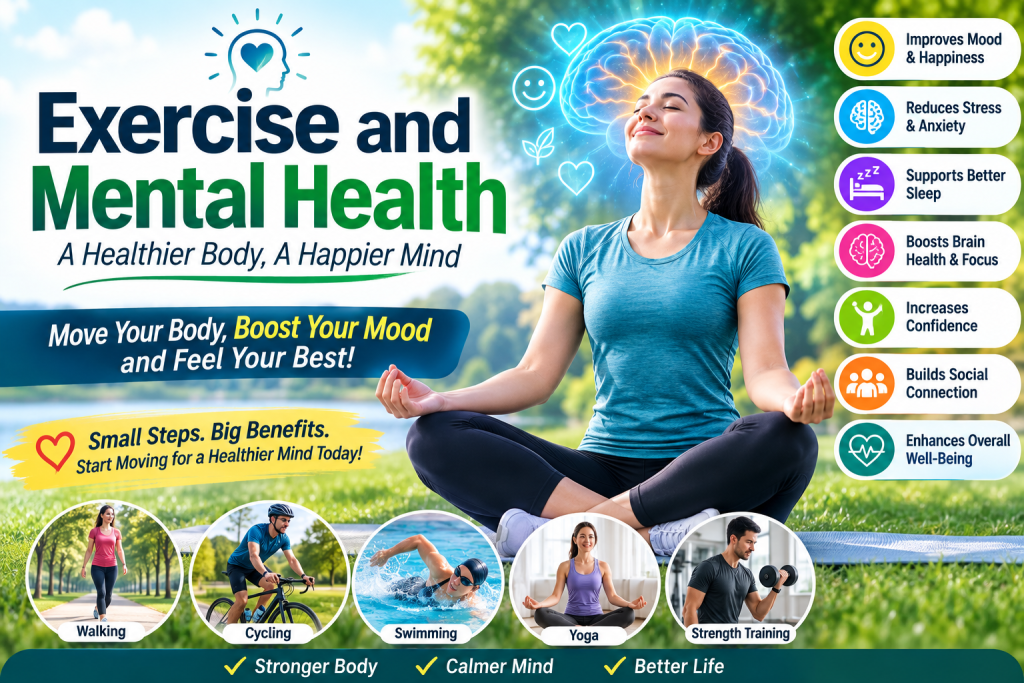
9 Benefits of Exercise for Mental Health
1. Exercise Can Help Improve Mood
One of the most noticeable benefits of exercise and mental health is its potential effect on mood.
Physical activity can be a healthy way to break up periods of inactivity and create a sense of accomplishment. Completing even a short walk or workout may help you feel more active and engaged with your day.
You do not necessarily need an intense workout to get started. A 10- to 20-minute walk may be a practical first step for someone who has been inactive.
Over time, making movement a regular part of your routine can support a healthier lifestyle and contribute to emotional well-being.
2. Exercise May Reduce Symptoms of Anxiety
Anxiety can involve excessive worry, nervousness, physical tension, and difficulty relaxing. Exercise cannot eliminate an anxiety disorder, but physical activity may help some people manage symptoms.
Research and health guidance support physical activity as one potential component of anxiety management. WHO guidance notes that structured physical exercise may be considered for adults with generalized anxiety disorder or panic disorder, although the strength of that recommendation is conditional.
Simple activities such as walking, cycling, swimming, or controlled strength training can be easier to maintain than very demanding workouts.
If anxiety is severe, persistent, or interfering with daily life, professional care is important. Exercise should complement—not replace—appropriate treatment.
3. Exercise Can Support Better Sleep
Sleep and mental health are closely connected. Poor sleep can affect mood, concentration, energy, and stress levels.
Regular physical activity may support healthier sleep patterns. WHO reports that physical activity in adults and older adults is associated with improvements in sleep as well as mental and cognitive health.
For some people, a consistent walking or exercise routine can help establish a healthier daily rhythm.
However, exercise immediately before bedtime may feel stimulating for some individuals. If evening workouts interfere with your sleep, try exercising earlier in the day and see whether your sleep improves.
4. Exercise May Help Manage Stress
Daily stress can come from work, family responsibilities, financial concerns, studying, or other life situations. While exercise cannot remove the source of stress, it can provide a healthy way to respond to it.
This is another important part of exercise and mental health. Physical activity can give you a structured break from stressful tasks and allow you to focus on movement.
Walking outdoors can be particularly useful because it combines physical activity with a change of environment. Similarly, swimming, cycling, dancing, or a group exercise class can make movement more enjoyable.
The goal is not to exercise until you are exhausted. A sustainable routine that you can repeat regularly is often more practical than occasional extreme workouts.
5. Exercise Can Support Brain Health
Physical activity is also associated with benefits for brain health. According to U.S. physical activity guidelines, regular physical activity is associated with improvements in several aspects of brain health, including cognition and quality of life.
Activities such as walking, cycling, swimming, and strength training can help you stay physically active while also supporting overall health.
For older adults, maintaining regular movement may be especially valuable because physical activity is associated with cognitive and functional benefits.
Exercise is not a guarantee against cognitive decline or neurological conditions, but staying active is an important component of healthy aging.
6. Exercise Can Improve Confidence
Physical activity can also affect how people feel about their physical abilities.
When you consistently exercise, you may notice improvements in stamina, strength, balance, mobility, or endurance. These changes can create a sense of progress.
For example, someone who initially struggles to walk for 10 minutes may eventually be able to walk for 30 minutes comfortably. That progress can provide motivation to continue.
Strength training can offer similar benefits. Gradually increasing repetitions, resistance, or exercise duration can give you measurable goals.
The purpose should be to improve health and function rather than chasing unrealistic body standards.
7. Exercise Can Create Social Connection
Exercise does not have to be a solitary activity. Walking with a friend, joining a fitness class, participating in recreational sports, or exercising with family members can provide opportunities for social interaction.
Social connection itself can be beneficial for emotional well-being.
Group activities may also make exercise easier to maintain because they create accountability and structure. If you enjoy being around other people, choosing a social form of physical activity may make your routine more sustainable.
For people who prefer exercising alone, listening to music or walking in a pleasant environment can also make activity more enjoyable.
8. Exercise Can Support Overall Well-Being
The benefits of exercise and mental health go beyond mood alone. Physical activity can improve cardiovascular fitness, muscle function, mobility, and general physical health.
WHO reports that regular physical activity provides significant physical and mental health benefits and can improve overall well-being.
When physical and mental health are supported together, everyday activities may become easier. You may have more energy for work, household activities, hobbies, and social activities.
This is one reason exercise is often considered part of a healthy lifestyle rather than simply a method for changing body weight.
9. Exercise Can Help Build a Healthy Routine
A regular exercise routine can provide structure to your day. Having a specific time for walking, cycling, stretching, or strength training can make healthy behavior more consistent.
For someone experiencing low motivation, starting small may be more realistic than creating an ambitious workout schedule.
For example, you could begin with a 10-minute walk after breakfast. Once this becomes comfortable, you might increase it to 15 or 20 minutes.
The long-term goal is consistency rather than perfection.
How Much Exercise Do You Need?
Understanding exercise and mental health also means knowing that more exercise is not always necessary to see benefits.
WHO recommends that adults aim for 150 to 300 minutes of moderate-intensity aerobic physical activity per week, or an equivalent amount of vigorous activity. Muscle-strengthening activities are also recommended on at least two days per week.
If you are currently inactive, you do not need to reach this target immediately.
Start with an amount that feels manageable. For example:
- 10-minute walk on most days
- 15-minute cycling session
- Short strength-training routine twice per week
- Gentle swimming session
- Low-impact exercise at home
Gradually increase duration and intensity as your fitness improves.
Best Exercises for Mental Well-Being
There is no single best exercise for everyone. The most useful activity is often one that you enjoy and can perform consistently.
Walking
Walking is simple, accessible, and easy to adjust. You can start slowly and gradually increase your pace or distance.
Cycling
Cycling can provide cardiovascular exercise while giving you an alternative to walking or running.
Swimming
Swimming and water-based exercise can provide a full-body workout with relatively low impact on the joints.
Strength Training
Resistance exercises can improve muscular strength and physical function. Beginners can start with bodyweight movements or resistance bands.
Yoga and Mobility Exercises
Yoga combines movement, balance, flexibility, and breathing. Some people find it useful as part of a stress-management routine.
Dancing
Dancing can make physical activity enjoyable while combining movement with music and, in some cases, social interaction.
How to Start an Exercise Routine
If you are new to exercise, start with small goals. Trying to exercise intensely every day can increase fatigue and make it harder to stay consistent.
A simple beginner plan might look like this:
Monday: 20-minute walk
Tuesday: 15-minute strength routine
Wednesday: 20-minute walk
Thursday: Rest or gentle stretching
Friday: 20-30-minute cycling or brisk walk
Saturday: 20-minute strength or dance workout
Sunday: Easy walk or rest
You can modify this plan according to your fitness level, schedule, and health needs.
Can Exercise Treat Depression or Anxiety?
It is important to be careful with the word “treat.” Exercise and mental health are connected, and physical activity can help reduce symptoms for some people, but exercise alone should not be presented as a universal treatment for depression or anxiety disorders.
WHO states that physical activity can reduce symptoms of depression and anxiety, while NIMH emphasizes that people experiencing significant or persistent mental-health symptoms should seek appropriate care.
If symptoms are severe, last for weeks, or interfere with work, relationships, sleep, or daily activities, speak with a qualified healthcare professional.
Professional treatment may include psychotherapy, medication, or other evidence-based approaches depending on the condition and individual needs.
Tips to Make Exercise Easier
If motivation is low, make your routine as simple as possible.
Choose an activity you enjoy rather than one you believe you “should” do. Keep your workout clothes and shoes ready. Schedule exercise at a time when you are most likely to follow through.
You can also break your activity into smaller sessions. For example, three 10-minute walks can be easier to fit into a busy day than one 30-minute workout.
Track progress based on habits and function rather than only body weight. Walking farther, feeling stronger, sleeping better, or becoming more consistent are meaningful achievements.
Most importantly, avoid comparing your progress with someone else’s.
Safety Tips Before Exercising
For most people, moderate physical activity is safe, but your exercise plan should reflect your current health and fitness level.
Start gradually, especially if you have been inactive for a long time. Wear appropriate footwear, stay hydrated, and use correct technique during strength exercises.
If you have a chronic medical condition, significant mobility limitations, or another health concern, consider discussing your exercise plans with a healthcare professional.
Stop exercising and seek urgent medical attention if you develop serious symptoms such as chest pressure, fainting, severe breathing difficulty, or sudden neurological symptoms.
When Should You Seek Mental Health Support?
Exercise can support well-being, but it should not be your only response to serious mental-health symptoms.
Consider speaking with a healthcare professional if you experience persistent sadness, excessive anxiety, hopelessness, major changes in sleep or appetite, loss of interest in activities, difficulty functioning, or symptoms that are getting worse.
NIMH advises seeking professional help when symptoms are severe, persist, or interfere with daily life.
If you are experiencing thoughts of suicide or immediate danger, seek emergency help or contact a local crisis service immediately.
Final Thoughts
The connection between exercise and mental health makes physical activity an important part of a balanced healthy lifestyle. Regular movement can support mood, help manage stress, improve sleep, support brain health, and contribute to better overall well-being.
You do not need an expensive gym membership or an intense workout plan to begin. Walking, cycling, swimming, dancing, strength training, and other enjoyable activities can all be useful.
Start small, stay consistent, and gradually build your activity level. If you are experiencing significant anxiety, depression, or another mental-health concern, combine physical activity with appropriate professional support rather than relying on exercise alone.