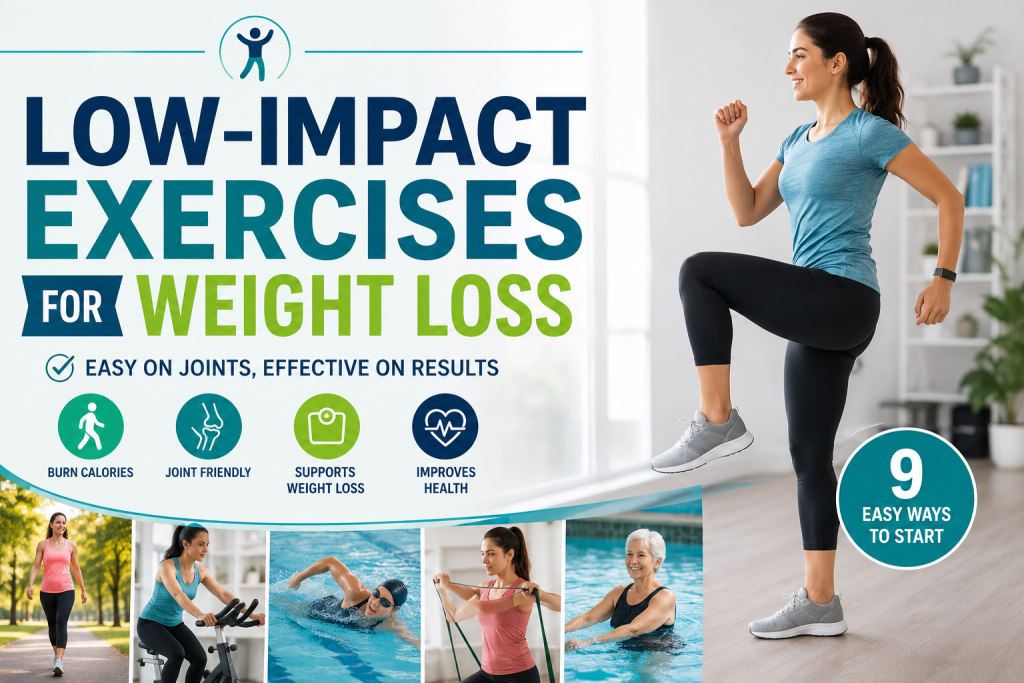
Low-Impact Exercises for Weight Loss: 9 Easy Ways to Start
Losing weight does not always require running, jumping, or intense gym workouts. For many people, low-impact movement can be a practical and comfortable way to become more active, burn energy, build strength, and support long-term weight management. Low-impact exercises are especially useful for beginners, older adults, and people who prefer to reduce stress on their joints.
In this guide, we will explain how low-impact exercises for weight loss work, which exercises you can try at home or outdoors, how often to exercise, and how to build a simple weekly routine.
What Are Low-Impact Exercises?
Low-impact exercises are activities that reduce the repetitive pounding associated with activities such as running and jumping. Examples include walking, cycling, swimming, water aerobics, and some forms of strength training.
Low impact does not mean low effort. A brisk walk, cycling session, or water workout can raise your heart rate and contribute to meaningful physical activity. The best low-impact workout is one you can perform consistently and safely.
The CDC lists activities such as brisk walking, cycling, swimming, and water aerobics among low-impact aerobic options.
Can Low-Impact Exercises Help With Weight Loss?
Yes. Low-impact exercises for weight loss can increase daily energy expenditure and help you become more physically active. However, exercise is only one part of weight management. Food intake, sleep, stress, medications, health conditions, and other factors can affect body weight.
Regular activity can also help maintain muscle and improve fitness while you work toward a healthier weight. Current U.S. physical activity guidance recommends that adults work toward at least 150 to 300 minutes of moderate-intensity aerobic activity each week, along with muscle-strengthening activity on at least two days. People who are inactive can start with smaller amounts and gradually build up.
Physical activity combined with appropriate nutrition can support weight loss and long-term weight management.
9 Best Low-Impact Exercises for Weight Loss
1. Brisk Walking
Walking is one of the simplest low-impact exercises for weight loss because it requires little equipment and can be adapted to almost any fitness level.
Start with a comfortable pace and gradually increase your speed. During moderate activity, you should generally be breathing harder than normal while still being able to carry on a conversation.
Try a 20- to 30-minute brisk walk several days per week.
To make walking more challenging without running, use a slight incline, increase your pace, or add short faster intervals.
Walking can also be divided into shorter sessions throughout the day if a single long workout is difficult to fit into your schedule.
2. Stationary Cycling
Stationary cycling provides a joint-friendly cardiovascular workout while allowing you to control resistance and speed. It can be particularly useful when outdoor walking is difficult because of weather, safety, or terrain.
Begin with 10 to 15 minutes at an easy-to-moderate pace. As your fitness improves, gradually increase the duration toward 30 minutes or more.
Avoid suddenly adding high resistance or long sessions if you are new to cycling. A gradual progression is easier to maintain and may help reduce unnecessary soreness.
3. Swimming
Swimming is another excellent option because the water supports much of your body weight. It can provide a full-body workout while reducing impact on the joints.
You can swim continuously at a comfortable pace, alternate swimming with rest periods, or use water-based exercises if traditional swimming is not comfortable.
If you are not a confident swimmer, consider a supervised water-exercise class instead of exercising alone in deep water.
4. Water Aerobics
Water aerobics combines cardiovascular movement with resistance from the water. It can be useful for people who find land-based exercise uncomfortable.
A class may include walking through water, leg movements, arm exercises, and rhythmic movements. Because water creates resistance in multiple directions, even simple movements can feel challenging.
Choose a class appropriate for your fitness level and follow the instructor’s technique.
5. Elliptical Training
An elliptical machine can provide a cardiovascular workout without the repeated foot impact of running. Many machines allow you to adjust resistance and incline.
Start with a short session and focus on smooth movement. Keep your posture comfortable and avoid leaning heavily on the handles.
As your fitness improves, you can alternate easy and moderate periods. For example, try two minutes at an easy pace followed by one minute at a faster pace.
6. Low-Impact Aerobic Classes
Low-impact aerobic classes can make exercise more enjoyable and provide structure. Look for classes that avoid repeated jumping and include options for beginners.
You can also follow a low-impact workout at home. Marching in place, side steps, controlled knee lifts, and arm movements can raise your heart rate without requiring jumps.
If a movement causes pain rather than normal muscle effort, stop and choose a gentler alternative.
7. Strength Training
Strength training is an important part of low-impact exercises for weight loss because it helps you build and maintain muscle. You do not need heavy weights to begin.
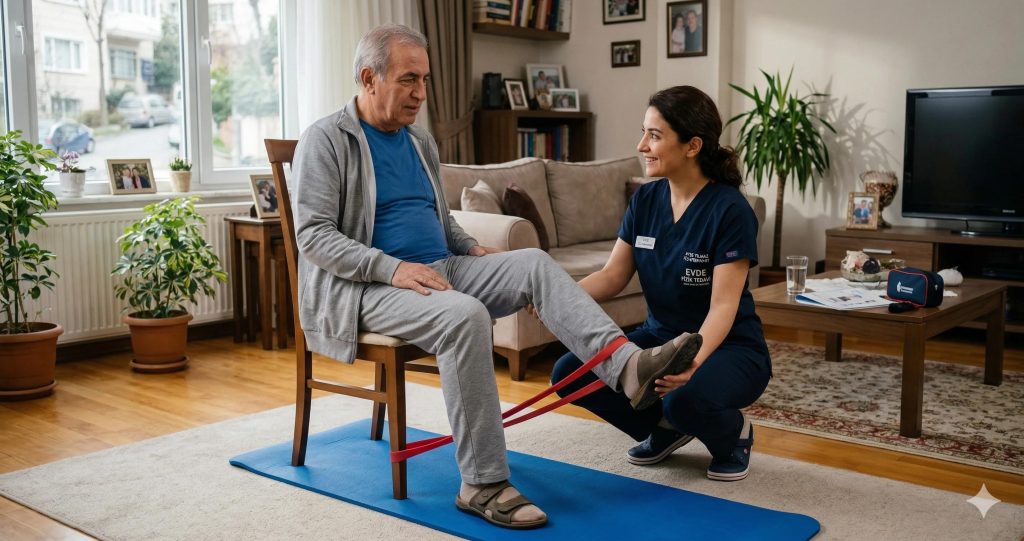
Bodyweight squats to a chair, wall push-ups, resistance-band rows, glute bridges, and controlled step-ups can form a beginner routine.
Aim to train major muscle groups on at least two days per week, allowing recovery between challenging sessions. Good technique is more important than lifting heavy weights.
Federal guidelines also recommend muscle-strengthening activities on at least two days each week for adults.
8. Chair Exercises
Chair-based workouts are a useful starting point for people who have limited mobility or are not ready for standing workouts.
Try seated marching, alternating leg extensions, seated punches, heel raises, and controlled sit-to-stand movements if they are safe for you.
Chair exercise can be progressed gradually. For example, you might start with 10 minutes and add a few minutes as your tolerance improves.
9. Low-Impact Dance
Dancing can turn exercise into an enjoyable activity. Choose routines that use stepping, marching, side-to-side movements, and controlled arm patterns rather than repeated jumps.
You can dance at home for 10 to 20 minutes and gradually increase the duration. Music can also make it easier to stay engaged and exercise consistently.
How Often Should You Do Low-Impact Exercises?
For general health, adults should work toward 150 to 300 minutes of moderate-intensity aerobic activity each week and muscle-strengthening activities on at least two days.
If you are starting from a low activity level, you do not need to reach that target immediately. Start with a manageable amount, such as 10 to 15 minutes of walking, and add time gradually.
Consistency matters more than doing a very hard workout once and then stopping for several days. You can split activity into shorter sessions throughout the day if that makes your routine easier to follow.
Sample 7-Day Low-Impact Weight-Loss Routine
Monday: 30-minute brisk walk + 10 minutes of beginner strength exercises.
Tuesday: 20 to 30 minutes of stationary cycling.
Wednesday: 25-minute walk with five short periods of faster walking.
Thursday: Rest day or 15 to 20 minutes of gentle mobility work.
Friday: 30-minute low-impact aerobic workout + strength training.
Saturday: 30 to 45 minutes of swimming, water aerobics, cycling, or walking.
Sunday: Easy 20-minute walk or rest.
You can adjust this plan to your fitness level. If you have been inactive, begin with less time and increase gradually. Current guidance specifically encourages inactive adults to start with smaller amounts and build toward recommended activity levels over time.
How to Make Low-Impact Workouts More Effective
The goal is not to make every session exhausting. Instead, gradually increase one variable at a time.
You can increase workout duration, walking speed, resistance, number of repetitions, or weekly frequency. For example, if you currently walk for 15 minutes, add five minutes rather than suddenly walking for an hour.
Use the talk test to estimate intensity. During moderate activity, you should be breathing harder but generally able to speak in sentences. If you can barely speak, the intensity may be too high for a beginner.
Another useful strategy is to reduce long periods of sitting. Take short walking breaks, use stairs when appropriate, walk while making phone calls, or perform gentle movement during television breaks.
How to Progress Safely
When using low-impact exercises for weight loss, increase your activity gradually. If you currently walk for 15 minutes three times a week, add five minutes to one or two sessions before making another change.
You can also increase walking speed, cycling resistance, repetitions, or weekly frequency. Gradual progression allows your body time to adapt.
Low-Impact Exercises for Weight Loss at Home
Many low-impact exercises for weight loss can be done at home without expensive equipment. Try marching in place, chair squats, wall push-ups, standing side steps, glute bridges, and controlled step-ups.
Perform each movement for 30 to 60 seconds, rest when needed, and repeat the circuit one to three times. Keep your exercise area clear and use a sturdy chair for support when appropriate.
Nutrition Still Matters
Low-impact exercises for weight loss can increase activity and energy expenditure, but exercise is only one part of weight management.
A sustainable eating pattern can include vegetables, fruits, whole grains, protein-rich foods, healthy fats, and appropriate portions. Avoid extreme diets or promises of rapid weight loss.
Your results can vary according to activity level, food intake, sleep, medications, health conditions, and other factors. A 2024 systematic review found that short-term interventions combining physical activity and nutrition can produce weight loss in adults with overweight or obesity, although individual results varied.
Frequently Asked Questions
Can low-impact exercises really help with weight loss?
Yes. Low-impact exercises for weight loss can increase physical activity and energy expenditure. They work best when combined with sustainable eating habits and regular movement.
What is the easiest option for beginners?
Walking is often a convenient starting point because you can control the pace and duration. Begin comfortably and increase gradually.
Can people with joint pain do these exercises?
Some people may find low-impact exercises more comfortable than running or jumping, but the right activity depends on the cause and severity of pain. A physical therapist can help select appropriate movements.
How often should adults exercise?
Adults should work toward 150 to 300 minutes of moderate-intensity aerobic activity each week plus muscle-strengthening activity on at least two days. Beginners can start with smaller amounts and build over time.
Can I do low-impact exercises for weight loss at home?
Yes. Walking, marching, chair exercises, resistance-band training, and bodyweight exercises are practical home options.
When to Get Professional Advice
Low-impact exercises for weight loss are not one-size-fits-all. Speak with a healthcare professional if you have a significant medical condition, balance problems, major mobility limitations, or symptoms that make exercise difficult.
Stop exercising and seek urgent medical care if you experience chest pain or pressure, fainting, severe shortness of breath, or another sudden serious symptom.
For persistent or worsening muscle or joint pain, professional assessment can help identify the cause and guide exercise selection.
Final Thoughts
Low-impact exercises for weight loss can help you become more active without relying on running or repeated jumping. Walking, cycling, swimming, water exercise, strength training, chair workouts, elliptical training, and low-impact dancing are practical choices.
Choose activities you enjoy, start at a manageable level, and progress slowly. Pair regular movement with balanced nutrition, adequate sleep, and recovery.
The most effective routine is not necessarily the hardest workout. It is the routine that is safe, realistic, enjoyable, and sustainable enough to continue for months rather than days.