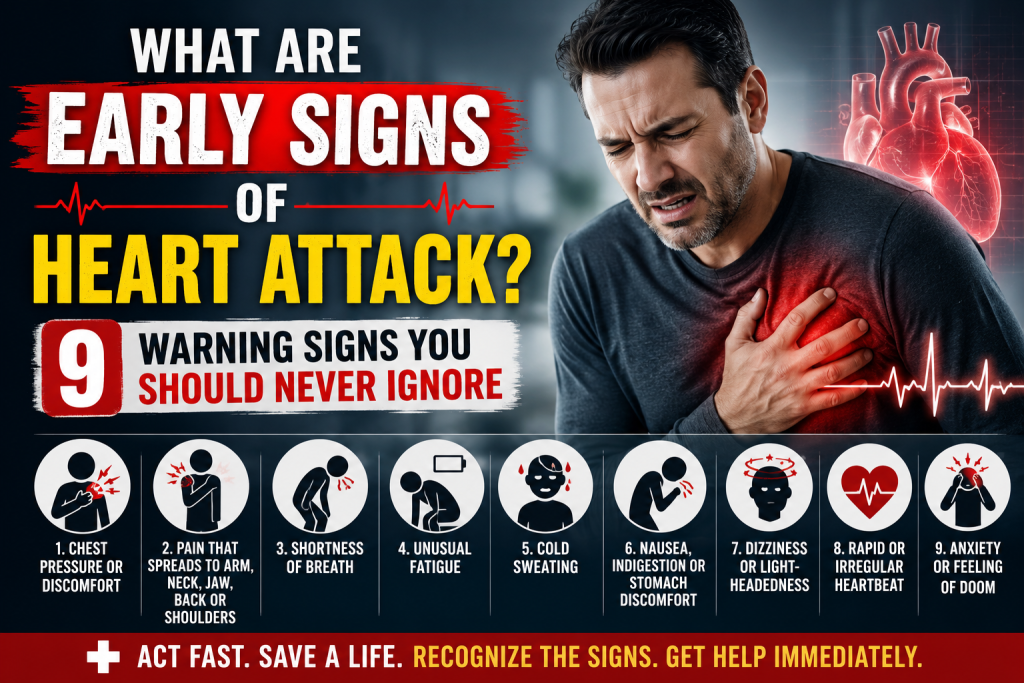
What Are Early Signs of Heart Attack? 9 Warning Signs You Should Never Ignore
A heart attack can sometimes happen suddenly, but it does not always begin with dramatic chest pain. Some people experience mild or unusual symptoms hours, days, or even weeks before a major event. Recognizing these warning signs can help someone seek emergency medical care sooner.
If you are wondering what are early signs of heart attack, it is important to understand that symptoms can vary from person to person. Chest pressure is one of the most recognized signs, but shortness of breath, unusual tiredness, nausea, sweating, dizziness, and discomfort in the arm, back, neck, jaw, or upper abdomen can also occur.
This guide explains nine warning signs, what they may feel like, and when immediate medical attention is necessary.
What Is a Heart Attack?
A heart attack, medically called a myocardial infarction, occurs when blood flow to part of the heart muscle becomes severely reduced or blocked. Without enough oxygen-rich blood, heart tissue can become damaged.
A common cause is a buildup of plaque inside the coronary arteries. If plaque ruptures and a blood clot forms, the clot can restrict blood flow to the heart.
A heart attack is a medical emergency. Treatment works best when blood flow is restored as quickly as possible.
Understanding what are early signs of heart attack can be especially important because symptoms are not always severe at first. Some heart attacks begin with mild discomfort that comes and goes rather than sudden, intense pain.
1. Chest Pressure, Tightness, or Discomfort

Chest discomfort is one of the most important warning signs of a possible heart attack.
It may feel like:
- Pressure or heaviness
- Tightness or squeezing
- Fullness in the center of the chest
- Aching or uncomfortable pressure
- A sensation that comes and goes
The discomfort may last several minutes or disappear and return. It does not necessarily have to be extremely painful.
When considering what are early signs of heart attack, chest discomfort should never be dismissed simply because it is mild. The American Heart Association notes that heart attack symptoms can begin slowly and may initially be mild.
New or unexplained chest discomfort should receive prompt medical attention, particularly when it occurs with other symptoms.
2. Pain or Discomfort That Spreads
Heart attack discomfort is not always limited to the chest. It may spread to other areas of the upper body.
Possible locations include:
- One or both arms
- Shoulders
- Back
- Neck
- Jaw
- Upper abdomen
Some people may notice discomfort in one location without significant chest pain.
This is one reason what are early signs of heart attack can be difficult to answer with one symptom alone. The pattern and combination of symptoms matter.
Pain that spreads from the chest toward the arm, jaw, back, or neck can be particularly concerning when it occurs together with shortness of breath, sweating, nausea, or dizziness.
3. Shortness of Breath

Shortness of breath can occur with or without chest discomfort.
A person may feel unable to take a satisfying breath, become unusually winded, or experience breathing difficulty during an activity that normally feels easy.
Although breathing problems can have many causes, sudden or unexplained shortness of breath can be associated with a heart attack and should not automatically be attributed to anxiety, tiredness, or lack of fitness.
When learning what are early signs of heart attack, remember that symptoms do not always appear together. Someone can experience breathing difficulty even without obvious chest pain.
4. Unusual or Sudden Fatigue
Unexpected tiredness can sometimes be another warning sign.
This may be different from ordinary fatigue after a busy day. A person might feel unusually weak, exhausted, or unable to perform routine activities.
Unusual fatigue can be particularly easy to overlook because it has many possible explanations, including poor sleep, stress, infection, dehydration, and other health conditions.
However, when unusual tiredness occurs alongside chest discomfort, breathing difficulty, nausea, dizziness, or sweating, medical evaluation becomes more important.
Knowing what are early signs of heart attack means looking at the overall pattern rather than waiting for one dramatic symptom.
Some people, including women and older adults, may experience less typical symptoms, making awareness especially important.
5. Cold Sweating

Breaking out in a cold sweat without an obvious reason can be a warning sign of a heart attack.
This is different from sweating after exercise or being in a hot environment. A person may suddenly become clammy or sweaty while resting.
Cold sweating can occur along with chest discomfort, nausea, dizziness, or shortness of breath.
Because sweating can occur with many other conditions, it cannot confirm that a heart attack is happening by itself. However, when it appears alongside other concerning symptoms, emergency assessment is important.
If someone asks what are early signs of heart attack, cold sweating deserves attention because it is among the warning symptoms identified by major heart organizations.
6. Nausea, Indigestion, or Stomach Discomfort
Heart attack symptoms can sometimes resemble digestive problems.
A person may experience:
- Nausea
- Indigestion
- Heartburn-like discomfort
- Upper abdominal discomfort
- Vomiting
These symptoms can be especially confusing because indigestion and acid reflux are common.
However, unexplained nausea accompanied by chest pressure, sweating, shortness of breath, dizziness, or upper-body discomfort should not simply be assumed to be a stomach problem.
This is particularly relevant when discussing what are early signs of heart attack in women because some women may experience symptoms such as nausea, vomiting, unusual fatigue, shortness of breath, or back and shoulder discomfort.
7. Dizziness or Lightheadedness

Feeling suddenly dizzy, weak, or lightheaded may occur during a heart attack.
Some people may feel as though they are about to faint. Others may experience an unusual sense of imbalance or weakness.
Dizziness alone does not mean someone is having a heart attack. It can occur because of dehydration, low blood pressure, medication effects, inner-ear problems, low blood sugar, and many other causes.
But sudden dizziness accompanied by chest discomfort, shortness of breath, sweating, or nausea is more concerning.
If you are researching what are early signs of heart attack, dizziness is important because it may occur alongside other cardiovascular warning symptoms.
8. Rapid or Irregular Heartbeat
Some people may notice their heartbeat becoming unusually fast, pounding, or irregular.
This sensation is commonly called palpitations. Palpitations can occur for many reasons, including stress, caffeine, certain medications, dehydration, or abnormal heart rhythms.
However, a rapid or irregular heartbeat accompanied by chest discomfort, shortness of breath, faintness, or severe weakness requires urgent medical attention.
The American Heart Association lists rapid or irregular heartbeat among possible additional warning signs associated with heart attack.
Understanding what are early signs of heart attack therefore involves recognizing both classic symptoms and less obvious changes that may occur with them.
9. Symptoms That Come and Go
One of the most misleading features of some heart attacks is that symptoms may not remain constant.
Chest discomfort or pressure may improve and then return. A person may feel better after resting and assume the problem has disappeared.
But symptoms that come and go can still be serious.
Some people have warning symptoms hours or days before a heart attack, while others develop symptoms suddenly. Recurrent chest pressure, especially when it occurs during activity or does not settle normally, should be evaluated by a healthcare professional.
This is why what are early signs of heart attack is not simply a question about one particular type of pain. The timing, severity, location, and combination of symptoms all matter.
Do Heart Attack Symptoms Differ in Women?
Heart attack symptoms can overlap in men and women, but some women may experience symptoms that are less commonly associated with a heart attack.
Possible symptoms include:
- Chest discomfort
- Shortness of breath
- Nausea or vomiting
- Unusual tiredness
- Weakness
- Back discomfort
- Shoulder or arm discomfort
- Jaw discomfort
Women should not assume that a heart attack must cause severe chest pain.
Research and clinical guidance emphasize that symptoms can vary considerably, and women may have symptoms that are easier to mistake for digestive problems, stress, or exhaustion.
When asking what are early signs of heart attack, it is therefore important to avoid the misconception that everyone experiences exactly the same symptoms.
Can a Heart Attack Happen Without Chest Pain?
Yes. Although chest discomfort is one of the most common heart attack symptoms, some people may have little or no obvious chest pain.
Symptoms can instead include nausea, unusual fatigue, shortness of breath, dizziness, or discomfort in the back, neck, arm, or jaw.
Symptoms may also be less obvious in some older adults and people with diabetes.
This does not mean that every episode of fatigue or nausea is a heart attack. It means that unexplained symptoms occurring together or appearing suddenly should be taken seriously.
What Should You Do If You Suspect a Heart Attack?
If you think you or someone else may be having a heart attack, do not wait to see whether the symptoms disappear.
Call your local emergency medical service immediately. In the United States, this is 911; elsewhere, use the appropriate local emergency number.
Emergency medical professionals can begin assessment and treatment while transporting the person to a hospital. The American Heart Association recommends calling emergency services immediately when heart attack warning signs are present.
Do not drive yourself unless there is absolutely no other option. If emergency transportation is unavailable, have another person take you to the nearest emergency department.
If you are wondering what are early signs of heart attack because you or someone nearby currently has concerning symptoms, do not wait until you finish reading this article. Seek emergency medical help now.
Should You Take Aspirin During Suspected Heart Attack?
Aspirin may be recommended in some heart attack situations, but it is not appropriate for everyone.
It can interact with medications and may be unsafe for people with certain allergies or bleeding risks. For this reason, Mayo Clinic advises calling emergency medical services first and taking aspirin only if recommended by a healthcare professional or emergency medical operator.
Do not delay emergency treatment while trying to decide whether aspirin is appropriate.
Heart Attack vs. Other Causes of Chest Pain
Not every episode of chest discomfort is caused by a heart attack.
Chest symptoms can also occur because of:
- Acid reflux
- Muscle strain
- Anxiety or panic
- Respiratory infections
- Inflammation
- Other heart conditions
- Lung-related conditions
Unfortunately, it can be difficult to determine the cause based on symptoms alone.
That is why new, unexplained, or severe chest discomfort should be medically assessed rather than self-diagnosed. Mayo Clinic recommends emergency help for sudden, severe, or unexplained chest pain that lasts more than a few minutes.
Risk Factors Worth Knowing
Several factors can increase the likelihood of coronary artery disease and heart attack, including smoking, high blood pressure, high cholesterol, diabetes, obesity, physical inactivity, increasing age, and a family history of cardiovascular disease.
Having a risk factor does not mean a heart attack will definitely happen. Likewise, someone without obvious risk factors can still experience one.
Regular medical checkups can help identify conditions such as high blood pressure, diabetes, and abnormal cholesterol levels before they cause serious complications.
How Can You Reduce Heart Attack Risk?
Healthy lifestyle choices can support cardiovascular health.
Helpful habits include:
- Avoiding tobacco products
- Eating a balanced diet rich in vegetables, fruits, whole grains, and other nutritious foods
- Staying physically active according to your health professional’s advice
- Maintaining a healthy weight
- Managing blood pressure
- Monitoring cholesterol
- Managing diabetes when applicable
- Getting adequate sleep
- Limiting excessive alcohol intake
- Attending recommended medical checkups
If you have existing cardiovascular risk factors, speak with a qualified healthcare professional about a personalized prevention plan.
Frequently Asked Questions
What are early signs of heart attack?
Common warning signs include chest pressure or discomfort, pain spreading to the arm, back, neck, or jaw, shortness of breath, cold sweating, nausea, unusual fatigue, dizziness, and sometimes a rapid or irregular heartbeat.
Can heart attack symptoms start days before?
Yes. Some people experience warning symptoms hours, days, or even weeks before a heart attack. Recurrent chest pressure or discomfort that does not settle normally can be an important warning sign.
Can a heart attack feel like indigestion?
Yes. Heart attack symptoms can sometimes resemble heartburn, indigestion, nausea, or upper abdominal discomfort. When these symptoms occur with chest discomfort, sweating, breathing difficulty, or other warning signs, emergency medical evaluation is important.
Can women have different heart attack symptoms?
Women can experience the same classic chest discomfort seen in men, but they may also experience symptoms such as unusual fatigue, nausea, shortness of breath, and back, shoulder, or jaw discomfort.
Is mild chest pain a heart attack?
Mild chest discomfort does not necessarily mean a heart attack, but a new or unexplained symptom should not be ignored. Some heart attacks begin with mild symptoms rather than severe pain.
Final Takeaway
Knowing what are early signs of heart attack can help people recognize potentially dangerous symptoms sooner. Chest pressure, discomfort spreading to the upper body, shortness of breath, unusual fatigue, cold sweating, nausea, dizziness, heartbeat changes, and symptoms that come and go are important warning signs.
However, symptoms vary, and no online article can determine whether a particular symptom is a heart attack.
If you suspect that you or someone else is having a heart attack, seek emergency medical help immediately. Do not wait for symptoms to become severe. Fast medical evaluation can make an important difference.