What Causes Knee Pain? 9 Common Causes, Warning Signs & Relief Tips
Knee pain is one of the most common problems affecting people of different ages. It can appear after exercise, an injury, prolonged sitting, repetitive activity, or sometimes without an obvious reason. If you are wondering what causes knee pain, the answer can range from a temporary strain to conditions such as arthritis, tendon problems, bursitis, or cartilage injuries.
The knee is a complex joint that supports your body weight while walking, running, climbing stairs, squatting, and standing. Because it handles significant daily stress, irritation or injury to any of its structures can lead to discomfort.
Understanding what causes knee pain can help you recognize possible triggers and decide when professional evaluation may be appropriate. However, symptoms alone cannot always identify the exact cause, so persistent or severe pain should be assessed by a qualified healthcare professional.
What Causes Knee Pain?
There are many possible answers to what causes knee pain. Some people develop pain following an injury, while others experience gradual discomfort because of overuse or joint changes.
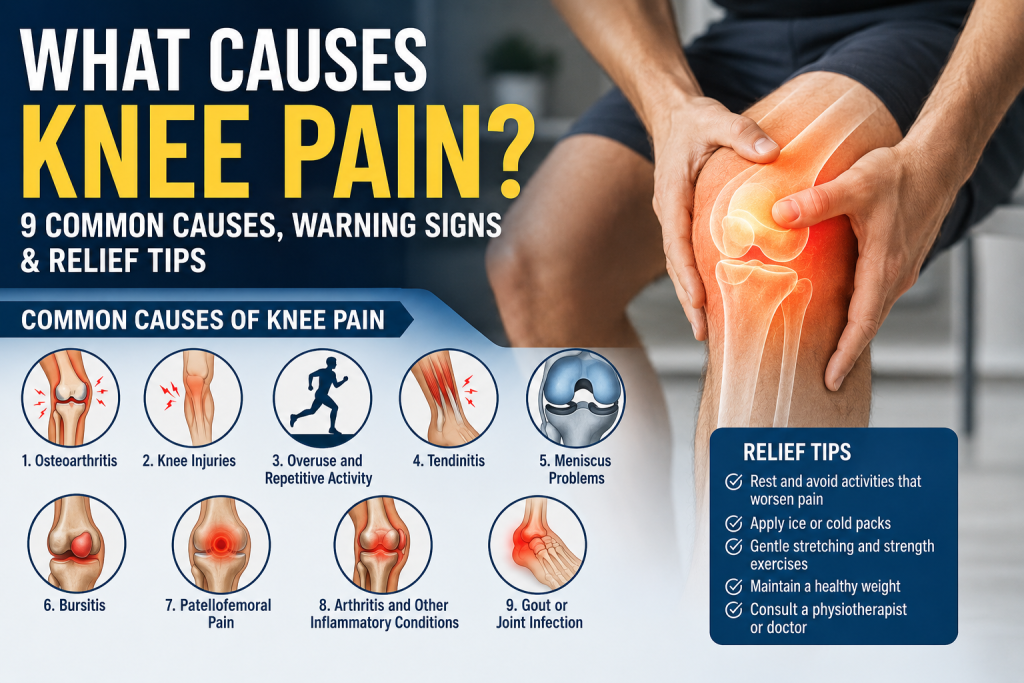
Common causes include:
- Osteoarthritis
- Sprains and strains
- Tendinitis
- Meniscus injuries
- Ligament injuries
- Bursitis
- Patellofemoral pain
- Overuse and repetitive movements
- Gout or joint inflammation
The location and character of the pain can provide useful clues. For example, pain at the front of the knee may have different causes from pain behind the knee or along the inner or outer side.
1. Osteoarthritis
One major explanation for what causes knee pain is osteoarthritis. Osteoarthritis occurs when the tissues within a joint gradually change over time, which can lead to pain, stiffness, and difficulty with movement.
Knee osteoarthritis is more common with increasing age, although previous injuries and other factors can also contribute.
Common symptoms may include:
- Knee stiffness
- Aching during or after activity
- Pain when walking
- Difficulty climbing stairs
- Reduced range of motion
- Occasional swelling
People with osteoarthritis may notice that symptoms become more noticeable after prolonged activity. A healthcare professional can assess symptoms and recommend an appropriate management plan.
2. Knee Injuries
Another common answer to what causes knee pain is an injury. The knee contains several important structures, including ligaments, tendons, cartilage, and bones. A sudden twist, fall, collision, or awkward movement can injure these tissues.
Common knee injuries include:
- Sprains
- Strains
- Meniscus tears
- Ligament injuries
- Tendon injuries
- Dislocations
- Fractures
A knee injury may cause sudden pain, swelling, bruising, weakness, or difficulty putting weight on the leg.
If knee pain begins immediately after a significant injury, particularly if you cannot walk or move the knee normally, professional medical assessment is important.
3. Overuse and Repetitive Activity
If you frequently run, jump, squat, kneel, or participate in sports, you may ask what causes knee pain after physical activity.
Repetitive movements can place repeated stress on the muscles, tendons, and other structures around the knee. Increasing your exercise intensity too quickly can also contribute to irritation.
For example, knee discomfort may occur after:
- Increasing running distance
- Starting a new workout program
- Repeated jumping
- Long periods of kneeling
- Frequent squatting
- Intensive sports training
Resting from activities that aggravate the symptoms and gradually returning to exercise can help in many minor cases. Cleveland Clinic notes that repetitive activity and overuse are common contributors to knee pain.
4. Tendinitis
Tendons connect muscles to bones and help transfer force during movement. When a tendon around the knee becomes irritated, it can cause pain and tenderness.
Patellar tendinitis, for example, affects the tendon connecting the kneecap to the shinbone. It can occur in people who frequently run or jump.
You may experience:
- Pain below the kneecap
- Tenderness
- Discomfort during jumping
- Pain when climbing stairs
- Increased symptoms after exercise
If you are researching what causes knee pain after repeated jumping or running, tendon irritation is one possibility worth considering.
However, similar symptoms can occur with other knee conditions, so persistent pain should not automatically be diagnosed as tendinitis.
5. Meniscus Problems
The menisci are pieces of cartilage that help cushion and stabilize the knee. A sudden twisting movement can damage a meniscus, and degenerative changes can also affect it over time.
A meniscus injury may cause:
- Knee pain
- Swelling
- Difficulty bending or straightening the knee
- Clicking or catching
- A feeling that the knee is locking
If your knee started hurting after twisting while playing sports or during another activity, a meniscus injury may be one possible explanation for what causes knee pain.
A healthcare professional can assess the symptoms and determine whether further investigation is needed.
6. Bursitis
Small fluid-filled sacs called bursae help reduce friction between tissues around joints. When a bursa becomes irritated, bursitis can develop.
Knee bursitis may be associated with activities involving repeated kneeling or pressure on the knee.
Symptoms can include:
- Localized tenderness
- Swelling
- Warmth
- Pain when kneeling or bending
NHS guidance lists bursitis among possible causes of knee pain, particularly when the knee is warm, swollen, and painful with movement or pressure.
7. Patellofemoral Pain
Pain around or behind the kneecap can sometimes be related to patellofemoral pain. It may be more noticeable during activities that repeatedly bend the knee.
Possible triggers include:
- Running
- Squatting
- Climbing stairs
- Sitting with the knees bent for a long time
- Repeated exercise
This is another reason what causes knee pain cannot always be answered simply. Several conditions can produce similar symptoms.
A physiotherapist can assess movement, muscle strength, flexibility, and activity patterns to help determine contributing factors.
8. Arthritis and Other Inflammatory Conditions
Arthritis is another important consideration when asking what causes knee pain. Osteoarthritis is common, but other types of arthritis can also affect the knee.
Inflammatory joint conditions may cause:
- Pain
- Swelling
- Stiffness
- Warmth
- Difficulty moving the joint
Some inflammatory conditions affect multiple joints rather than only one knee. If knee pain is persistent, accompanied by significant swelling, or associated with symptoms elsewhere in the body, medical evaluation can help determine the underlying cause.
9. Gout or Joint Infection
Less commonly, sudden and severe knee pain can occur because of gout or an infection inside the joint.
Gout can cause sudden intense pain, swelling, redness, and warmth. Joint infection can also produce a hot, swollen, painful joint and may be accompanied by fever or feeling unwell.
These symptoms should not be ignored.
If the knee becomes suddenly very painful, hot, and swollen, particularly if you also have a high temperature or feel very unwell, seek urgent medical advice. NHS guidance identifies a hot, red knee with severe pain and fever as a reason for urgent assessment.
Where Is Your Knee Pain Located?
The location of pain can provide clues about what causes knee pain, although it cannot provide a definite diagnosis by itself.
Front of the Knee
Pain at the front of the knee may occur with:
- Patellofemoral pain
- Arthritis
- Bursitis
- Tendon problems
Back of the Knee
Pain behind the knee can be associated with arthritis, tendon problems, muscle injuries, meniscus problems, or a Baker’s cyst.
Inner Side of the Knee
Inner knee pain can occur with arthritis, bursitis, or injuries involving the medial collateral ligament.
Outer Side of the Knee
Outer knee pain can be associated with ligament injuries, meniscus problems, arthritis, or iliotibial band-related problems.
Because different conditions can produce similar symptoms, location should be treated as a clue rather than a diagnosis.
What Are the Symptoms of Knee Pain?
The symptoms associated with what causes knee pain can vary considerably.
You may experience:
- Aching
- Sharp pain
- Stiffness
- Swelling
- Tenderness
- Warmth
- Clicking
- Reduced movement
- Weakness
- Difficulty walking
- A feeling that the knee gives way
The timing of symptoms is also useful. Pain that occurs after exercise may have different potential causes from pain that is present constantly or wakes you during the night.
Keep track of when the pain started, what activities make it worse, and whether swelling or other symptoms are present.
How Can You Relieve Knee Pain at Home?
For mild knee discomfort without a serious injury, several basic strategies may help.
Reduce Aggravating Activities
If running, jumping, squatting, or another activity increases your pain, temporarily reduce or modify that activity.
Avoid completely stopping all movement unless advised by a healthcare professional. Gentle movement within a comfortable range may help maintain mobility.
Use Cold Therapy
For some recent injuries or swelling, a wrapped ice pack may help reduce discomfort. NHS guidance recommends using an ice pack wrapped in a towel for up to 20 minutes at a time, with periods between applications.
Never place ice directly against your skin.
Gradually Return to Activity
Once symptoms improve, return to your normal activities gradually rather than immediately returning to intense exercise.
A sudden increase in training can contribute to overuse problems.
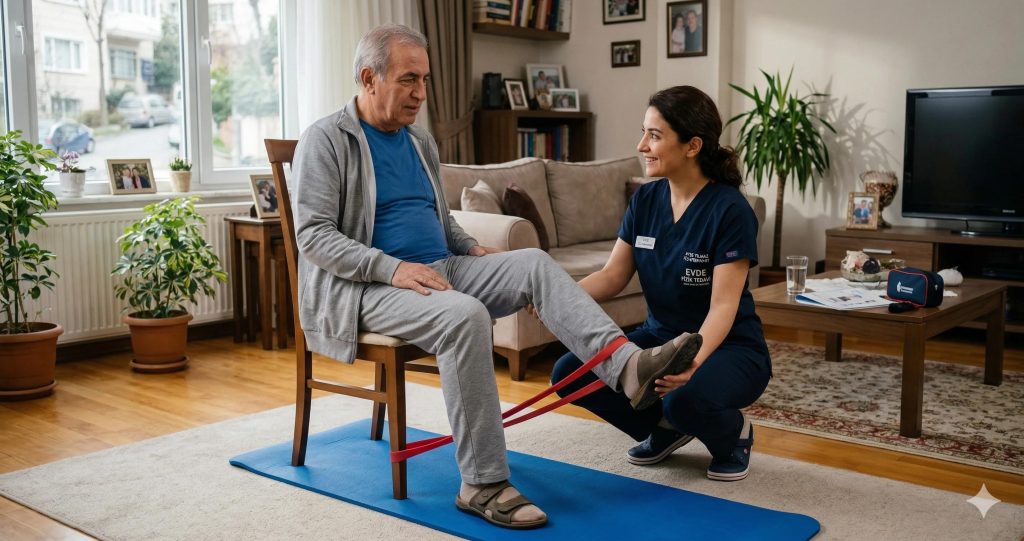
Consider Physiotherapy
Physical therapy can be useful for many musculoskeletal causes of knee pain. A physiotherapist may assess:
- Muscle strength
- Joint mobility
- Flexibility
- Balance
- Walking mechanics
- Exercise technique
- Activity levels
A tailored exercise program may help improve strength and movement while reducing stress on the knee. Cleveland Clinic notes that physical therapy can strengthen muscles around the knee and improve flexibility and support.
When Should You See a Doctor?
Knowing what causes knee pain is important, but knowing when to seek professional help is even more important.
Consider seeing a healthcare professional if:
- Pain continues for several days or keeps returning
- Pain affects your daily activities
- You have difficulty moving the knee
- Swelling persists
- The knee repeatedly gives way
- You have significant stiffness
- Symptoms are getting worse
Seek urgent medical attention if you cannot move the knee or put weight on the leg, the knee has changed shape after an injury, or you have severe pain and significant swelling. A hot, red knee accompanied by fever may also require urgent evaluation.
Can Exercise Help Knee Pain?
Exercise can be an important part of managing many knee problems, but the right exercises depend on the cause.
Common physiotherapy approaches may include:
- Quadriceps strengthening
- Hamstring strengthening
- Hip strengthening
- Gentle range-of-motion exercises
- Balance exercises
- Gradual functional training
Exercises should generally be performed in a controlled manner and should not significantly increase pain.
If you are unsure what causes knee pain before starting exercises, consider getting an assessment first. The wrong exercise or excessive training may aggravate certain injuries.
How Can You Prevent Knee Pain?
You cannot prevent every possible knee problem, but several habits can reduce the risk.
Warm Up Before Exercise
Spend several minutes preparing your body before intense physical activity.
Increase Training Gradually
Avoid suddenly increasing running distance, workout intensity, or jumping volume.
Strengthen Supporting Muscles
Strong muscles around the hips and legs can help support movement and improve functional capacity.
Use Appropriate Equipment
Wear suitable footwear and use appropriate protective equipment for sports.
Allow Recovery Time
Rest and recovery are important after demanding physical activity. Cleveland Clinic recommends warming up, cooling down, and giving your body time to recover after intense activity.
Frequently Asked Questions
What causes knee pain without an injury?
If there has been no obvious injury, possible causes include osteoarthritis, bursitis, tendinitis, overuse, inflammatory arthritis, or other joint conditions. Sometimes the exact cause is not immediately obvious.
What causes knee pain when walking?
Knee pain during walking can occur because of arthritis, overuse, tendon problems, patellofemoral pain, or an injury. The exact cause depends on other symptoms and where the pain occurs.
What causes knee pain when bending?
Pain when bending the knee can be associated with several conditions, including arthritis, bursitis, patellofemoral pain, tendon problems, or meniscus injuries.
What causes knee pain after exercise?
Increasing activity too quickly, repetitive stress, poor recovery, tendon irritation, or an underlying knee condition can contribute to pain after exercise.
Can physiotherapy help knee pain?
Physiotherapy may help many people with musculoskeletal knee problems by improving strength, mobility, flexibility, balance, and movement patterns. The appropriate treatment depends on the underlying cause.
Final Thoughts
So, what causes knee pain? There is no single answer. Knee pain can result from arthritis, injuries, overuse, tendon problems, bursitis, meniscus damage, inflammatory conditions, or other issues.
Understanding what causes knee pain can help you recognize possible triggers, but self-diagnosis is not always reliable. The same symptom can occur with several different conditions.
If your knee pain is mild, temporary, and improving, modifying aggravating activities and using appropriate self-care may be enough. However, persistent, severe, or worsening pain should be evaluated by a qualified healthcare professional.
For people experiencing ongoing musculoskeletal knee problems, a physiotherapy assessment can be useful for identifying movement and strength issues and developing an individualized rehabilitation plan.